North Carolina’s Triangle region has emerged as a powerful force in healthcare innovation, a transformation on full display at last week’s Raleigh-Durham Startup Week. The scale of what’s happening here warrants serious attention, not just regionally but nationally. As someone immersed in the healthcare ecosystem, I saw firsthand how this five-day event solidified the Triangle’s status as a laboratory for solving America’s most pressing healthcare challenges.
The demographic realities driving innovation are worth considering. In 2025, already one in five North Carolina residents are 65 or older, mirroring national trends where the so-called “silver tsunami” is transforming healthcare needs across America. This shift represents both an enormous challenge and economic opportunity, one that I think the Triangle’s entrepreneurs are uniquely positioned to address.
What makes the Triangle distinctive is its rare convergence of assets: world-class universities producing cutting-edge research, a robust healthcare infrastructure with multiple major systems, and a growing pool of technical talent. With over 200 companies employing 60,000 workers in Research Triangle Park alone, the region has become one of the most vibrant corporate and scientific research and development centers in the world for healthcare innovation.
Among the standouts at this year’s startup week was Theralinq, whose founder Brennan Barber took the stage to discuss the company’s tech platform connecting families and pediatric therapists. Inspired by his son’s cerebral palsy diagnosis, Barber developed technology that enables customized care plans, enhanced progress monitoring, and data reporting capabilities, showcasing how personal challenges often drive the most meaningful innovations.
Another notable presence was Ablr360, represented by CEO and co-founder John Samuel. This Durham-based organization is dedicated to “creating a more accessible world for all” through their disability inclusion and digital accessibility services. Samuel, who is blind himself, has become a recognized diversity leader and motivational speaker, sharing his expertise on how technology can break down barriers for people with disabilities.
The event also featured Deebo, a rising star in the Triangle tech ecosystem. Though relatively new to the scene, their innovative approach in direct-to-consumer otoscopes has made them one to watch in the region’s evolving startup landscape. Their founder Minnie Marwaha participated in panels exploring how locally-developed tech solutions can address broader societal challenges.
At CareYaya Health Technologies, we’ve been privileged to contribute to this ecosystem by connecting two underutilized resources: technology and student talent. Our platform uses AI-powered care matching to connect over 30,000 college students across America with seniors needing affordable companion care in their homes. This intergenerational approach is now providing reliable 24-hour care and even overnight care in markets from New York to Los Angeles, Tampa to Boston, while giving students meaningful healthcare experience.
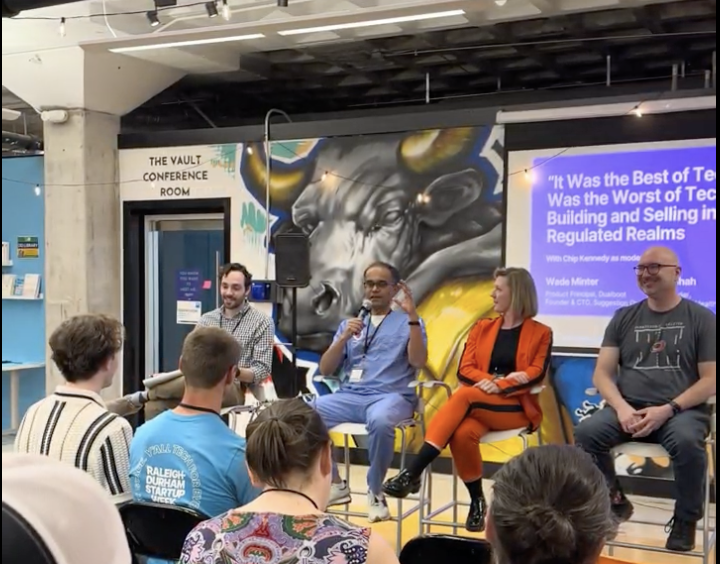
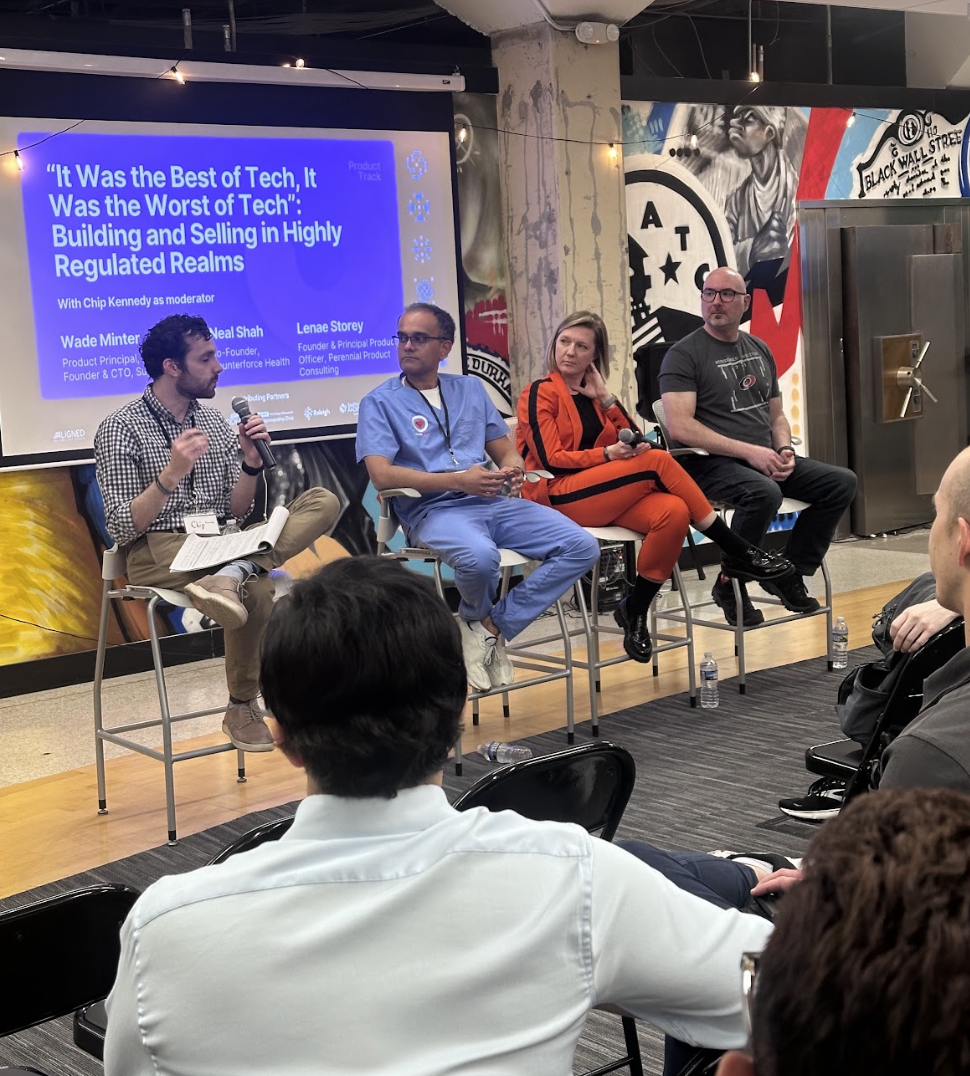
What differentiates the Triangle’s approach to healthcare innovation is the focus on balancing technology with human connection. During a panel I participated in, about building innovations in regulated markets, several panelists emphasized that while AI, smart home devices, and remote monitoring create a valuable infrastructure, the human touch remains irreplaceable. As one family receiving CareYaya’s affordable senior care services in San Francisco recently told us, “The technology got us in the door, but the person coming through that door changed our lives.”
The North Carolina Department of Health and Human Services has recognized this potential with its “All Ages, All Stages NC” roadmap, creating a strategic framework for aging innovation. Our forward-thinking policy environment, combined with research institutions and growing venture capital, makes the Triangle an ideal laboratory for solutions that can scale nationwide.
What’s clear from Raleigh-Durham Startup Week is that the region’s healthcare innovators are building more than just companies. They’re creating a blueprint for how America can address its healthcare and aging challenges. CareYaya’s growing network of affordable senior care providers across Atlanta, San Diego and other major metropolitan areas demonstrates how Triangle-born solutions can scale rapidly to meet national needs.
The U.S. elder care market is over $450 billion in size and expected to reach $650 billion by 2029, creating substantial opportunities for multi-billion dollar companies to be built, rewarding forward-thinking investors backing solutions that both improve lives and generate returns. Entrepreneurs focused on overnight care and 24-hour care solutions for seniors are particularly well-positioned, as these services represent critical care gaps in our current system.
Florida might have the retirement communities, and Silicon Valley might have the tech giants, but the Triangle has something more valuable: the perfect intersection of healthcare expertise, technical talent, and a growing aging population willing to adopt new solutions. The innovations showcased during Raleigh-Durham Startup Week demonstrate that North Carolina isn’t just preparing for the future of healthcare. We’re actively building it!
Neal K. Shah is the CEO of CareYaya Health Technologies, one of LinkedIn’s Top 50 Startups in America in 2024, which runs an AI-powered technology platform that helps thousands of families with healthcare across America. He is also the Chairman of Counterforce Health, a leading AI platform for helping patients fight health insurance claim denials, and Chairman of Evidentia Health, AI tools to help functional medicine providers with clinical decision support. He has been a featured contributor for CNBC, Wall Street Journal, Barron’s and TechCrunch.
Source link