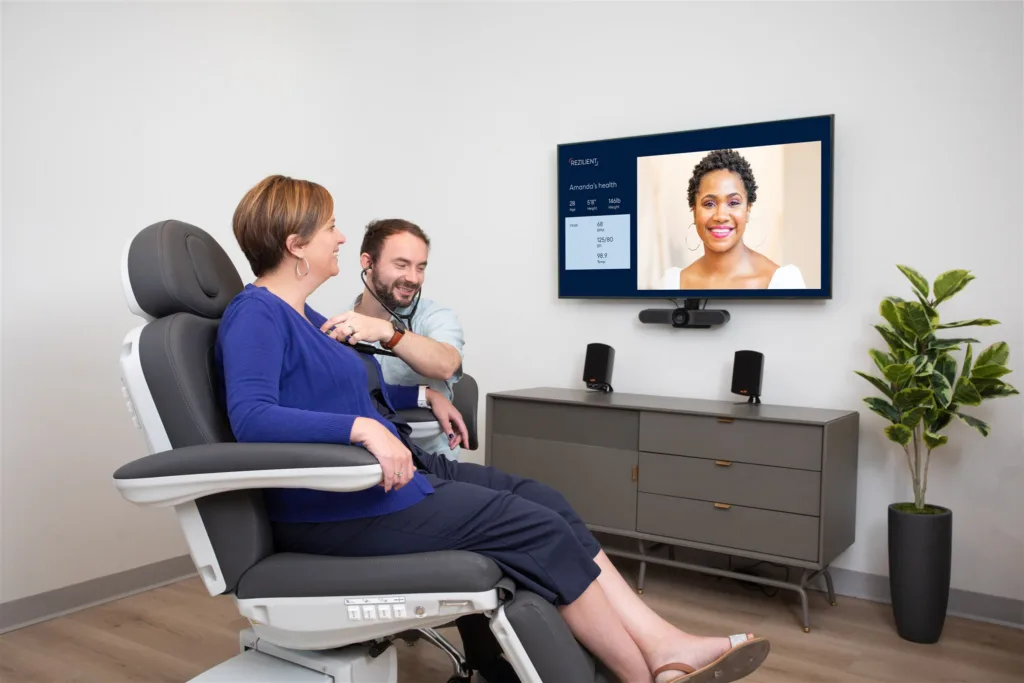
Rezilient Health is reshaping healthcare in St. Louis and beyond. In July, the company opened its third CloudClinic in the metro area. It’s one of five new locations planned nationally for the next year.
As one of the fastest-growing healthcare startups in St. Louis, Rezilient is proving that better access, smarter technology and a people-first approach can radically improve how employers and employees experience healthcare.
Rezilient Health began with two deeply personal stories.
For CEO Danish Nagda, MD, the idea came after watching his father go undiagnosed with sleep apnea for 20 years. By the time the condition was identified, it had already led to heart failure—something that could have been prevented with earlier access to attentive, consistent care.
For co-founder and COO Jeffrey Gamble, it was the loss of his mother. After years of healthcare hurdles and a late-stage diagnosis of heart failure, she passed away too soon. Gamble, an engineer, saw how delayed access and fragmented care systems played a role in that outcome.
“Nearly everyone has a story about how the healthcare system let them down,” Nagda says. “What will always bind Jeff and myself is ultimately that healthcare in America can be incredible. We know it’s able to be the best healthcare system in the world; it’s just not evenly distributed. So many barriers lead to poor quality of care.”
Together, Nagda and Gamble asked a hard question: What if access to high-quality healthcare didn’t depend on your ZIP code, your schedule, or how long you could wait for an appointment?
The result is Rezilient Health, a fast-growing healthcare startup that’s reimagining primary and specialty care through technology, empathy, and smarter access.
High Tech Meets High Touch
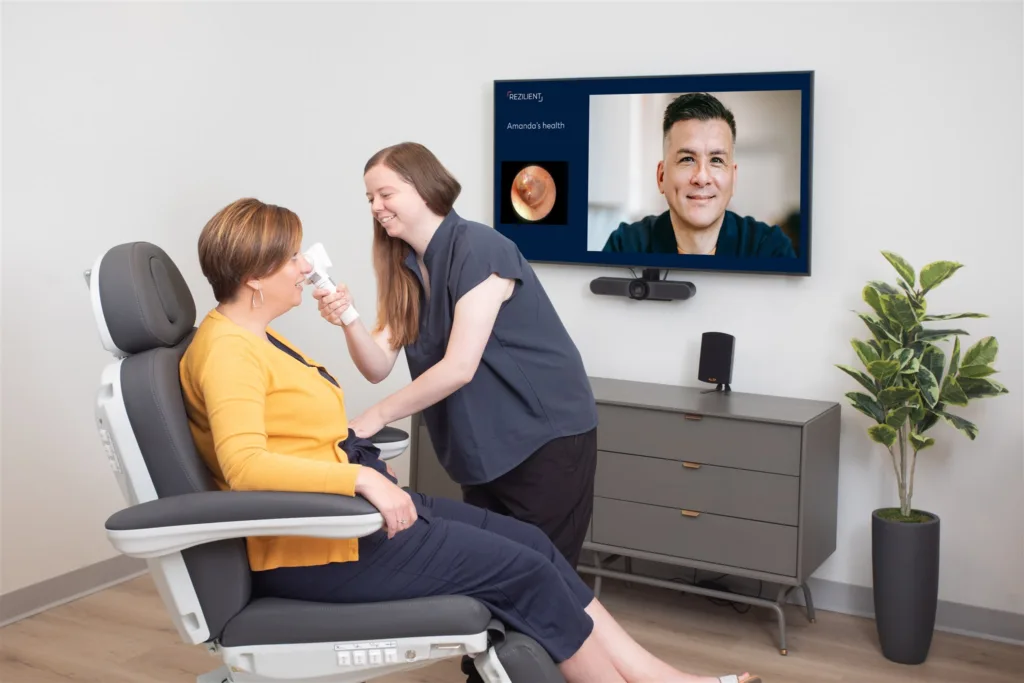
Rezilient’s CloudClinics aren’t your typical doctor’s offices. They’re powered by technology developed in house by a team of engineers and healthcare professionals. Each clinic is staffed by trained medics, often paramedics or EMS professionals, who handle intake, vitals, and in-person testing. The provider then joins the room via a secure, high-definition video screen.
But it isn’t your average telehealth visit either. All diagnostic tools inside the clinic—from otoscopes for ear exams to stethoscopes, dermatoscopes, and blood pressure monitors—are connected to the platform and stream live data directly to the remote physician, who can instantly assess, diagnose, and explain what they’re seeing. The patient watches the same feed on a large in-room monitor, creating transparency and empowering shared decision-making.
“There’s a power shift when patients can see what the provider sees,” Gamble says. “It’s not just being told what’s wrong; it’s being shown. And that makes a huge difference in how people understand and follow through with care.”
Rezilient’s engineering team designed the software platform, so everyone involved—provider, medic, patient, and care coordinator—is connected by the same system. This enables smoother communication, faster diagnostics, and better followup. Plus, with everything from scheduling to documentation fully integrated, physicians have more time to focus on patients and less time dealing with administrative tasks.
Ultimately, the model allows for same-day access to a high-quality provider, a seamless in-person experience, and a deeper level of trust and understanding—all without needing the provider physically in the room.
A Smarter Model for Businesses
This model benefits not only individuals but also the businesses that employ them. Rezilient’s direct primary care model is a game-changer for companies looking to reduce costs, improve employee health, and streamline their benefits offerings. Rather than dealing with rising premiums and unpredictable claims, employers pay a flat monthly rate per employee.
That one fee unlocks unlimited, zero dollar out-of-pocket access to same-day primary care, urgent care, and select specialty services such as physical therapy, weight loss programs, and nutrition counseling for all employees on the company’s health plan.
This approach encourages proactive, not reactive, care. Employees get seen sooner, conditions are managed earlier, and emergency room visits drop significantly. For employers, that translates to fewer insurance claims, lower long-term spending, and improved employee performance.
Rezilient also acts as the “front door” of the health plan, assisting employees with navigating referrals, locating in-network specialists, and scheduling timely appointments. That level of support improves employee health outcomes and ensures that they are receiving the highest quality, lowest cost care within their health plan design.
Because Rezilient’s clinics allow physicians to be remote, the traditional model of multiple providers at every location is turned on its head. A single team of physicians can serve all clinics simultaneously, maximizing reach without driving up real estate or staffing costs. That means Rezilient can provide high-quality care at a cost that even small businesses can justify.
Rezilient also drives higher employee satisfaction and retention. Workers feel cared for, empowered, and healthier—leading to fewer sick days, greater productivity, and a stronger workplace culture.
And once companies sign on, they stay. Rezilient’s client retention rate is 100 percent, with no employers dropping the service to date.
Built for the People Who Provide the Care, Too
Rezilient offers a much-needed alternative for its physicians as well. Providers are fully salaried, with no pressure to rush through appointments. They work remotely, spend more time with fewer patients, and enjoy a healthier work-life balance.
This model is especially attractive to women in medicine—many of whom are managing caregiving responsibilities and seeking a more sustainable pace.
“If you look at why providers have burned out, the top three reasons are the administrative burden, the lack of relationship with patients, and the lack of gratitude from patients,” Nagda says. “We eliminated each of those.
“We get rid of the administrative burden with adequate support staff, and our providers get up to an hour with each patient,” he adds. “That time allows for more meaningful relationships that both providers and patients come to appreciate.”
Growing in St. Louis and Beyond
Rezilient is doubling down on its hometown. The team recently moved into a larger headquarters in Webster Groves and continues to hire aggressively in St. Louis as demand soars.
“We’re not just growing for the sake of growth,” Gamble says. “We’re focused on creating real access points in communities. It’s about being there for people—wherever they are.”
With more than 200 employer partners and a 92+ net promoter score, the numbers tell a powerful story. But it’s the personal stories that drive the mission—co-founders who lost parents due to delayed diagnoses, patients who finally feel seen, and providers who rediscover their passion.
“The American healthcare system has incredible potential,” says Nagda. “We just need to make that quality available to everyone—and that starts by rethinking how care is delivered.”
This post was created by SLM Partner Studio on behalf of Rezilient Health. Learn more about Rezilient Health and how to bring its care model to your workplace at rezilienthealth.com.
Source link
![[Korean Startup Weekly News #100] Rideflux Secures $14M Pre-IPO Funding to Accelerate Autonomous Truck Commercialization - WOWTALE](https://newsx.io/wp-content/uploads/2026/01/1767485644_Korean-Startup-Weekly-News-100-Rideflux-Secures-14M-Pre-IPO-Funding.jpg)