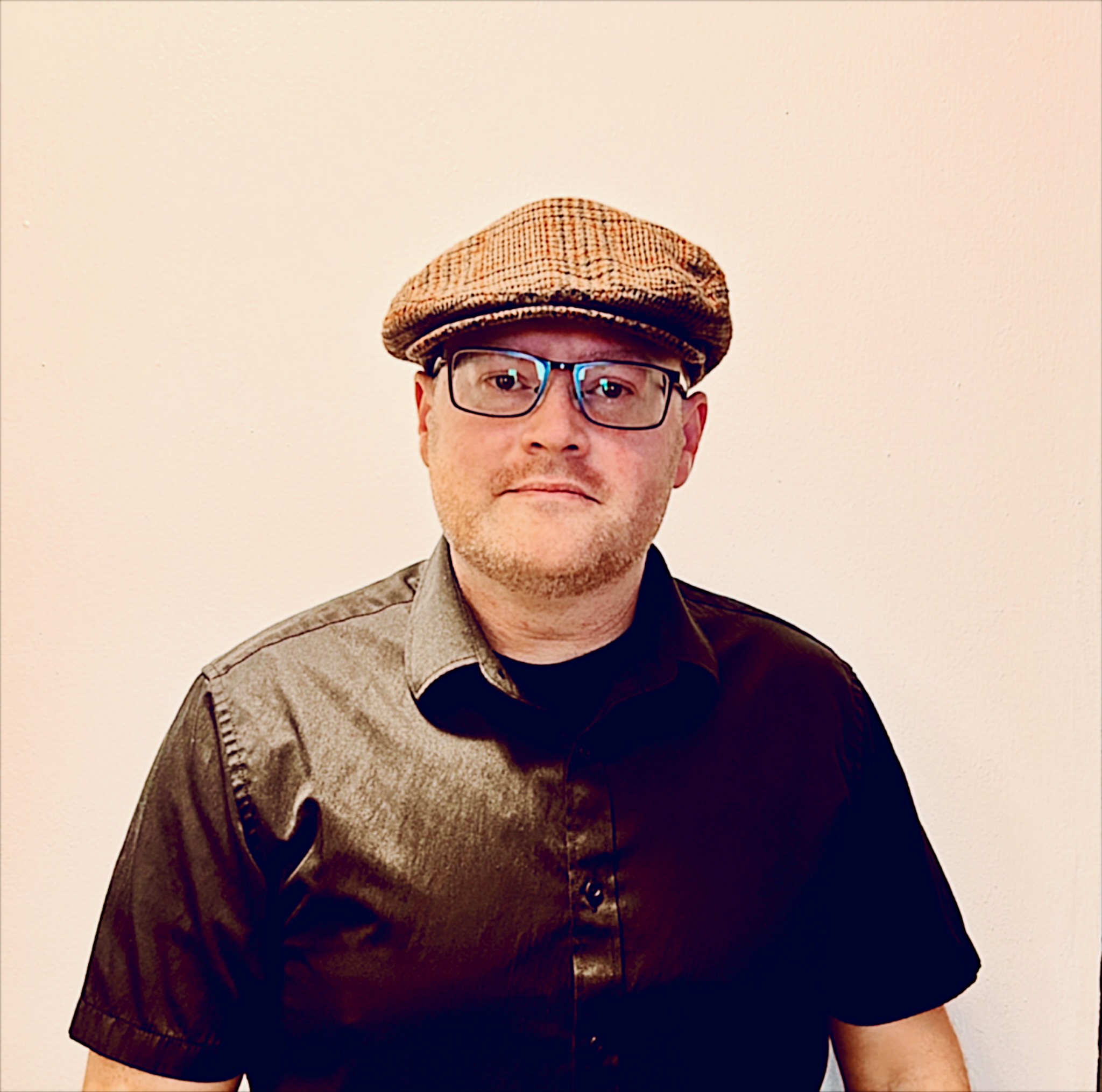
Joel Stewart co-founded the local startup. Courtesy | Joel Stewart
The company hopes to encourage the integrity and self-reliance of higher education.
A Hillsdale resident and Hillsdale College professor co-founded a tech startup aimed at bettering education in the face of rising levels of artificial intelligence plagiarism.
Associate professor of Economics Charles Steele and Joel Stewart started American Education Technologies in response to what Steele said is a crisis in American education.
“America was built on entrepreneurship,” said Stewart, president of AET. “That’s what made us so great. And the only way we’re going to make America great again is allow people to start doing things, start working, and start getting stuff done.”
The ultimate goal for AET, Stewart said, is to provide certifications for people who have taught themselves job skills by building a platform where they can receive credit for their work.
Steele said he joined AET as the director of academic strategy and innovation after a conversation with Stewart.
“He and I were talking about education, and he had a really interesting point. He said that education in America has failed in many respects,” Steele said. “People need to learn how to take care of themselves with some practical skills, and they also need a Hillsdale, liberal arts style of education so they know how to live a good life.”
Stewart said that AET will start by addressing one of the major problems threatening the legitimacy of any education: plagiarism using artificial intelligence.
“Our first problem to tackle is the issue of AI plagiarism, along with our concept of having this universal credentialing system idea is the goal to create an education marketplace,” Stewart said. “Everybody learns differently — we want to be able to credential people who took classes, took some courses, learned from professors or tutors. And one of the issues is, if we have an education marketplace, and people are writing papers, how do we know they’re not writing papers with AI?”
The AI plagiarism aspect of that long-term strategy, Steele said, was particularly interesting to him as a professor.
He said he allows the use of artificial intelligence in his classes if students acknowledge how they used it, since he sees it as a useful tool that is increasingly part of daily life, especially in the workplace.
“So this is a solution for people that totally blocks AI so that, as a student, you have to use your natural intelligence, assuming you have it. But there are no one-size-fits-all solutions. This is just part of the solution,” Steele said.
To address this, Stewart taught himself how to build software that blocks AI use, which he said is currently being reviewed for a patent.
“The idea is to get the plagiarism tool on the market and then use that as a gateway to the larger educational platform idea,” said Turner Korotzer, a junior at Hillsdale studying economics and the director of communications technology for AET. “It’s going to be a viable product that any institution, like a school or college, could adopt.”
The current version is still a basic proof of concept, Korotzer said. He added that the process of building it from scratch was an example of the confidence and entrepreneurship the company is trying to foster.
“None of us have extensive coding experience, but we were able to build an alpha version of it, with some help from AI,” Korotzer said. “AI helped us build out, just like a concept of what this could be.”
“A more American education” is the company’s motto, according to the AET website. Stewart said that this phrase came from a question: what kind of education did America’s founding fathers have?
“Most of them didn’t go to college or even graduate from college,” Stewart said. “Yet they were obviously wise and very intelligent. So how on earth did they get that knowledge and their wisdom without attending college? They self educated.”
Stewart said that his day job, refueling nuclear power reactors, reinforced his confidence in people’s ability to self-educate and study.
“When I show up to a nuclear plant, I take a few days to a week in classes to prove that I know what I know,” Stewart said. “Every single time I go there, I have to prove that I still know this. You don’t need to have a college degree to tear a nuclear reactor apart and move nuclear fuel. You just have to be able to do it.”
Steele said he is looking forward to seeing what AET becomes.
“We’re going to get this thing ready to be rolled out and then tried somewhere, and some school system, or some college,” Steele said. “There’s no reason why this wouldn’t expand across the United States.”