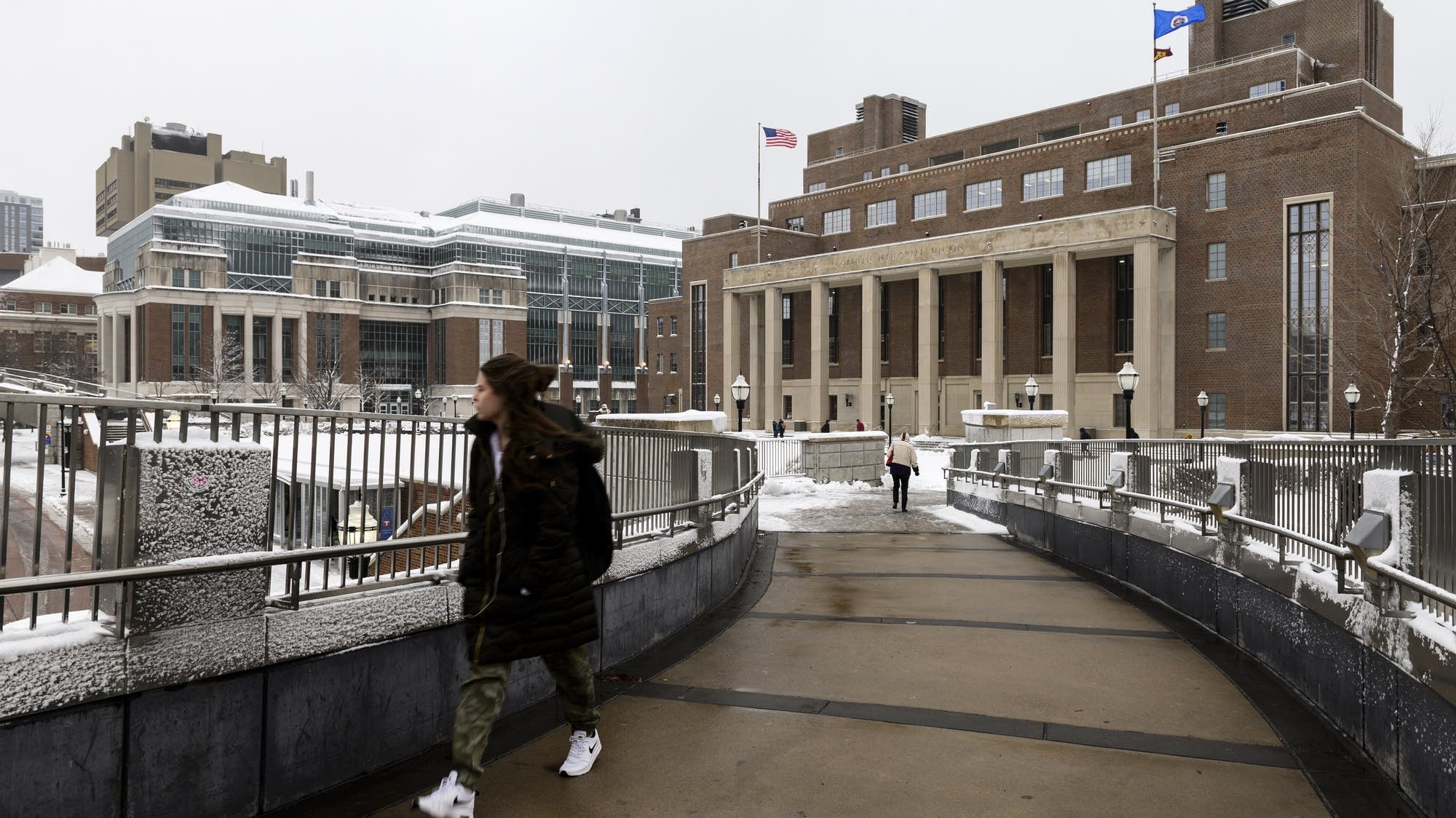
The Trump administration has been clear on wanting deep cuts in federal funding for research at American universities, including cutting money for basic research by more than a third. In response, some universities are working harder to turn research into moneymaking startup companies.
Marketplace senior economics contributor Chris Farrell, based in St. Paul, recently joined “Marketplace Morning Report” host David Brancaccio to discuss. The following is an edited transcript of their conversation.
David Brancaccio: Universities like Stanford and MIT have famously helped turn research insights into commercial products and enterprises. Tell me about other universities. Are more getting into this business of commercializing the idea that the professors and the graduate students come up with?
Chris Farrell: Yes, more of them are getting into it. Now, the action is still dominated, David, by these big research schools, like the ones that you mentioned. But that said, more inventions, patents, licenses, startups are coming out of universities compared to, say, a decade ago. To learn more about these initiatives, I visited the University of Minnesota’s Technology Commercialization Office — Tech Comm, for short.
Brancaccio: Hubs that take the innovations of academic researchers and then you could license out promising technology or find ways to patent and therefore protect the inventions, or even there might be money for startup businesses themselves?
Farrell: That’s right. So Tech Comm, they’ve backed 285 startups, just as you’re mentioning, in various ways since 2006. Nearly half that growth came since 2020, and in the past five years, only four universities have spun off 20 or more startups a year. And Minnesota ranks among the top four. Rick Huebsch is associate vice president for research and innovation at Tech Comm.
Rick Huebsch: The University invested a little bit more in the office, brought in some people from the outside, and then really support the entrepreneurial ecosystem, sort of this entrepreneurial feeling within the faculty.
Brancaccio: And with federal money getting cut off, or at the very least more uncertain in this environment, one can imagine other institutions of higher learning would explore this track.
Farrell: Absolutely. I mean, look, the traditional model for researchers has been to rely on federal funding, and it was becoming suspect, David, even before President Trump returned to the White House. So Brian Rosenberg, he’s the former head of Macalester College and is currently visiting professor at the Harvard Graduate School of Education.
Brian Rosenberg: [It’s] very hard to go back to a world in which you treat it as certain. And so I think you’re going to see universities looking for other sources of revenue, and I think you’re going to see more of them trying to monetize some of these startups.
Brancaccio: Which I think you’re seeing at the University of Minnesota?
Farrell: I did see it. So the Tech Comm office backed a record 26 startups this past year. And while I was having the conversation with them, the ambition is eventually to ramp up to 30, 40, 50 startups a year.