Selected as an A+ university, the highest grade, in the 2024 ‘Campus Town Project Performance Evaluation’
Achieved sales of 13.86 billion won, attracted 2.32 billion won investments, and took part in government support projects worth 4.37 billion won in 2025
‘Ehwa Startup Open Space,’ serving as a hub for the youth entrepreneurship cluster in the northwest region’
Operating a cluster program with annual participation of over 1,000 young people and residents
Repeatedly selected for the ‘Campus Town Project’ under the RISE (Regional Innovation System & Education) program
The Campus Town Project supports economic revitalization in the surrounding region through collaborations between the university and the local community. The goal of the Campus Town Project is to create a vibrant entrepreneurial ecosystem by sharing resources and forming an organic network between the university and the local community.
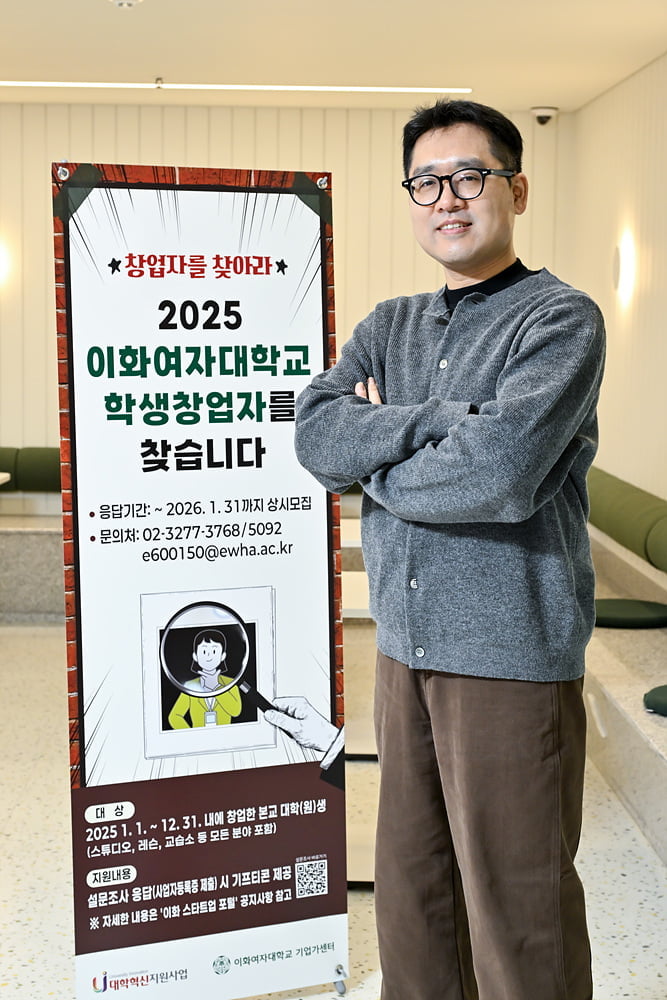
Sang Joon Kim, head of the Ewha Womans University Startup Support Organization, said, “The Ewha Womans University Campus Town Project Board discovers promising young startup companies that are integrating innovative technology into everyday life, and operates various programs to help them actually grow,” and added, “In addition to space, to help these entrepreneurs grow rapidly, we provide various forms of customized support based on individual company diagnoses, such as commercialization support, mentoring, and education.”
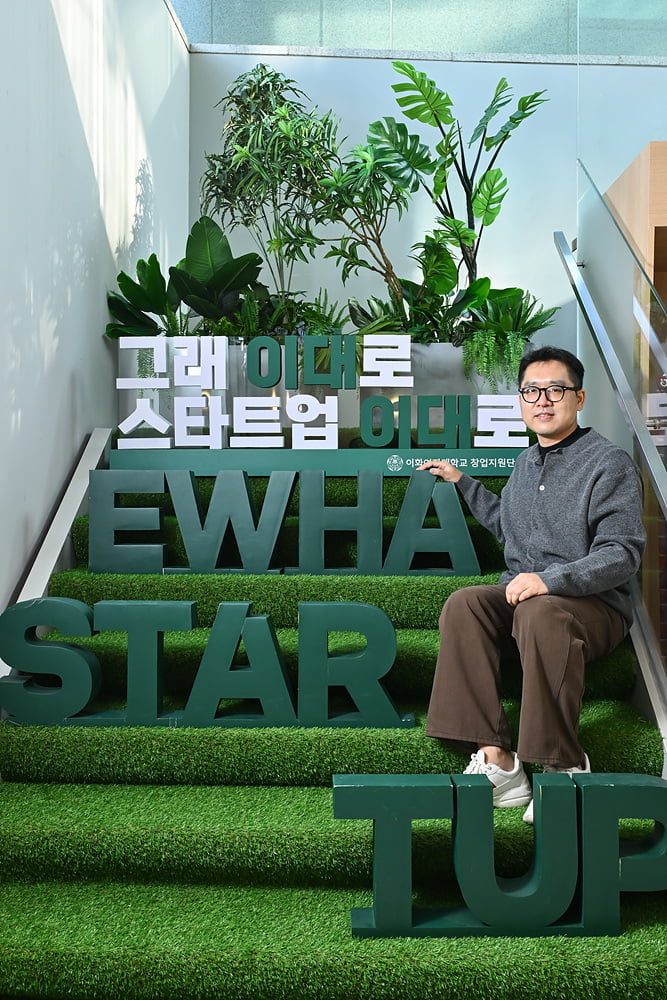
He continued, “We are continuously hosting startup fairs and conducting AI startup talent development programs to spread a startup culture in the region,” and, “Above all, the Ewha Womans University Campus Town Project Board is focused on creating a structure where startup companies can grow together with the region.” I met Professor Kim at Ewha Womans University in Seodaemun-gu, Seoul, on December 2nd.
PROFILE
Professor Sang Joon Kim (Head of the Startup Support Organization at Ewha Womans University, Head of the Campus Town Project Headquarters)
Head of the Startup Support Organization at Ewha Womans University (2023~Present)
Head of the Ewha Womans University Entrepreneurship Center (2023–Present)
Head of the Ewha Womans University Regional Cooperation Center (2023–Present)
General Director of Ewha Womans University Campus Town Project Board (2023–Present)
Associate Professor at Ewha Womans University School of Business (2022-Present)
Member of the Policy Planning Committee, Ministry of SMEs and Startups (2018~2019)
Senior Researcher at the SK Management and Economic Research Institute (2015~2016)
How would you evaluate the results so far?
“By providing various customized support programs and startup spaces, the Ewha Womans University Campus Town Project has created an environment where young entrepreneurs can take on the challenge of starting a new business with less risk. Through collaborations with Seodaemun-gu Office and various universities, we have operated joint programs such as the Sinchon Start-up Fair, the Global Student Startup Competition (GSSC), and Open Innovation, and are continuously strengthening the networking and collaboration based of the regional startup ecosystem.
In 2023, we selected and supported 20 startup companies in the biotech and healthcare sectors. In 2024, we expanded the scope to the lifestyle and tech sectors and selected a total of 52 companies. In 2025, we selected 66 companies for customized support. By providing systematic support based on diagnoses for each company, as of September 2025, we had achieved approximately 9 billion won in sales and attracted about 1.4 billion won in investments.
As a result, this year we were also selected as an A+ university, the highest grade, in the ‘2024 Campus Town Project Performance Evaluation’ organized by the Seoul Metropolitan Government. In 2026, the Ewha Womans University Campus Town plans to enhance its support system in line with the changing startup environment by expanding startup spaces, implementing global programs for foreign entrepreneurs, and setting up investment programs to nurture baby unicorns. Our aim is to continuously strengthen the startup ecosystem so that young entrepreneurs can achieve real growth.”
What were the biggest highlights of this year’s project?
“We had two major achievements this year. The first is the GSSC, which was held for the first time this year. This was a global entrepreneurship event focused on AI-based solutions to social problems, with student startup teams from prestigious universities around the world, such as Harvard, Cornell, Aalto, and UC Berkeley, gathering to compete and collaborate. From Korea, there were Ewha Womans University, Seoul National University, Pohang University of Science and Technology, and Dongseo University. Also, the final round was held in the main hall of the Asia Leadership Conference, which is hosted by the Chosun Ilbo, so students had an opportunity to experience the global stage firsthand. The Ewha Womans University team performed excellently in the IR preliminaries, mentoring, and boot camp, and was selected as an outstanding team. This is a significant result, as it means they can participate in the local program at UC Berkeley in the United States.
The second is that Ewha Womans University has been selected again for the ‘Campus Town Project’ under the RISE (Regional Innovation System & Education) program, which the Seoul Metropolitan Government has started actively promoting this year. Ewha Womans University has grown consistently, from the initial unit-based projects of the Campus Town Project to more comprehensive projects. I think that being selected for next year’s project as well firmly demonstrates the university’s role and capabilities in promoting youth entrepreneurship. The fact that the startup spaces, programs, and networks we have built are consistently being recognized shows that, as a hub of the youth startup ecosystem, we need to continue our efforts with an even greater sense of responsibility.”
“Seodaemun-gu has 11 universities, so there is an active influx of young people in the area. A local environment like this is a significant advantage when it comes to discovering and nurturing young entrepreneurs. Starting this year, the Ewha Startup Open Space and Ewha Startup Erum Center are fully up and running, providing practical startup infrastructure for education, mentoring, and office space. One notable strength of the Ewha Womans University Campus Town Project Board is that we operate customized support programs based on one-on-one company diagnoses. What the companies are most satisfied with is our ability to accurately identify their needs first and then provide tailored support.
As we are the only university in the northwest region with a startup-focused Campus Town, we collaborate closely with other local universities to operate a cluster program, which over 1,000 young people and residents participate in annually. In this way, we are playing an important role in the creation of a region-based startup ecosystem.”
How are tenant companies selected, and what benefits are offered to them?
“Tenant companies are selected at the beginning of each year. We comprehensively review each company by evaluating documents and presentations. We focus mainly on marketability, feasibility, growth strategy, and the motivation for developing the startup idea. We thoroughly verify what problem the team is trying to solve, whether they are technically and commercially prepared, and whether they have the capability to continuously develop their idea.
We also pay close attention to how the startup idea could impact the region or society and what its future scalability might be. The initial stage is important, but another key criterion for us is whether the company has a structure that will allow for growth afterwards.”
The Start-up Booster Program operated by Campus Town is a customized support program designed to help tenant companies systematically grow from the initial startup stages to the scale-up stage. First, each company conducts a self-assessment to identify its strengths and weaknesses. Then, based on a 1:1 pre-diagnosis and a diagnosis conducted with commercialization experts, we provide support by prioritizing companies that require in-depth assistance in each area where startups typically need the most help, such as market research, concept validation, marketing strategy, organizational management, and intellectual property. We present a roadmap for the company first, then funding for startup activities. This way, they can utilize the grants strategically to quickly commercialize or grow.
In addition, in order to increase the likelihood of success, a dedicated manager is assigned to each tenant company. Their role is to continuously monitor the company, check the execution process, and provide additional support where necessary. In fact, through this year’s program, many companies have made tangible achievements in market research (6 companies), promotional content production (10 companies), technology protection (8 companies), and organizational capacity building (3 companies).
So I think the Start-up Booster Program is one of the representative startup fostering programs of the Campus Town Project Board, as it goes beyond mere incubation to enable tenant companies to achieve tangible results and secure a foundation for sustainable growth.
What are some of the success stories among the tenant startup company?
“This year, the team with the most outstanding performance among the Campus Town tenant companies was the meat alternative technology company ‘SUFAB Inc.’ SUFAB is able to achieve the texture of meat at the voxel (3D pixel) level through its ‘Foodructure’ algorithm and material property design technology. In fact, such precision texture design technology is still in its early stages in the global meat alternative market. Using this technology, they have precisely replicated the actual marbling pattern and texture with their product ‘Next Meat’, garnering significant attention in the market.
SUFAB has also received excellent evaluations in government R&D projects. In 2024, the company was selected for a Ministry of Oceans and Fisheries project involving the development of cultured seafood, securing approximately 8.5 billion won in research and development funding and expanding its technological domain to include both meat and seafood. This is a good example of a technology developed jointly by a university research team and a company being linked to a large government project. SUFAB also received a CES 2025 Innovation Award. Only seven teams from Campus Town companies in Seoul have received this award, and this is a rare case where a Korean team has been recognized for its competitiveness in the food and agriculture sector.
SUFAB is currently preparing certification for B2B sales and is working on food safety verification and certification procedures to commercialize its technology. You could say they’re a representative model of technology based on university research leading to success in the actual market.
With a track record of achievements that includes being selected for a government R&D project, developing advanced technology, winning global awards, and securing market trust for industry collaboration, I believe SUFAB is one of the most noteworthy Campus Town teams in the alternative meat and food tech sectors.”
What programs are available to help startups attract investment?
“The Project Board operates various programs to provide actual investment opportunities and to strengthen the ability of early-stage startups to attract investments on their own.” A representative example is the Open IR program. Aimed at early-stage companies that are struggling to raise funds, it helps them improve their IR capabilities and gain experience by pitching to professional investors. Through Pitch Coordinating, companies can learn presentation skills and IR pitching know-how, and see examples of pitch deck creation. They also have the opportunity to present in front of actual investors and receive personalized feedback.
This year, ‘Open IR’ started with preliminary rounds to select outstanding companies, and those that passed could advance to the finals at the ‘Ewha Startup Festa’, the year-end performance sharing event. Companies that advanced to the finals conducted their final IR pitch in front of a panel of judges that included investors and alumni companies.
At the same time, in collaboration with the technology holding company, we planned and operated a separate investment program for alumni entrepreneurs called ‘Station Ewha’. So the Ewha Womans University Campus Town has diversified its operations into two tracks: ‘Open IR’, a multi-stage IR program that helps companies improve their ability to attract investment and then supports matchmaking with investors, and ‘Station Ewha’, which provides direct investment opportunities through the university’s technology holding company.”
What programs are there for collaboration, rather than investment?
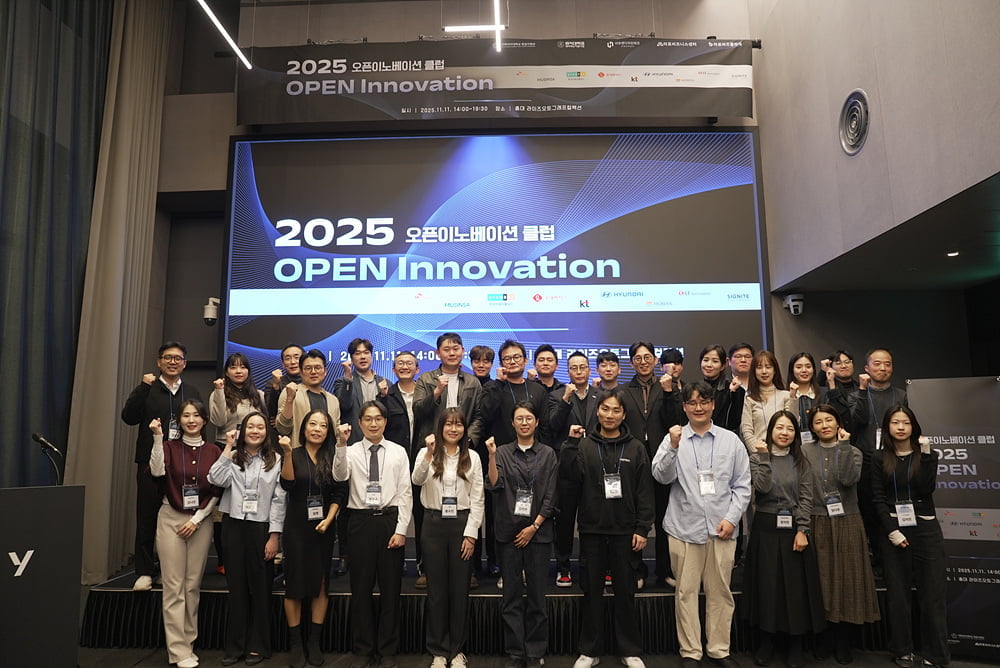
“The Ewha Womans University Open Innovation Club is a collaborative entrepreneurship program that we operate annually with various large and medium-sized enterprises. It has now been running for six years. The purpose of the program is for large and medium-sized enterprises and early-stage startups to find where their needs align and identify the ‘points’ that can lead to actual collaboration. So rather than a simple one-way or input-based program, the Open Innovation Club creates a bidirectional structure where companies and startups can discuss the possibility of actual collaboration and present to each other. This is its most distinctive feature.
Satisfaction among participating startups has been increasing every year. We’ve received a lot of feedback saying that it has been greatly beneficial to exchange opinions directly with open innovation practitioners from various companies, who are difficult to meet otherwise, to assess the market suitability of services or refine business directions. This year, there has been greater interest from large and mid-sized companies compared to previous years, which has created an atmosphere where both startups and large/mid-sized companies are inclined to ‘discuss things a bit more deeply,’ leading to follow-up mentoring after the program concluded. This process has led to discussions regarding POC opportunities with large corporations and tangible results, making it one of the most successful programs of this year.”
“To nurture entrepreneurial talent among current students, our school operates systematic curricular and extracurricular entrepreneurship education programs. The Ewha Startup Leadership Track is designed to enhance entrepreneurial skills in stages, from cultivating an entrepreneurial mindset, to customer development practices, AI and coding, and startup capstone design. We also provide practical education on ESG evaluation practices, interview and data utilization, customized mentoring, and more. In addition, in the first half of the year we host the Ewha Startup Discovery Hackathon, which provides focused, hands-on opportunities to formalize AI-based startup ideas, establish business models, receive expert mentoring, and more. Afterwards, the selected pre-startup teams engage in entrepreneurial activities, and we support mentoring and education from experts in various fields as well as startup spaces. Then through the Ewha Startup Discovery Competition held at the end of the year, they are able to review and evaluate their approximately seven months of entrepreneurial activities, and outstanding teams are awarded prizes to support them in their transition into actual startups. In the future, we plan to expand this type of hands-on entrepreneurship education based on new technologies such as generative AI and deep learning to nurture more future-oriented entrepreneurial talents.”
How are you providing startup support that connects the local community to the global community?
“The Campus Town Project is helping to revitalize the local startup ecosystem by supporting promotional content creation and market research through the ESTILO Creator Program, where our university students collaborate with local businesses.” We also host the Sinchon Start-up Fair to create a space for exchange, with 1,200 local residents and young entrepreneurs participating, and are expanding our startup activities with IR pitching and exhibition booths. In addition, a coalition of five universities in the northwest region held a youth entrepreneurship forum to share domestic and international issues and trends on AI-based startups and provide insights to prospective entrepreneurs and young people interested in entrepreneurship.
In terms of global connections, we are working to establish a global network by discovering AI-based startup ideas in collaboration with prestigious universities around the world, such as Harvard University, Cornell University, Aalto University, the University of California, Berkeley, and the University of Southern California, through the GSSC mentioned earlier. We plan to hold the GSSC again next year, and expect more global universities to participate. In the future, the Ewha Womans University Campus Town Project Board will continue to build a startup ecosystem connected to both the university and the global.”
What are the future goals and commitments of the Ewha Womans University Campus Town Project Board?
“The Ewha Womans University Campus Town Project Board will continue to carry out the Campus Town Project next year, ensuring continuity in nurturing tenant companies and creating an environment where startup teams can maximize their performance through more in-depth support. Based on this, we expect startup teams to achieve good results in the market.
To this end, we have recently reorganized the program to focus more on promoting global expansion, attracting more investments, and nurturing baby unicorns. We plan to operate a program focused on execution ability that will not only provide simple support but also enable startup teams to gain competitiveness in the actual market. In addition, we hope to create a growth path that will allow teams to naturally progress from the initial stage through growth to global expansion based on a network of overseas experts, focused placement linked with investment firms, and a practical startup development platform.
In the future, the Ewha Womans University Campus Town Project Board will maximize its expertise in startup support and faithfully fulfill its role as a platform where startup teams can achieve both tangible results and global expansion at the same time.”
reporter jinho lee
[email protected]
Source link