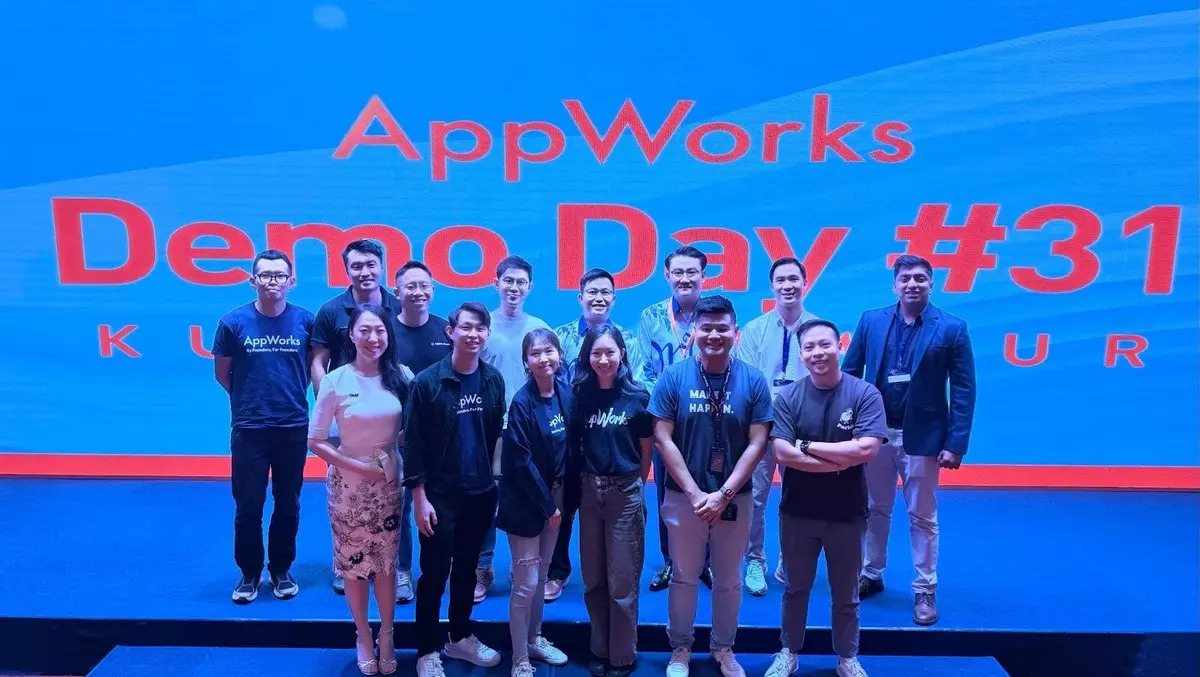
AppWorks held its latest Demo Day in Kuala Lumpur, showcasing eight early-stage startups from Malaysia and Singapore focused on urban mobility, SME finance, AI robotics, food supply chains, Web3, and digital storytelling.
The event, branded as Demo Day #31, ran as part of the Malaysian Venture Capital & Private Equity Association (MVCA) Conference 2025. The conference adopted the theme “Beyond Borders: Positioning ASEAN in the Global Private Capital Renaissance”.
The one-hour session at Menara Affin Bank’s auditorium in the Tun Razak Exchange district combined rapid-fire pitches with a fireside chat. It attracted investors, corporates, and ecosystem organisers seeking companies with regional expansion plans.
AppWorks runs an accelerator and a venture fund focused on AI and blockchain. It has expanded its activity across what it describes as Greater Southeast Asia, which spans Southeast Asia and Taiwan.
“Malaysia is an essential part of Greater Southeast Asia’s innovation fabric,” said Alyssa Chen, Principal of the Accelerator Arm, AppWorks. “By bringing Demo Day #31 into the MVCA Conference, we’re putting Malaysian founders, and their Singapore peers expanding here, in front of exactly the people who can help them scale: investors, corporates and decision-makers who understand private capital and are hungry for resilient, cross-border growth stories.”
MVCA represents venture capital and private equity firms in Malaysia and seeks closer links between investors and founders. It framed this year’s conference around cross-border dealmaking in ASEAN.
“Malaysia is becoming a natural bridge for capital, talent and technology flows across ASEAN,” said Dr. Chris Daniel Wong, Secretary General, MVCA. “Partnering with AppWorks allows us to give local stakeholders direct access to founders who are already building regionally, while signalling Malaysia’s readiness to support high-growth companies scaling beyond their home markets.”
Malaysian ventures
Four Malaysia-based teams presented solutions in urban congestion, outdoor advertising, travel planning and private investment.
Parkit, founded by Kyan Liew, has evolved from a parking-technology concept into a mobility operator that addresses parking inefficiencies in Malaysian cities. The company reports a community of 40,000 registered users and 30,000 paying customers. It offers access to 300,000 daily commuters on the Klang Valley MRT network through its integrated parking infrastructure.
Parkit works with corporate clients, including Samsung and Malaysia Mass Rapid Transit. The company reports annual revenue of USD 4 million from a hybrid business model that serves both businesses and consumers.
Carching, launched by founder Jeshua Choong, positions itself in the out-of-home advertising market. It places branded wraps and displays on everyday cars and tracks each vehicle’s exposure and movement.
Carching says it operates in three countries and has worked with 40 brands. It serves a base of 5,000 users and reports USD 400,000 in revenue this year. It states that the business is already profitable.
Plandora, created by founder Kit Neoh, targets travel planning. The service uses what it calls “AI real creator twins”, which are digital models that reflect the preferences of individual travel content creators. Users receive itineraries that aim to replicate the style and judgement of specific creators rather than generic templates.
Plandora reports 867 users and is seeking to grow within the ASEAN travel sector. The company points to growing demand for trusted and personalised itineraries among regional travellers.
Singular, led by founder Terrence Hooi, operates in private markets and Web3. It offers on-chain access to fractionalised shares in private equity assets and late-stage private companies. The startup says it gives retail investors a route into holdings that were previously limited to institutions.
Singular reports more than 55,000 registered users and USD 2 million in processed transactions. It cites a deal pipeline of USD 200 million. The platform lists exposure to companies and funds such as SpaceX, OpenAI and global private equity vehicles.
“These founders are solving Malaysian problems with globally competitive solutions,” said Chen. “They’re grounded operators building in messy, real-world environments, exactly the kind of ambition long-term capital is now rewarding.”
Singapore expansion
Four Singapore-based startups pitched, with plans to enter Malaysia as a first or early market in their regional strategy.
Farmio, founded by Paco Chan, focuses on food supply chains. It offers what it describes as an AI-led operating system for growers, distributors and buyers. The system digitises procurement, logistics and order management in markets that still rely on manual processes.
Farmio reports USD 6 million in revenue over the past year. It says it has automated more than 55,000 orders and serves over 1,600 business customers across Asia.
Fluid, led by founder Trasy Walsh, operates in B2B payments and embedded credit. It offers an AI-based platform for reconciliation and collections that suppliers and buyers use. The product also embeds credit decisioning into payment flows, targeting SMEs facing late payments and cash flow uncertainty.
Fluid says 3,000 suppliers and buyers in Singapore and Malaysia use its service. It focuses on data-driven underwriting for smaller firms that may lack extensive credit histories.
Hivebotics, created by founder Rishab Patwari, builds AI-based commercial cleaning robots. The robots operate in facilities such as airports, malls and transport hubs. The company cites labour shortages and hygiene requirements in large venues as drivers of adoption.
Hivebotics reports deployments in Singapore, the UAE, the US, Hong Kong and Taiwan. It lists customers including Changi Airport Group, ISS, Sodexo, Kintsugi Holdings and Chaico Development. The company is now in discussions with Malaysian mall operators and facilities management providers.
Alpha Story, started by founder Jeremy Foo, occupies a niche in narrative strategy for technology businesses. The firm works with startups, funds and corporates on digital storytelling and investor-facing communications. It focuses on turning complex technologies and business models into materials that support fundraising and customer acquisition.
Alpha Story says it has partnered with more than 300 clients across the region in 18 months. It reports annual revenue above USD 1 million.
Collectively, the four Singapore startups set out plans to use Malaysia as a core expansion market rather than a secondary geography. Their approaches range from pilots with property developers and mall operators to partnerships with SMEs and agriculture networks.
Regional playbooks
A fireside chat rounded out the session, featuring TK Chuah, Founder and Chief Executive of Malaysian software company Bootsorder, and Sophie Chu, Principal of the AppWorks AI Arm.
Chuah described Bootsorder’s expansion from Malaysia into Taiwan. He outlined the rationale for choosing a higher-income, more mature market as the first overseas base and the work required to adapt B2B software to different regulations and workflows.
“Software is ultimately about productivity,” said TK. “That’s why we expanded into higher-income markets like Taiwan first. Building trust in a new ecosystem isn’t easy, but communities like AppWorks give founders the insight and local support needed to compete, and to realise they shouldn’t underestimate themselves.”
Chu set out perspectives from the accelerator side on how Malaysian founders can approach regional growth. She referred to the role of founder communities, cross-market playbooks and North Asia’s rapid adoption of enterprise AI.
“For Malaysian startups, going overseas isn’t just optional, it’s necessary,” said Sophie. “The real challenge is finding the leverage points in each market fast. North Asia’s rapid AI adoption and its urgency to solve labor shortages create a window of opportunity that Southeast Asian founders can seize and confidently step into.”
The event took place against a backdrop of what investors describe as a more disciplined capital market. Organisers highlighted Southeast Asia’s projected digital economy growth, which regional studies forecast at more than USD 360 billion within the next few years, and an expected AI-driven uplift in GDP of about USD 120 billion by 2027.
AppWorks and MVCA said the partnership supports discussion on topics such as market entry, regulatory navigation and long-term partnerships between founders and institutions. The collaboration is set to continue as ASEAN investors and startups explore further cross-border expansion.