The Swift Fall of EV Battery Swapping: Ample’s $330 Million Gamble Ends in Bankruptcy
In the fast-evolving world of electric vehicles, where innovation promises to reshape transportation, the recent bankruptcy filing of Ample, a San Francisco-based startup specializing in battery swapping technology, marks a stark reminder of the sector’s volatility. Founded in 2014, Ample raised over $330 million from investors, touting a system that could swap out depleted EV batteries for fully charged ones in just five minutes. Yet, on December 19, 2025, the company filed for Chapter 11 bankruptcy protection, citing challenges in scaling operations amid broader industry headwinds. This development, as reported by Inc., underscores the difficulties faced by companies attempting to disrupt traditional charging methods.
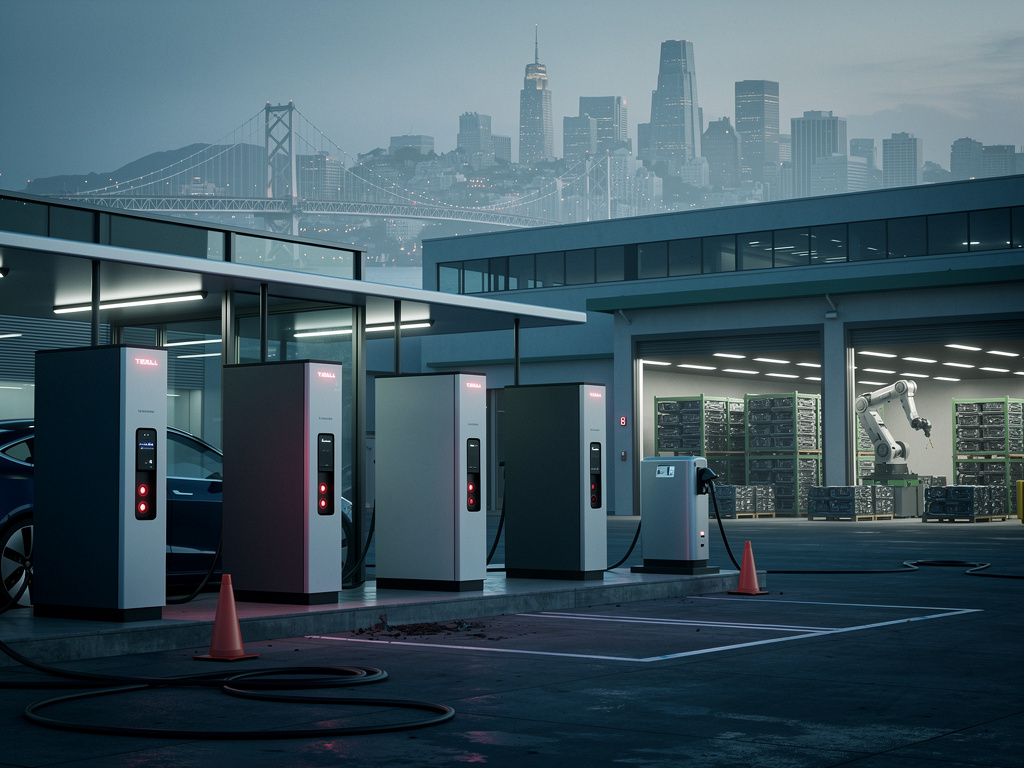
Ample’s technology involved modular battery swapping stations resembling compact car washes, designed primarily for commercial fleets in logistics, ride-hailing, and delivery services. The promise was to eliminate long charging times, a persistent pain point for EV adoption. Investors, including high-profile backers like Shell Ventures and Moore Strategic Ventures, poured funds into the venture, betting on its potential to accelerate the transition to electric mobility. However, the filing reveals that despite significant capital, Ample struggled with deployment costs, infrastructure incompatibility, and slower-than-expected market uptake.
The bankruptcy comes at a time when the EV sector is grappling with economic pressures, including fluctuating raw material prices and shifting consumer demand. Ample’s case is not isolated; it joins a growing list of battery-related startups that have faltered. For instance, earlier in 2025, Swedish firm Northvolt, once hailed as Europe’s battery powerhouse, also filed for bankruptcy, unable to secure ongoing financing, according to The Guardian.
Rising Ambitions and Early Promises
Ample’s journey began with ambitious goals to solve one of the EV industry’s core challenges: range anxiety and charging infrastructure limitations. By focusing on swapping rather than fast-charging, the company aimed to provide a seamless experience for fleet operators, who could avoid downtime associated with plugging in vehicles. In partnerships with companies like Uber and Stellantis, Ample deployed pilot stations in cities such as San Francisco and Madrid, demonstrating swaps that took less time than refueling a gas tank.
Financially, the startup seemed poised for success. Its funding rounds attracted attention, with the latest infusions supporting research and the build-out of swapping stations. Yet, underlying issues emerged. High capital expenditures for manufacturing modular batteries and installing stations proved burdensome. As detailed in a report from Slashdot, Ample’s model required purpose-built infrastructure, which limited scalability compared to widespread charging networks.
Moreover, the competitive environment intensified. Rivals like Nio in China have successfully implemented battery swapping on a larger scale, but in the U.S., regulatory hurdles and varying EV standards complicated adoption. Ample’s bankruptcy filing states that despite raising substantial funds, the company faced “broader EV industry turmoil,” including supply chain disruptions and economic slowdowns that reduced fleet investments.
Industry-Wide Failures and Lessons Learned
This isn’t the first time a battery swapping venture has hit a wall. Historical precedents abound, with companies like Better Place collapsing in 2013 after burning through hundreds of millions. More recently, as outlined in an article from Battery Tech Online, at least 11 EV and battery firms have filed for bankruptcy in recent years, victims of overhyped expectations and underdelivered results.
Ample’s downfall highlights systemic risks in the sector. Posts on X (formerly Twitter) from industry observers reflect a mix of skepticism and concern, with some noting that EV startups often overestimate market readiness. For example, discussions emphasize how economic factors, such as rising interest rates, have squeezed funding for capital-intensive projects. One post likened Ample’s fate to that of Fisker, another EV player that went bankrupt, pointing to the counterparty risks inherent in relying on innovative but unproven tech.
Experts argue that battery swapping, while innovative, faces inherent challenges in standardization. EVs from different manufacturers use proprietary battery designs, making universal swapping difficult without industry-wide agreements. Ample attempted to address this through modular systems, but as per reports from Electrek, the approach failed to gain traction amid competition from improving fast-charging technologies.
Economic Pressures and Market Dynamics
The broader economic context played a pivotal role in Ample’s demise. With inflation persisting and venture capital tightening, startups like Ample found it harder to secure follow-on funding. The company’s filing, covered by Clean Trucking, indicates plans for restructuring, potentially seeking a buyer for its technology. This Chapter 11 approach allows Ample to continue operations while reorganizing debts, but skepticism remains about its viability.
Comparisons to other failures are instructive. Northvolt’s bankruptcy earlier in the year, as reported by The Guardian, stemmed from similar issues: inability to scale production amid funding shortfalls. In the U.S., firms like Proterra, an electric bus manufacturer, also succumbed to bankruptcy in 2023, illustrating how supply chain vulnerabilities can doom even well-funded ventures.
On X, sentiment echoes these concerns, with users debating the sustainability of EV innovations. Some posts highlight Bloomberg’s predictions of EV price parity by 2025, yet warn of exponential disruptions that could accelerate failures for laggards. This discourse underscores a divide: while EVs are gaining ground globally, niche technologies like swapping struggle against established players like Tesla’s Supercharger network.
Technological Hurdles and Future Prospects
Delving deeper into Ample’s tech, the swapping system relied on robotics to remove and replace battery packs autonomously. This required vehicles to be compatible, often necessitating modifications. For commercial fleets, the appeal was clear—minimizing idle time—but rollout was slow. Partnerships with rental firms and delivery services showed promise, but scaling to widespread adoption proved elusive.
Critics point out that advancements in battery chemistry, such as solid-state batteries promising faster charging, may render swapping obsolete. A recent article from Express.co.uk describes Ample’s filing as a “major blow” to the EV industry, amplifying fears of a slowdown in innovation funding.
Looking ahead, Ample’s assets could attract acquirers. Chinese firms like Nio or even established automakers might integrate the technology. However, as per insights from Inc., the failure isn’t just Ample’s; it’s symptomatic of an industry where hype often outpaces reality. X posts from tech enthusiasts speculate on consolidation, with predictions for 2026 suggesting stricter norms and mass-market applications could favor survivors.
Investor Sentiment and Broader Implications
Investors who backed Ample now face significant losses, prompting a reevaluation of risk in green tech. Venture capital in EVs has cooled, with data showing a decline in deals amid economic uncertainty. This mirrors patterns seen in past tech bubbles, where promising ideas falter without sustainable business models.
The bankruptcy also raises questions about government support. While subsidies have fueled EV growth, they haven’t always prevented failures. In Europe, Northvolt’s collapse, detailed in The Guardian, led to calls for more targeted industrial policies. In the U.S., similar debates swirl, with some X users arguing that policy shifts under new administrations could further strain startups.
For industry insiders, Ample’s story is a cautionary tale. It emphasizes the need for robust supply chains, realistic scaling plans, and adaptability. As one X post noted, drawing from historical failures like Britishvolt’s 2023 bankruptcy, green tech must balance innovation with economic viability.
Pathways to Recovery and Innovation Shifts
In its filing, Ample expressed intent to restructure, potentially emerging leaner. This could involve licensing its tech or pivoting to niche markets like heavy-duty trucking, where swapping might still hold advantages. Reports from Clean Trucking suggest that while the company restructures, its stations could continue serving existing clients, preserving some value.
Emerging trends, such as battery recycling innovations highlighted in a piece from Analytics Insight, point to alternative focuses for the sector. These could mitigate some risks by creating circular economies, reducing dependency on new materials.
Ultimately, Ample’s bankruptcy reflects the high-stakes nature of EV disruption. As the industry matures, successes will likely come from integrated solutions rather than standalone innovations. X discussions predict consolidation in 2026, with survivors like established players dominating. For now, Ample’s fall serves as a pivotal moment, urging a more grounded approach to electrifying transportation.