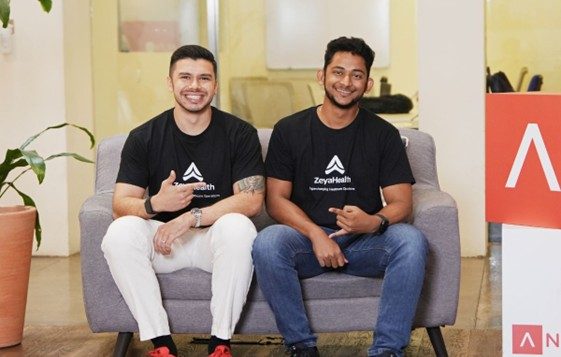
Zeya Health, a Singapore-headquartered healthtech startup building AI-native operational infrastructure for healthcare providers, has raised $575,000 in a pre-seed funding round led by Antler, with participation from strategic angel investors, according to an announcement.
The funding comes as healthcare providers across the Asia Pacific face rising patient volumes and administrative pressure amid a widening shortage of healthcare professionals. Zeya said demand for its platform has accelerated as clinics look to automate operational workflows without replacing existing systems.
Zeya operates as an AI-powered front desk that integrates with clinics’ electronic medical records (EMR) systems and communication channels such as WhatsApp. The platform automates routine administrative tasks, including appointment reminders, follow-ups, rescheduling, and patient engagement, while allowing providers to retain their core infrastructure. Deployments typically take under 48 hours, according to the company.
Since August, Zeya claimed to have recorded more than 20x growth in the number of clinics onboarded, sustaining roughly 2x month-on-month expansion. The company is now working with larger healthcare groups seeking to standardise workflows and reduce manual administrative workloads at scale. AcuMed, a healthcare provider in Singapore, is currently assessing a pilot deployment across multiple clinics.
In a statement, Antler partner Winnie Khoo said the firm backed Zeya early due to the founders’ execution speed and focus on addressing operational inefficiencies that have long constrained healthcare providers. Antler first invested following its residency programme and later increased its exposure as the company demonstrated demand-led traction.
“They are addressing a deeply entrenched problem in healthcare: operational and administrative overhead, while earning trust from providers who are cautious about adopting new systems. Their early traction reflects both the urgency of the problem and the founders’ grit in turning insight into real-world adoption,” Khoo said.
Zeya was founded by Agastya Samat and Pasindu Wijesena, who previously worked on large-scale digital health and AI deployments across Europe and the Middle East. Samat said the founders repeatedly observed care teams spending disproportionate amounts of time on administrative tasks, which limited the amount of care delivered.
“We’ve both seen firsthand how care teams end up spending more time fighting systems than caring for patients,” Samat said. “Whether it was deploying digital health systems at scale or watching clinics struggle with growing patient loads, the same issue kept coming up: operational friction limits how much care can actually be delivered. We started Zeya to remove that bottleneck, so providers can grow without burning out their teams.”
The pre-seed capital will be used to support further product development and deployments across private healthcare providers in Singapore and the wider Asia-Pacific region. Zeya is also hiring engineers and clinical deployment specialists to support its expansion.
The company currently works with providers across physiotherapy, primary care, paediatrics, surgical, and aesthetic outpatient services, with plans to expand into additional care models and regional markets within this year. It aims to become the foundational AI layer that enables healthcare organisations to scale sustainably, without adding complexity.
Earlier, Antler announced that it has committed $5.6 million to a new cohort of AI startups, comprising 14 early-stage companies that tackle real-world operational challenges rather than experimental model builds. Each received about $400,000 in initial capital after completing a four-week sprint in Singapore.
The startups span diverse sectors, from manufacturing and robotics to enterprise software, energy optimisation and travel automation. It said several are already generating six-figure revenues or building multi-million-dollar pipelines, signalling early commercial traction.