
Korea’s financial innovation sandbox—once hailed as the nation’s most successful startup policy experiment—is facing its defining moment. The controversy surrounding fintech startup Lucentblock has not only exposed critical flaws in the system but is now compelling Seoul to re-engineer how innovation is protected once it matures into regulated markets.
Minister Han Seong-sook Leads Mediation as Lucentblock Case Escalates
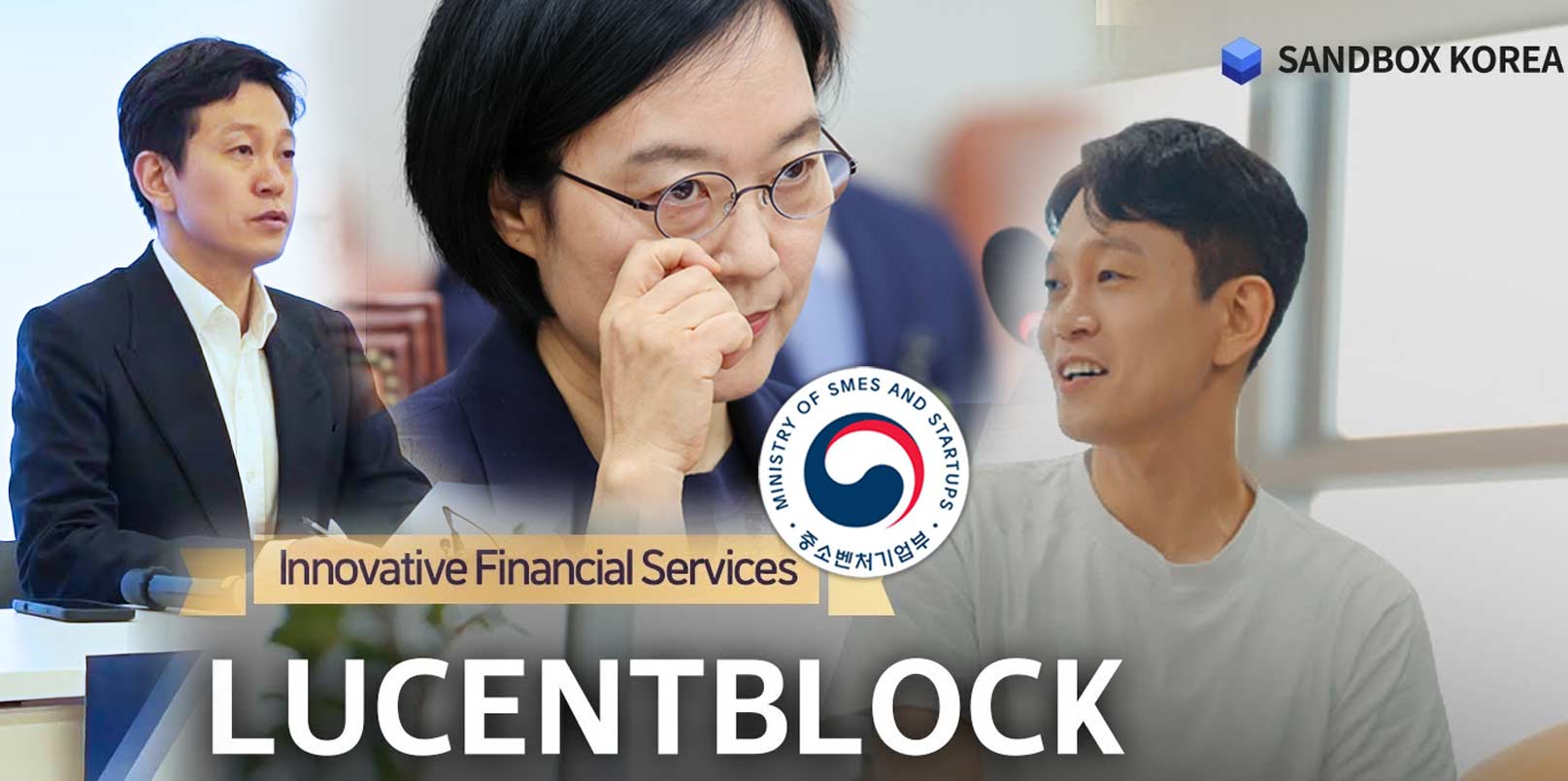
Korea’s Minister of SMEs and Startups Han Seong-sook has personally stepped in to address growing concerns over the Lucentblock dispute, marking a rare instance where a sitting minister intervenes directly in a startup–institution conflict.
According to multiple government sources, Han convened a high-level discussion forum that included Kim Yong-beom, Chief of Policy at the Blue House, alongside senior officials from the Financial Services Commission (FSC), Financial Supervisory Service (FSS), and Fair Trade Commission (FTC).
Participants reportedly discussed adjustment measures aimed at resolving issues surrounding the preliminary licensing process for tokenized securities (STO) trading platforms.
During the January 20 Cabinet meeting, President Lee Jae-myung asked for an update on the matter. Kim Yong-beom confirmed,
“Minister Han led the discussion and produced a partial adjustment plan.”
Though Lucentblock was not explicitly named in the session, officials later confirmed that the minister had personally ordered a review of the case under the SME Ministry’s jurisdiction.
Lucentblock: How Korea’s Sandbox Success Became Its Policy Test
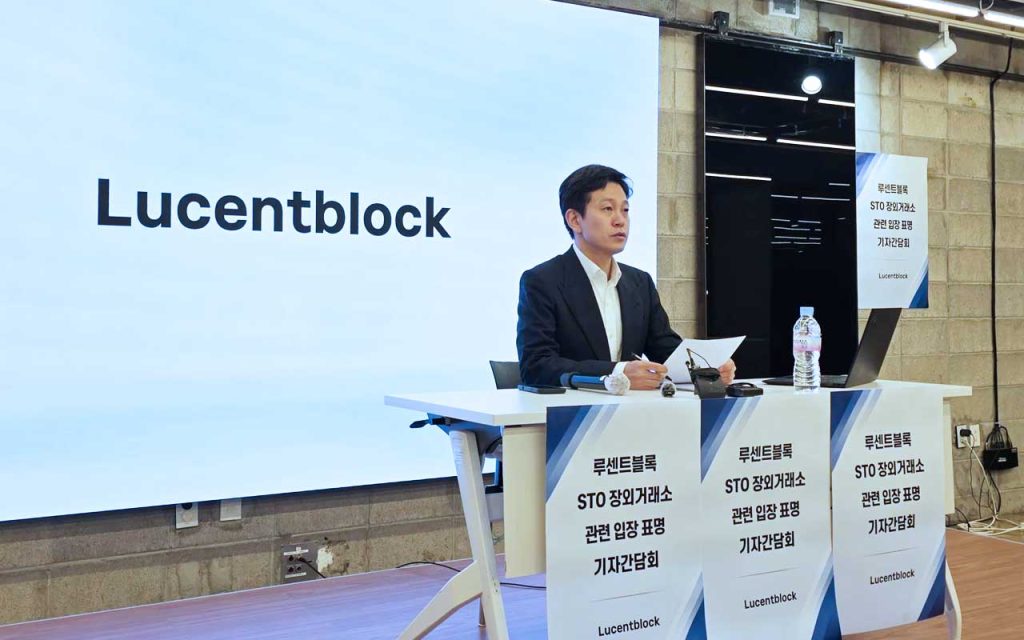
Lucentblock had been one of the first fintech startups approved under Korea’s Financial Innovation Sandbox in 2018. It spent seven years operating a fractional investment platform for tokenized real estate securities, amassing over 500,000 users and issuing approximately KRW 30 billion in tokenized assets.
Its case became emblematic of how Korea’s sandbox could help startups validate new business models under controlled regulatory environments. Yet, as the FSC moved to institutionalize STO trading, startups like Lucentblock found themselves competing against financial consortiums with no prior operational record—notably, the Korea Exchange–Koscom (KDX) and NexTrade–Musicow (NXT) alliances.
The decision to prioritize these large players triggered a backlash across the startup ecosystem. Founders and legal experts argued that the system had failed to define what it means for a startup to “graduate” successfully from the sandbox.
Stakeholder Statements and Reactions on the Lucentblock Dispute
During the Cabinet meeting, President Lee Jae-myung emphasized that licensing procedures must be handled with full transparency and fairness:
“There are many doubts and concerns about the approval process. What matters is ensuring that it is transparent, fair, and clearly explained, so that even those not selected can accept the outcome.”
Minister Han Seong-sook noted the systemic gap that Lucentblock’s experience had revealed:
“Our sandbox model differs from others. Even after four years of successful operation, startups must be re-evaluated from scratch to continue their business. We need to redefine what successful graduation means and redesign the system altogether.”
Lucentblock itself issued a statement criticizing how the process undermined the spirit of innovation:
“We endured years of regulatory uncertainty under FSC guidance, proving the market’s viability. Yet the honor of being a pioneer has turned into a struggle for survival.”
Ecosystem Analysis: Startup Protection and Institutional Power in Transition
The Lucentblock case has reignited debate over how public institutions and private innovators coexist within Korea’s regulatory architecture.
While the sandbox system was designed to foster experimentation, its lack of a structured exit framework has left early pioneers exposed once large institutions enter the same markets.
Policy experts note that this imbalance mirrors structural patterns in other innovation sectors—where publicly linked entities replicate and dominate markets first proven by startups. This dynamic threatens the credibility of Korea’s Third Venture Boom and risks deterring venture capital inflows into regulated innovation fields like fintech, tokenized assets, and AI-driven finance.
Furthermore, the Lucentblock–NXT conflict, involving allegations of confidential data misuse, has underscored the need for stronger IP protection mechanisms—a policy area Seoul has pledged to tighten following the government’s proposal to raise penalties for technology theft.
Balancing Rapid Market Formalization with Innovation Governance Credibility
Korea’s regulatory sandbox was once showcased across Asia as a model for innovation governance. Yet the Lucentblock incident highlights a key vulnerability: policy success at the experimental stage does not guarantee systemic fairness at the institutional level.
For global investors and founders, this moment reflects Korea’s ongoing challenge—balancing rapid market formalization with the credibility of its innovation governance.
If the current policy redesign succeeds, Korea could restore confidence in its startup protection system and reinforce its role as a regional hub for digital finance and venture innovation.
A Redesign That Could Define Korea’s Third Venture Boom
The SME Ministry’s intervention signals a turning point in how Korea treats its most compliant innovators. By reopening discussions and acknowledging the sandbox’s structural flaws, Seoul is preparing to rebuild trust between regulators, startups, and investors.
For now, the decision on fractional STO trading license is still delayed, but what comes next will determine whether the country’s Third Venture Boom is remembered as a phase of institutional maturity—or as the moment Korea learned that innovation must not only be regulated but protected.
– Stay Ahead in Korea’s Startup Scene –
Get real-time insights, funding updates, and policy shifts shaping Korea’s innovation ecosystem.
➡️ Follow KoreaTechDesk on LinkedIn, X (Twitter), Threads, Bluesky, Telegram, Facebook, and WhatsApp Channel.
Source link