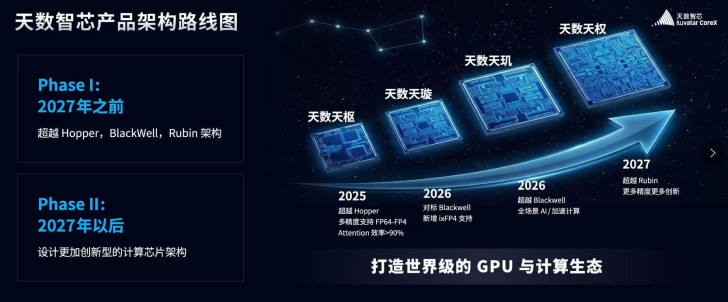
One of China’s AI chip startups, “Iluvatar CoreX”, has unveiled a rather optimistic roadmap that aims to achieve parity with NVIDIA’s Vera Rubin in a few years.
China’s Iluvatar CoreX Plans to Offer Proprietary Architecture That Rivals Vera Rubin in Performance By Next Year
China has been racing with the West to gain hands-on compute capabilities, either through domestic means or methods such as rental services or chip smuggling. Considering that the nation is a huge part of the AI race, there have been various efforts made by the likes of Huawei, Moore Threads, BirenTech, and many others to provide Chinese hyperscalers with “effective” domestic technology, and now, based on a report by MyDrivers, it is claimed that a new startup has emerged with bold plans. Iluvatar CoreX intends to compete with NVIDIA’s Blackwell this year, and with Rubin by next year.
Iluvatar CoreX is claimed to be China’s first “HPC-oriented” company, unlike competitors, which are focused on both consumer and AI sectors. The report doesn’t specifically mention how the company intends to compete with the world’s largest AI infrastructure provider, aside from noting that it will have a native architecture under the “Tianshu Zhixin” lineup. The company already offers solutions claimed to match NVIDIA’s Ampere lineup, such as the TianGai-100 and TianGai-150, but information about them is limited.
This isn’t the first time a Chinese company has pledged to rival NVIDIA’s Vera Rubin AI lineup; we’ve seen similar claims from Huawei as well. The firm’s upcoming Atlas 950 and Atlas 960 ‘SuperPoDs’ are known to offer a high-density rack solution, mounting up to 8,192 Ascend 950 AI chips, and, courtesy of this arrangement, Huawei has pledged to compete with NVIDIA’s Vera Rubin NVL144 configuration. These claims certainly look fascinating, but before you factor in power constraints and thermal requirements, we won’t go into that debate for now.
The key bottleneck for Chinese AI chip startups is the lack of a semiconductor ecosystem that could put them on par with Western options. Sure, they might come up with attractive architectures, but without sufficient production capabilities, the ideas remain confined to PR purposes.
Follow Wccftech on Google to get more of our news coverage in your feeds.
Source link