In the heart of San Francisco’s Design District lies a new R&D lab, full of circuit boards connected to giant, electric vehicle batteries.
The lab belongs to Redwood Materials, a startup that recycles used EV batteries for second-life use. And they’re expanding their operations to providing grid energy storage to AI data centers.
Marketplace’s Meghan McCarty Carino recently visited the lab as part of our AI infrastructure series this week and spoke with Colin Campbell, chief technology officer at Redwood, about the startup’s recent expansion into the AI economy.
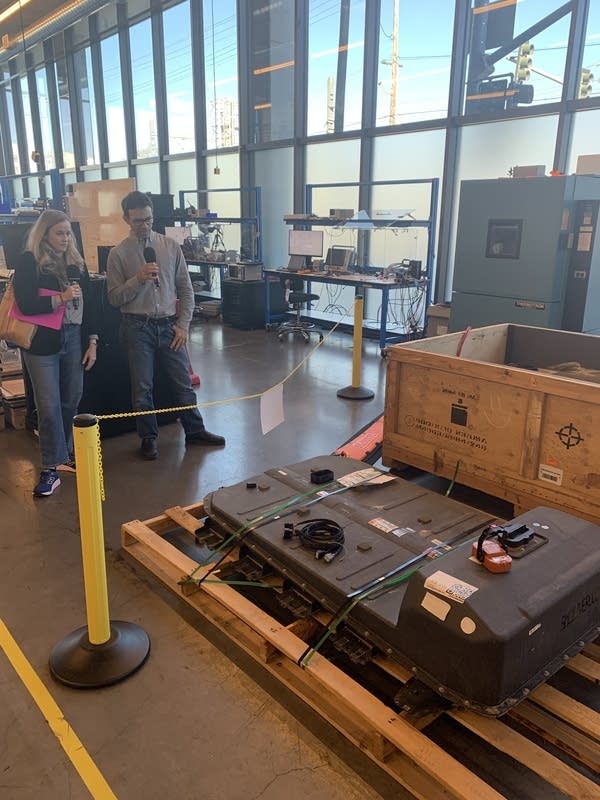
Marketplace’s Meghan McCarty Carino (L) and Redwood Materials CTO Colin Campbell (R) look at a used electric vehicle battery at Redwood’s R&D Lab in San Francisco, CA. Redwood recycles used EV batteries for second life use and has expanded into offering off-grid, energy solutions to AI data centers.
Daniel Shin/Marketplace
AI companies and their massive data centers are trying to tap as much power as possible while they face pushback from communities worried about downstream effects, like higher electricity bills.
“The thing that really distinguishes the AI companies that they really want to move fast and building battery storage coupled with renewables is often much faster than interconnecting to the grid or building natural gas turbines so we can be the first movers,” Campbell said.
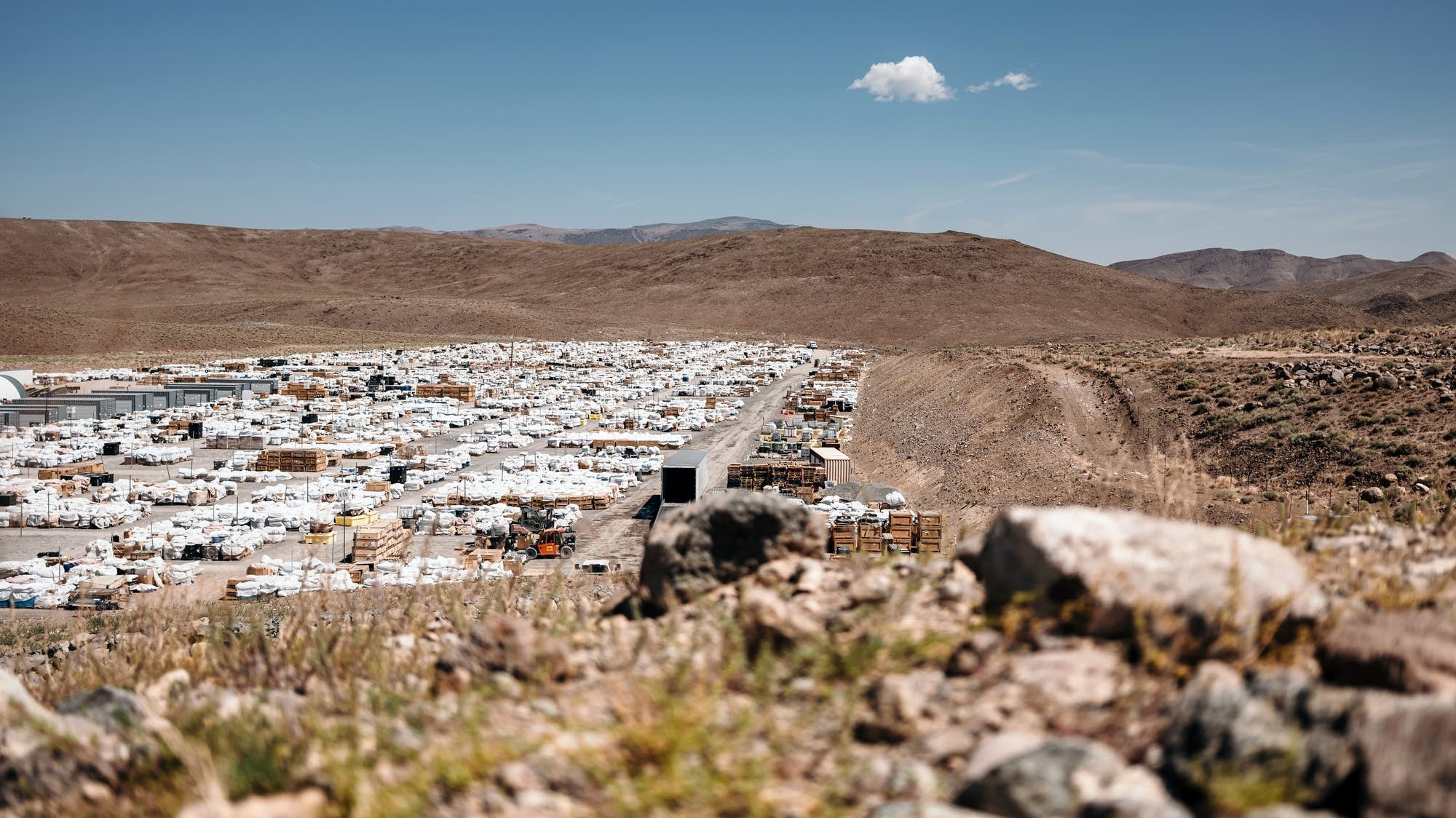
And last year, Redwood successfully activated a large-scale, EV battery grid in Nevada specifically to power a local data center.
What that is, is 60 megawatt hours and 12 megawatts of reused electric vehicle batteries powering a data center completely disconnected from the grid,” Campbell explained. “So the electricity is provided by a solar array, and we can run it 24/7, just using these reused batteries and electricity from the sun, it only took us four months to build.”
Larger data centers need much more than just twelve megawatts but Nvidia, the multi-trillion-dollar chipmaker recently invested into the startup.
“So this is really just engineering production here, but it’s the beginnings of what will eventually be a 10-gigawatt-per-year manufacturing line that we will most likely site out at our facility in Nevada to be able to mass produce this thing in a way that’s industrially relevant for the world,” Campbell said.
But does this business model work without this surge of demand from AI data centers?
“It does work without the AI surge,” Campbell said. “The AI customers are really excited, they want power fast, and we are in a position to do that, but we can absolutely sell into all of the things that grid, scale, energy storage is sold into today and we do have those customers. They’re just a little more measured, a little slower to get going.”