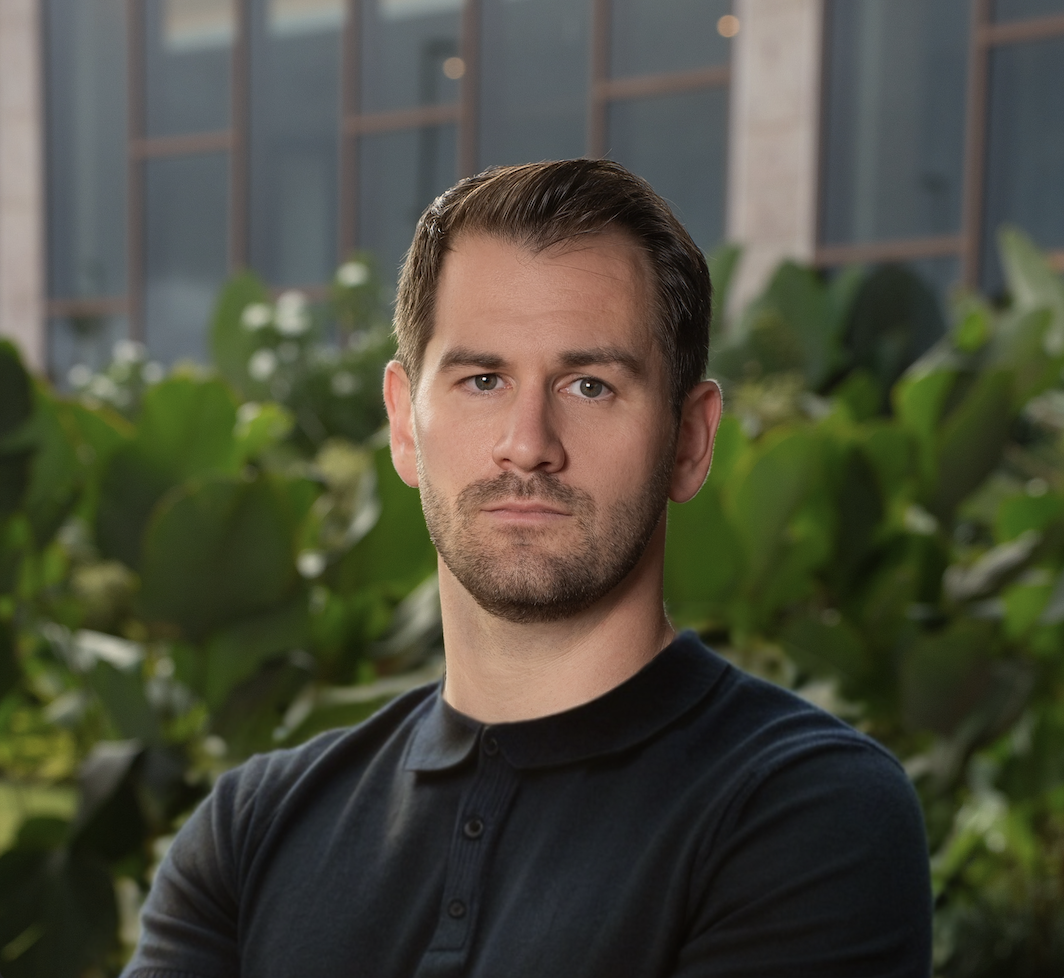
Aiming to move “money as freely as data,” OpenFX is quickly expanding worldwide, now handling more than $3 billion a month in foreign-exchange transactions and boosting its presence in Miami and across the Americas.
The financial-infrastructure company just added Catherine Kaupert, a former executive with Colombia’s delivery heavyweight Rappi as its head of new business for Latin America. From Miami, she’s building a network of remittance companies, neobanks and other partners across Latin America to help make foreign-exchange transfers faster and cheaper.
OpenFX is the brainchild of serial entrepreneur Prabhakar Reddy, who earlier co-founded digital-asset broker FalconX. The venture launched in 2024, and last year, announced $23 million in funding in a round led by California-based Accel. It now employs more than 75 people worldwide, with regional hubs in Miami, London, Bangalore, Singapore, and Dubai, said Harrison Mann, who leads global growth from Miami.
“It’s important for us to have regional hubs, because our clients are trading 24/7/365, so we have to be able to support and move with our clients at all times,” said Mann from his office in downtown Miami.
OpenFX provides infrastructure for fintechs and other companies to move currencies across borders, perhaps sending euros to someone receiving Mexican pesos. It bypasses traditional correspondent-banking channels that rely on the Swift settlement system begun in the 1970s. Instead, it leverages “stablecoins,” digital currencies on the blockchain that have a stable value, pegged 1-to-1 to the U.S. dollar. Its solution cuts out layers of middlemen, slashing processing time and costs, Mann said.
“This is a technology that allows the benefit of settling cross-border transactions in three hours, instead of two to seven days,” said Mann. “We’re up to 99 percent faster and 90 percent cheaper than standard solutions.” Its infrastructure builds on two tech advancements made in the past few years: quicker domestic-payment systems in many nations, such as Fedwire in the US, and greater adoption of stablecoins, facilitating money transfers between countries, Mann said.
OpenFX founder Reddy knew first-hand the need to innovate in foreign-exchange. He was born in India, raised in Dubai, went to Harvard Business School and worked in Silicon Valley, often sending or receiving money between nations.
Reddy and Mann met in California, when they worked together at FalconX. Reddy left to Dubai for family reasons, and Mann moved to Miami to work with a neobank. In late 2024, Mann visited Reddy, learned about OpenFX, and suggested the new venture develop a Miami hub for the Americas.
“Miami is a great arbitrage for attracting talent. New Yorkers are very receptive to moving to Miami, if you can properly, recruit, hire and entice,” Mann said. “Also, because we work in foreign exchange, many of my clients are Latin America-focused. Some of the biggest markets I support are the Mexican peso, Brazilian real, Colombian peso, and Argentina peso. So, having the gateway access from Miami into Latam countries keeps me closer to my customers.”
Mann now has some 10 people working remotely in the Miami hub. He has signed for office space at One Biscayne Tower in downtown Miami to unite the burgeoning group. Additional hiring will depend on how much OpenFX can grow and how fast diverse countries in the Americas adopt stablecoins for business. “Argentina is actually very fintech forward, very crypto forward, driven by the hyperinflation they’ve experienced and the desire to move the Argentine peso into a stablecoin,” said Mann. Colombia instead tends to be more relationship-driven, because it “hasn’t felt that same pain of hyperinflation.”
The potential for expansion is huge. Worldwide, the volume of cross-border payments now tops $44 trillion per year, and the market keeps increasing, thanks to rising international trade and e-commerce, studies show. Most transactions still use traditional bank channels. Says Commerce Ventures, a California-based venture-capital firm with a focus on financial services, “stablecoin infrastructure providers are well-positioned to capture outsized, durable value.”
Mann took an unconventional path to lead global growth at OpenFX. He earned his bachelor’s in systems engineering at the U.S. Military Academy at West Point and served for years as an Army officer. He has helped two fintechs in California reach valuations topping $1 billion each: Affirm and FalconFX.
READ MORE IN REFRESH MIAMI: