Article Content
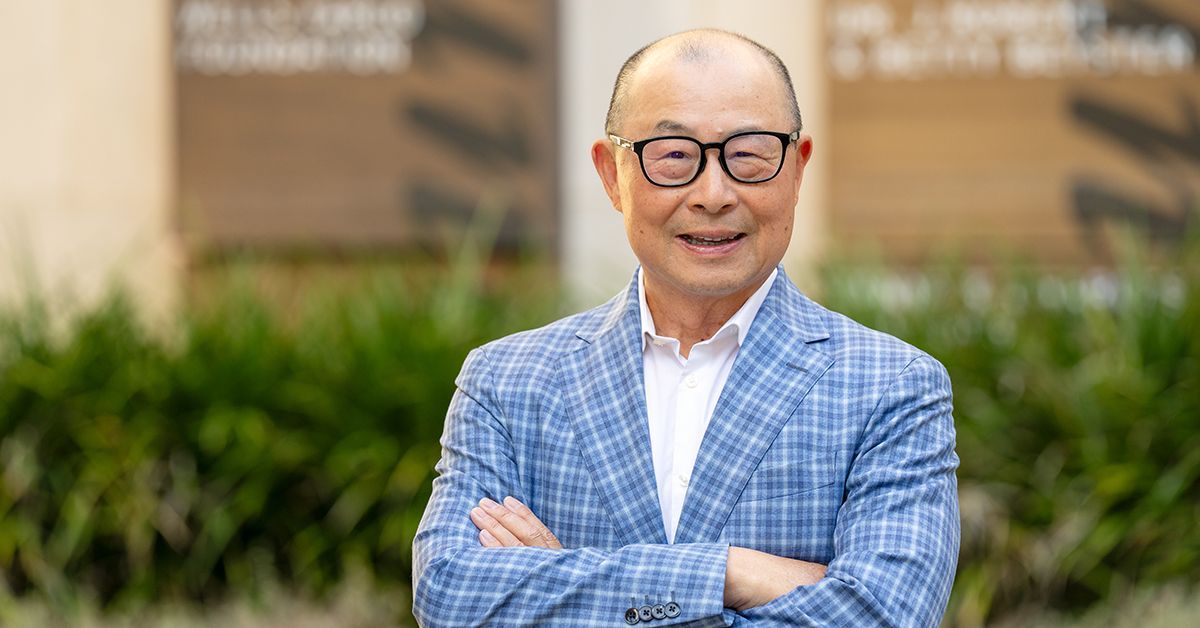
Daniel Chang, the newest Professor of Practice at the University of California San Diego’s Rady School of Management, knows that entrepreneurs need more than an interesting idea to build a business. They need a real customer problem to solve, the courage to hear “no” early and often, and the operational rigor to turn vision into execution. That founder’s reality — where learning, selling and building happen at the same time — is what Chang plans to bring into the classroom and into mentoring conversations with Rady School students. After decades of building in industry, Chang says he’s shifting his focus to education not as a traditional academic scholar but as a practitioner — bringing real-world entrepreneurial experience and industrial judgment into the university to serve society.
Chang founded AEM in San Diego after starting as a one-man consulting operation in a 1,000-square-foot office in 1988 and grew it into a global electronics manufacturing business with nearly 600 employees worldwide, dozens of patents and products used in everything from cellphones and televisions to satellites and major EV brands. The company’s growth was recognized nationally when AEM was named among Inc. Magazine’s “America’s Fastest Growing Private Companies” three times in the 1990s. This scale story is rooted in deep technical expertise. Chang’s engineering training began in China’s first post-1978 national entrance exam cohort (Class of 1978), where only three students nationwide were admitted to his materials specialization. Chang had already earned a master’s degree in ceramic engineering from South China University of Technology, second master’s degree in materials science from University of Southern California (USC) and went on to work as a scientist/Group Leader at Philips and later at Kyocera as senior engineer in San Diego, before striking out on his own.
AEM went on to carve out a dominant position in circuit protection for high-reliability and aerospace markets — its high-reliability fuses are used by NASA and major satellite and spacecraft manufacturers worldwide. Chang retired from day-to-day operations after AEM was sold in 2021 and has remained chairman of the board. Along the way, Chang and his team commercialized several original inventions — technologies that have been applied across communications, consumer electronics, automotive electronics, energy systems and medical devices.
As a Professor of Practice, Chang will bring that founder-to-scale operator perspective to Rady where he will give guest lectures, seminars and hands-on mentorship. He will actively support the Sullivan Center for Entrepreneurship and Innovation, the Institute for the Global Entrepreneur and other campus innovation initiatives with a focus on venture creation, scaling and marketing strategy, product innovation as well as R&D management and investor perspectives — all while strengthening ties between Rady and the region’s entrepreneurship ecosystem.
Chang sat down with University Communications to discuss the lessons he’s learned, what he looks for in early founders and how he hopes to help the next generation of Tritons build companies that last.
If you could give early-stage founders just one “starting framework,” what would it be?
My view is very simple: don’t start by talking about your product, your technology, or fundraising — and certainly not about scaling.
The first step in entrepreneurship is to clearly understand what market you are entering, what the real demand in that market is and what pain points your customers are actually experiencing. And that alone is still not enough. You must also understand what your customers truly need.
Entrepreneurship is not about showcasing what you can build. It is about solving real pain points in a way that creates higher quality and greater value. Only after new value is genuinely created does it make sense to talk about how that value — and the resulting profits — can be shared with customers.
But the work does not stop there. Founders must also ask a second question: what resources do I have that allow me to position myself correctly in the market and actually capture and sustain that value?
What’s the most common mistake you see young entrepreneurs make — and what should they do instead in the first 6-12 months?
One of the most common issues I see is that many young entrepreneurs simply do not know what they should be doing during the first six months to a year.
A lot of people believe that having a technology — whether invented themselves or acquired — or having a product, a design, or an idea is enough. It is not.
During the first 6–12 months, the most important task is to clearly and objectively write a business plan. This is not a document for investors — it is a tool for the founder to understand reality.
When founders say they’re ready to scale, what has to be true before they should pour fuel on the fire?
In high-tech manufacturing, products and technology must already be broadly accepted by the market.
Before expanding production, founders must understand yield, cost structure, break-even point, and profitability thresholds. From my experience, only when there is at least a 50% level of confidence in these core parameters does it make sense to scale.
Why do you mentor — what do you personally get out of it, and what do you hope students gain from working with you?
Mentorship is a natural extension of more than three decades of entrepreneurship. In the early 1990s, I co-founded the US China Entrepreneur Association (UCEA) in San Diego, helping startups grow through shared experience and resources and building an entrepreneurial community that continues to this day.
I believe in guiding students with structure and perspective, not forcing outcomes. The return is not transactional — it is internal and lasting.
What are you most excited about joining the Rady School and larger UC San Diego community?
What excites me most is the opportunity to share real-world entrepreneurial experience and continue validating that entrepreneurship is a process that can be understood and taught.
I approach education from a practitioner’s perspective—helping students see entrepreneurship as something that can be analyzed, learned and validated and connecting education with real-world business practice.