Korea’s H2O Hospitality Finds Its Place in the UAE’s Stablecoin Revolution – Korean Tech Is Becoming Global Infrastructure – KoreaTechDesk | Korean Startup and Technology News
In a region racing to redefine digital finance, Korea’s quiet entry into the UAE’s stablecoin experiment reveals more than collaboration—it signals migration of fintech expertise from Asia’s innovation labs to the world’s financial frontlines. As governments test blockchain for real economies, Korean startup H2O Hospitality now stands beside global titans like Mastercard and BlackRock in designing tomorrow’s monetary infrastructure.
Korea’s H2O Hospitality Selected for UAE’s National Stablecoin Project
South Korea’s hospitality technology firm H2O Hospitality has been officially named a partner in the United Arab Emirates’ ADI Foundation, the sovereign blockchain initiative developing the nation’s dirham-based stablecoin payment infrastructure.
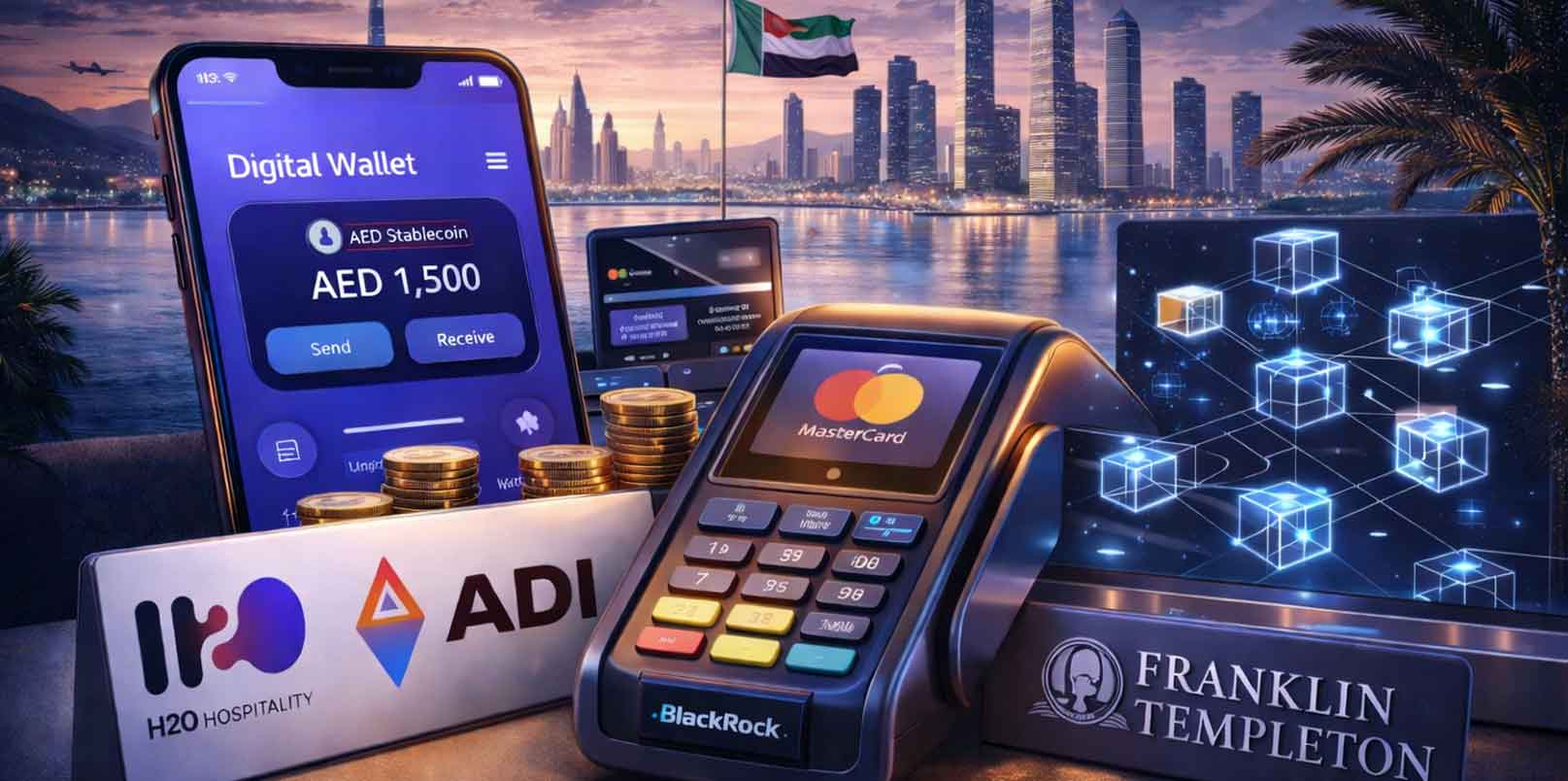
H2O joins Mastercard, BlackRock, and Franklin Templeton in the pilot phase of what is described as the UAE’s National Proof-of-Concept (PoC) for regulated stablecoin usage.
Under the partnership, H2O will integrate its smart check-in platform with the ADI mainnet, allowing travelers to download a digital wallet during hotel registration and complete transactions using the upcoming AED-backed stablecoin.
The ADI Foundation—founded by Sirius International Holding, a subsidiary of the Middle East’s largest conglomerate IHC—aims to connect one billion people to the digital economy by 2030. Its mandate: to test and deploy blockchain-powered settlement that can coexist with existing banking and regulatory systems under state supervision.
H2O CEO Lee Woong-hee said,
“The UAE’s attempt to combine tourism and stablecoin infrastructure is a real-world testbed for global fintech innovation. We aim to set new precedents at the front line of this change.”
Why This Partnership Signals More Than a Tourism Experiment
The collaboration is not merely about integrating blockchain into travel payments. It represents a strategic intersection of fintech, sovereign policy, and institutional finance.
H2O’s participation effectively places a Korean startup within the core layer of a national digital currency system designed in collaboration with global asset managers and payment networks.
While Korean regulators continue to debate the Digital Asset Basic Act, which would allow local stablecoin issuance, the UAE has moved directly to pilot state-supervised deployment. This difference in pace illustrates an emerging regional shift: Asian economies are no longer waiting for U.S.-led infrastructure models but are building independent compliance-based systems to govern tokenized finance.
For Korea, H2O’s inclusion in the ADI project demonstrates how Korean-born digital platforms are evolving into operational infrastructure abroad, especially where domestic regulatory environments remain cautious.
The Structural Friction: Korea’s Slow Policy, Global Acceleration
South Korea’s own stablecoin framework—still under legislative review—has sparked prolonged debate between the Bank of Korea, which favors bank-led issuance, and the Financial Services Commission (FSC), which supports shared access for fintechs.
In contrast, the UAE’s “proof-before-policy” model allows experimentation under controlled national supervision, balancing innovation with systemic oversight.
This divergence reveals the structural tension shaping Asia’s digital finance map:
Korea is emphasizing regulatory safety before scalability,
The UAE is prioritizing institutional interoperability before market restriction.
H2O’s cross-border role highlights what many Korean fintechs privately admit—global validation often comes before domestic acceptance. Korean innovators are increasingly using overseas pilots to demonstrate compliance maturity and technical capability that later strengthens their position at home.
How the UAE’s Stablecoin Pilot Turns Tourism into a Real-World Fintech Sandbox
Practically, the partnership allows the first real-world integration of blockchain-based payments in a regulated tourism environment. The digital wallet flow—from check-in to payment—serves as a sandbox for financial identity, programmable settlement, and compliance automation.
However, this does not yet equal commercial rollout. The ADI project remains in the proof-of-concept stage, and wide-scale issuance of dirham stablecoins requires ongoing regulatory validation. It also depends on user trust, cross-border interoperability, and merchant adoption—challenges that no consortium, even one involving BlackRock and Mastercard, can solve overnight.
Still, the symbolic shift is profound: H2O’s role shows how fintech platforms can become intermediaries between institutional liquidity and consumer applications, positioning tourism as a gateway for stablecoin mainstreaming.
Why Korea’s Role in the UAE Stablecoin Network Matters to Global Investors
For global investors, the project marks a turning point in how sovereign and private infrastructures intersect. The UAE is modeling a “supervised innovation zone” that integrates both traditional banks and fintech firms under unified compliance layers—a structure other nations may emulate.
As for Korean policymakers, the development underscores a challenge: domestic regulation must evolve fast enough to keep Korean innovation competitive abroad. H2O’s selection is both a national achievement and a subtle warning—Korea’s fintech potential is being realized offshore first.
Meanwhile for international founders and funds, the UAE’s ADI initiative demonstrates how digital currency, tokenized assets, and travel payments are converging into a single operational stack. It is a glimpse into how blockchain adoption may unfold—not through speculation, but through regulated, institutional-grade use cases.
From Policy Debates to Deployment: Korea’s Fintech Finds Global Ground First
The story of H2O’s partnership is not about one startup’s global win—it is about where fintech infrastructure is being built.
While Korea debates rules, its innovators are already helping foreign governments design compliant financial systems. The UAE’s experiment shows that the next chapter of digital money will not be written in theory but tested through functioning ecosystems where tourism, policy, and finance meet.
And Korea’s role in that experiment just became visible.
Key Takeaway: Korea H2O Hospitality – UAE Stablecoin Partnership 2026
Project: UAE’s ADI Foundation selects Korea’s H2O Hospitality as blockchain payment partner.
Participants: Mastercard, BlackRock, Franklin Templeton, IHC, and First Abu Dhabi Bank (FAB).
Technology Role: H2O integrates smart check-in with ADI mainnet for AED stablecoin wallet payments.
Policy Context: National Proof-of-Concept to test government-issued stablecoin functionality.
Strategic Meaning: Korea’s fintech capabilities are being validated abroad amid slow domestic regulation.
Global Signal: Tourism becomes a proving ground for compliant stablecoin infrastructure in regulated economies.
Access Denied You don’t have permission to access “http://www.business-standard.com/companies/news/nexus-raises-700-million-fund-to-back-ai-consumer-fintech-startups-125120401049_1.html” on this server. Reference #18.bd8e1402.1764958918.430f7cdd https://errors.edgesuite.net/18.bd8e1402.1764958918.430f7cdd Source link
NextGen Digital Platforms Inc., a publicly listed digital asset company focused on bridging traditional finance with decentralized Web3 technologies, has…