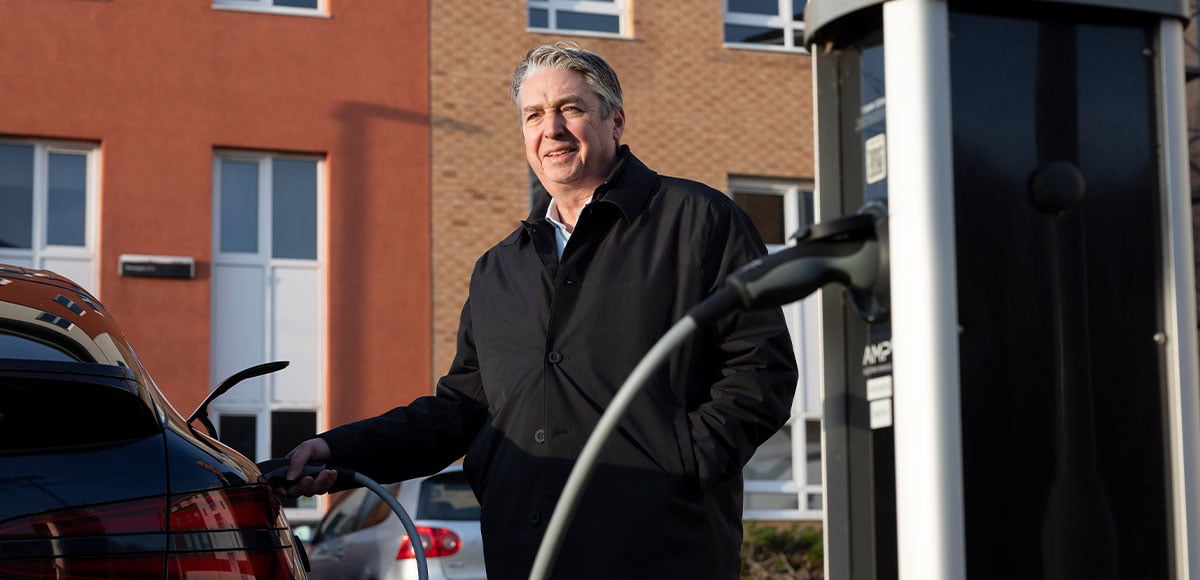
Serial entrepreneur Michael Gibson is CEO – or ‘Chief Explorer of Opportunities’ – of Fuuse, an electric vehicle charge point management specialist which continues to double in size each year, and has raised over £18 million of investment since receiving support from Connected Places Catapult.
“Make sure you’re ready for the journey,” offers Michael Gibson by way of advice to other professionals building a business. “This isn’t an ego trip; it’s about creating something of value. It’s never anything but hard work, but it has to be.”
Within a decade, Michael and colleagues from Fuuse have created a successful software business that employs 80 staff and counts Toyota, United Utilities, and Warburtons among its clients.
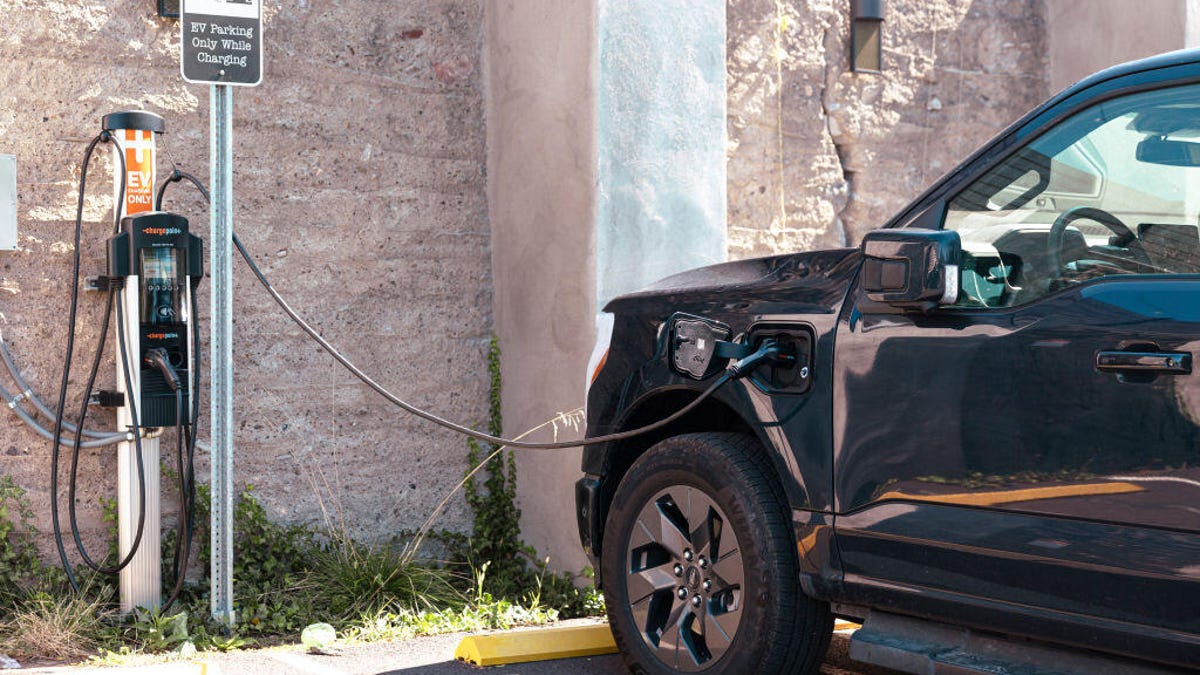
Services include helping employers manage the charging requirements of staff at the workplace, handling payments for charging, promoting chargers to 1.4 million drivers, and allowing charge point operators to better manage their power needs and reduce the potential of outages.
The company also offers driver support services, a payment management system that advises on the most cost-effective time to charge, and provides a means of compensating employees for charging company vehicles at home as well as when using public and workplace chargers.
Fuuse manages over £18 million of payments for customers each year and is used by around 500,000 drivers. Within 10 years, the company has raised £18.7 million of funding through venture capital – including a £6 million raise last summer – and has “typically doubled in size for each of the last four years”. Last year, the firm was named by advisory firm GP Bullhound as the 14th fastest growing technology firm outside London and the South East.
Six years ago, Miralis Data – the forerunner to Fuuse – took part in the Transport Research and Innovation Grants programme delivered by Connected Places Catapult on behalf of the Department for Transport. It developed an online tool to determine how ready drivers are to transition from petrol and diesel vehicles to electric. Off the back of that work, the company produced an app and dashboard to show the likely impact that switching to electric vehicles would have in terms of emissions and financial cost.
“The learnings we took from the Catapult, such as how best to pitch to potential clients, were incredibly valuable and helped shape what we did in the future,” he says. “We also got a better understanding of the needs of the market and how people and fleet managers use electric vehicles, and were introduced to the Energy Savings Trust who we worked with to come up with a solution.”
Advising on where and when to charge
Michael says drivers of petrol or diesel vehicles are often acutely aware of the price difference between forecourts, despite a marginal variation. But for electric vehicle drivers, the need for cost certainty is greater: charging can cost as little as 7p a kilowatt hour at home, but as much as 90p on the road.
And while home charging is often cheaper, many homeowners do not have a driveway. Charging at work (for a slight premium, and managed by the platform) is promoted by Fuuse, with employers able to apply for a grant covering the cost of installing infrastructure. Employers keen to track the sustainability of commuting can obtain data from the company showing the emissions saved when staff switch to electric vehicles.
“Our overwhelming aim is to create the best possible charging experience, and fundamentally we’re trying to help create a larger market for electric vehicles,” Michael says. “As a startup, it’s important to explore ideas and opportunities. But as you scale-up, you need to strike out into areas where others aren’t operating, to be at the forefront of what you do.”
He also predicts a near future where vehicles charged overnight will be used to provide power to houses during peak hours, or in times of emergency.
A shrewd businessman
Essex-born Michael has been based in Lancashire since childhood, and studied politics and philosophy at the University of Ulster. When living in the seaside town of Morecambe, casual jobs included working as a bingo caller, in a fish and chip shop and managing deck chairs, to “find any way of making extra money”. He would also buy large volumes of books at auction; typically picking up a box for a pound. “I knew lots of book dealers and every now and again, I found a gem and have a few books worth thousands. I wasn’t necessarily led by the money; it was the fascination with how a market operated.”
After university, he headed to London to work in advertising sales. He remembers cold calling, getting rejected and learning to deal with rejection. “It was a hard game, but the people I met in those early years are still friends. It provided an education in understanding buyer appetite.”
Michael moved around several publishing sales jobs before an old colleague asked if he wanted to join him in a new business. Michael asked to be part of the management team and become a shareholder; “I wanted to be part of that journey, and didn’t want to work for anybody any longer.”
Their company, Hillgate Communications, secured the publishing rights to a magazine called Internet World and doubled its revenues in a year. “We did whatever we could to get the title, and turned it into a massive revenue generator, giving the founders an opportunity to exit.”
Michael started the first of several new businesses and became a consultant for a mergers and acquisitions company. Reflecting on his early career, he says: “You don’t climb the ladder unless you’re good at something, or people perceive you to be. But you never stop learning. If you think you know it all, good luck to you because you’re never going to go very far.”
He later helped a bathrooms company take advantage of a Government growth accelerator to turn the business around. It succeeded and they offered him a stake in the firm. Michael was later appointed founding chair and director of Digital Lancashire to help other tech entrepreneurs, and today works in an innovation hub backed by Lancashire County Council that he helped secure funding for.
“There have been a huge number of start-ups in Lancaster who do incredibly well,” he notes. Michael has also helped under-privileged people to secure jobs in technology and is a trustee of two youth organisations. “I believe fundamentally in giving back.”
He likens his journey to that of a mountain climber. “You’re leading a team and don’t know which route is the best, or even where the summit is. But you want to look down and say: ‘Look what we’ve achieved’. But you also have to constantly look at the mountain and ask: ‘Where next and what’s the best route to get there?’
For more startup news, check out the other articles on the website, and subscribe to the magazine for free. Listen to The Cereal Entrepreneur podcast for more interviews with entrepreneurs and big-hitters in the startup ecosystem.