Bangladesh must strategically align artificial intelligence (AI), circular economy practices, and sustainability goals to remain competitive in a changing global landscape, experts said today.
They warned that technology alone will not ensure sustainability without strong institutions, research-driven reforms, and effective implementation.
“We have strong local data and research, but we fail to use them effectively. Instead of copying foreign models and adding more laws, we need context-specific, evidence-based policymaking,” said AK Enamul Haque, director general of the Bangladesh Institute of Development Studies (BIDS).
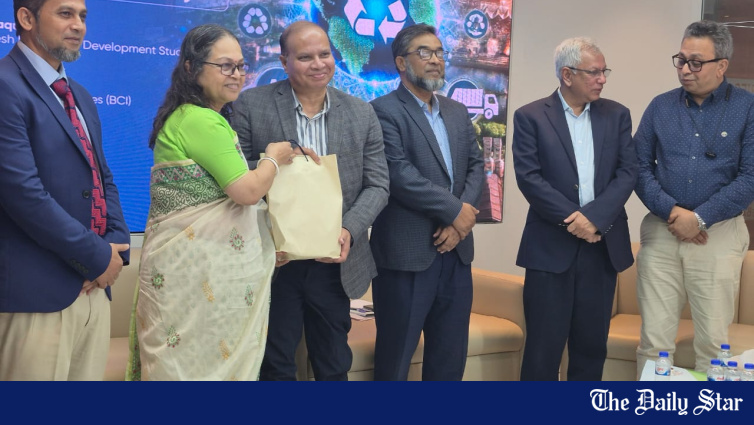
He was addressing a seminar titled “Integrating Artificial Intelligence, Circular Economy and Sustainability” organised by the Bangladesh Chamber of Industries at its office in Dhaka’s Tejgaon.
Haque said Bangladesh already has strong data on waste management, but policymakers often fail to use or integrate it effectively.
“Laws alone will not solve problems,” he said, pointing to dysfunctional traffic systems in Dhaka despite regulations.
Instead, he argued for behavioural solutions, such as redesigning buses with platform-level doors to reduce unsafe roadside stops.
On AI, Haque urged caution, noting that many AI firms remain unprofitable and energy-intensive. He emphasised that AI cannot replace human values or consciousness and should be applied strategically for efficiency.
Md Moniruzzaman, professor at the Bangladesh Institute of Governance and Management (BIGM), underscored the urgency of integrating economic growth with sustainability to design a resilient future.
He highlighted the interconnected relationship between the environment, society, and business, stressing that circular economy principles must guide policy and practice.
He pointed to a growing mismatch between education and employment, citing his experience on a Public Service Commission viva board where an engineering graduate from Bangladesh University of Engineering and Technology, extensively prepared for foreign service, reflected broader questions about the effective use of specialised expertise.
Moniruzzaman emphasised viewing waste as a resource, ensuring safe disposal throughout a product’s life cycle, and strengthening oversight of industrial pollution.
Nawshad Mustafa, director of the SME and Special Programmes Department at Bangladesh Bank, highlighted how a mix of regulatory pressure and financial incentives is helping drive sustainable practices in industry.
Mustafa emphasised that businesses are primarily profit-driven. “Without enforcement on one side and financial incentives on the other, good practices will not be adopted,” he said.
Since 2020, banks have also been assessed through sustainability ratings integrated into supervisory evaluations, he added.
However, implementation gaps remain. He cited delays in operationalising the Movable Collateral Registry Act, passed in 2023 to support small entrepreneurs, as an example.
SM Zulfiqur Ali, research director at BIDS, highlighted serious mismatches in Bangladesh’s labour market, drawing on recent tracer studies.
He said nearly 30 percent of National University graduates remain unemployed, while many others work in jobs unrelated to their academic training.
Both vertical mismatch—graduates working below their qualification level—and horizontal mismatch—working outside their discipline—are widespread.
Ali stressed the need to align education with industry demand, strengthen digital infrastructure and data systems, and promote coordinated policy reform.
Mohammad Shahab Uddin, director of the Office for International Affairs at the University of Chittagong, underscored the transformative potential of integrating AI with circular economy principles at the seminar.
Drawing on his presentation, “Integrated Artificial Intelligence, Circular Economy, and Sustainability”, he highlighted how global environmental crises—including climate change, plastic pollution, and biodiversity loss—demand innovative, technology-driven solutions.
He said Bangladesh, already a global leader in green garment factories with widespread LEED certification, is well positioned to embrace advanced circular technology to enhance resource efficiency and reduce waste.
Shahab Uddin explained that AI can optimise material flows, improve recycling systems, and support lifecycle management of products, particularly in high-risk sectors such as e-waste.
AI-driven data analytics, he said, can strengthen sustainability metrics, enabling better decision-making and environmental, social, and governance compliance.
However, he cautioned that integrating AI into sustainability frameworks requires careful governance, digital infrastructure, and skilled human capital.