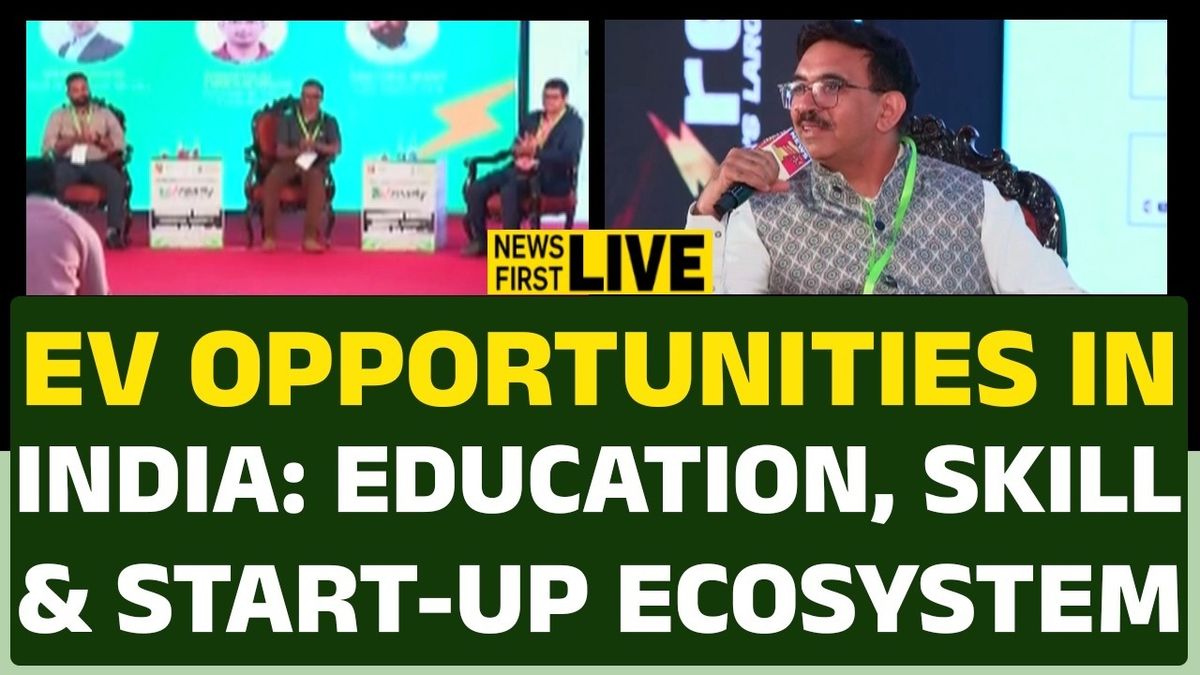
Electric Vehicles (EVs) are not just about replacing petrol with batteries, they represent India’s next big opportunity in careers, skills, innovation and entrepreneurship, said industry leaders during a high-impact panel discussion at EVReady 2026 – Karnataka’s Largest EV Expo, held at Tripura Vasini, Palace Grounds.
The highlight session of Day 3, titled “EV Opportunities in India: Education, Skills & Start-Up Ecosystem”, brought together senior leaders Martin David, Business Head, Micelio; Anamalai Chockalingam, CEO, ANCIT Consulting; and Karthick Reddy, CEO, Redhill Infra & EV Owner. The discussion was moderated by Suresh Narasimha, CoCreator, CoCreate Ventures.
Setting the tone, the panel stressed that EV should be viewed as India’s next IT-scale opportunity, capable of generating massive employment, startup creation, and global innovation. Martin David explained that India stands at a historic moment, where EV adoption allows engineers across mechanical, electrical, electronics, chemistry, physics, software and AI streams to build world-class innovations. He highlighted that EV offers opportunities for all graduates, making it one of the most inclusive industries for career growth.
Also Read:EVs, public transport & clean energy: Experts chart Bengaluru’s green mobility roadmap at EVReady 2026
Anamalai Chockalingam pointed out that the biggest bottleneck today is the shortage of skilled manpower. He said while the EV sector is expanding rapidly, the industry lacks adequately trained engineers and professionals. He emphasised the urgent need for reskilling and upskilling, urging students to align learning with industry needs rather than traditional mechanical-only approaches.
Sharing the ground reality, Karthick Reddy said the primary challenge lies in charging infrastructure and its consistency. He highlighted issues such as lack of standardisation, unreliable charging locations, multiple apps and payment systems, and poor network integration. He stressed that infrastructure must be fixed before aggressive EV sales, as end users are currently facing difficulties.
On innovation, the panel noted that India still has very few IP-led EV startups, with most focusing on quick integration instead of deep technology development. They said the EV transition has decentralised the automotive sector, allowing innovation even at small regional levels. Special emphasis was placed on battery second-life applications, recycling, digital public infrastructure for energy, and indigenous brand building as massive future opportunities.
Also Read:From ₹30,000 fuel bills to zero running cost: Experts explain when EVs truly make sense
Students were advised to pick real-world problems, build solutions during college, and create startups or working prototypes. According to the panel, companies today hire based on attitude, learning ability and problem-solving mindset, more than degrees alone. Skill areas such as AI-DV, cybersecurity, embedded programming, HIL, MIL and SIL testing were highlighted as top employability domains.
The session concluded with a powerful message: India needs innovators, not quick fixes, and EV is the perfect platform for building future-ready careers and startups.