Using only a typical mammogram image, the system is able to pinpoint women at a high risk of developing breast cancer with much greater accuracy than traditional methods that rely on family histories and questionnaires. Identifying women at high risk allows doctors to suggest patients change habits, like avoiding alcohol, or prescribe preventive medicines like Tamoxifen to reduce the chance of a tumor ever developing.
Lehman created the AI program after more than two decades as a radiologist at Massachusetts General Hospital, screening for breast cancer and writing hundreds of peer-reviewed scientific papers.
The idea for using AI came as Lehman was seeing an increasing incidence of cancer in younger women and women who had no family history of the disease, she said.
“Patient after patient being told they had a breast cancer diagnosis was shocked,” Lehman said. “And at one point, after having everyone shocked and shocked and shocked, you’re like, OK, maybe we need to do a better job at identifying these women.”
Lehman and her team trained the AI program using more than 400,000 actual mammograms, where each patient had been tracked for five years afterward, so the risk of cancer occurring was already known. The training set included patients from different zip codes, races, and ethnicities, and with different physical breast characteristics. The AI, which relies on software known as a deep convolutional neural network, was then tested against another set of 77,000 mammograms, where it outperformed traditional methods of risk assessment.
Breast cancer remains the leading cause of cancer death among women, killing about 42,000 people in the United States every year. While survival rates have improved dramatically from the 1970s, they have not gotten much better in the past 20 years. And the rate of early detection is higher in white women than Black and non-white Hispanic women, leading to a wide racial gap in survival rates.
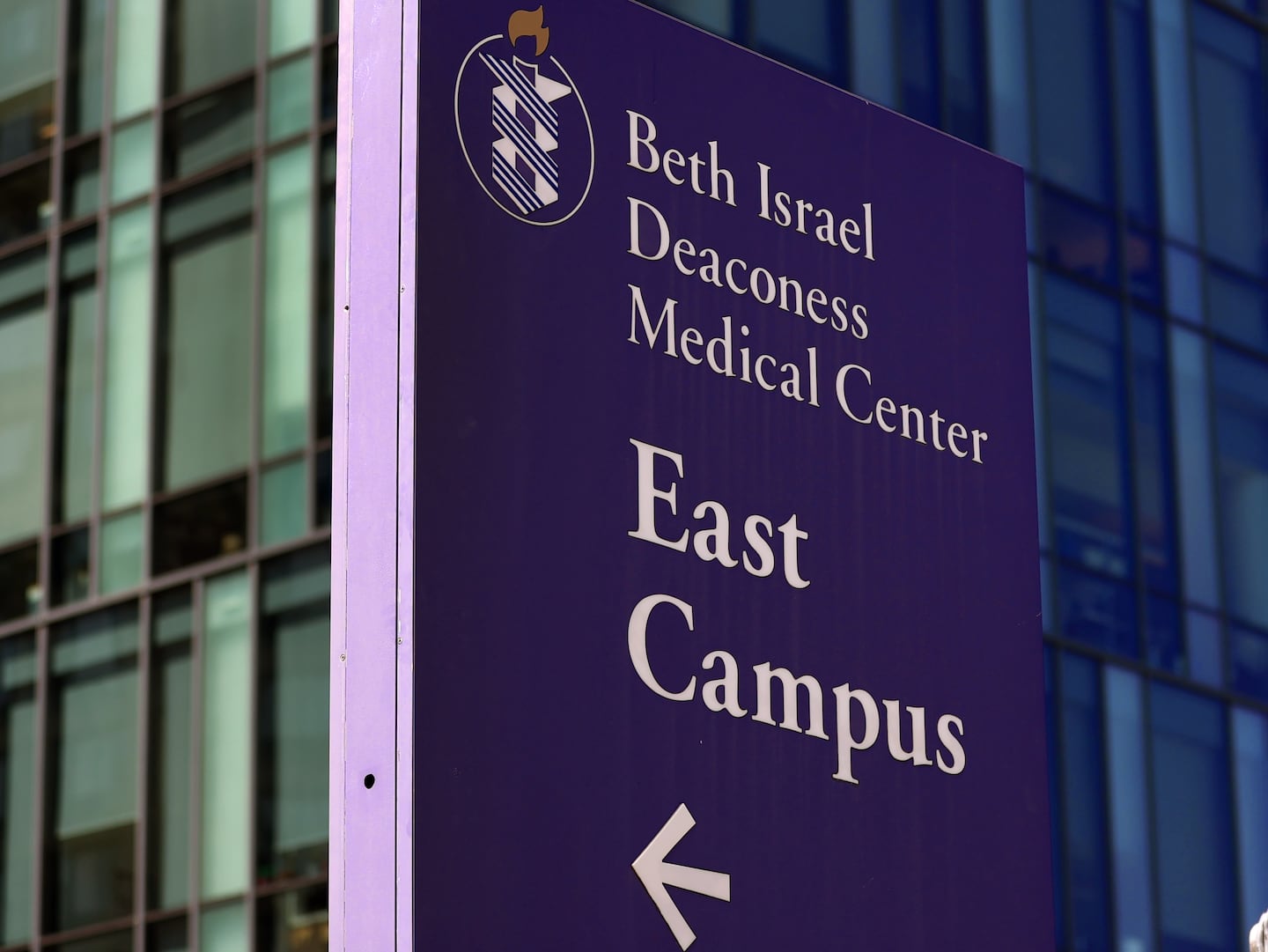
Clairity’s predictive system should work better for all types of people, according to Elizabeth Mittendorf, chief of the division of breast surgery at Beth Israel Deaconess, who is using the system at the Chestnut Hill clinic.
“Some of the other risk calculators we currently use were developed and validated in white, European women, and so they don’t really apply more broadly across the population,” Mittendorf said.
Preventative medications against breast cancer have serious side effects, such as causing hot flashes, so having a more accurate risk assessment system — and one that can be repeated over time — should help convince more patients to use the treatments, she said.
Clairity’s system might prove useful assessing mammograms from patients as young as 30 years old to find those at highest risk, Mittendorf added. “It’s not going to be a large percentage of them, but it’s going to be an important percent,” she said.
Those identified at the highest risk could be screened more regularly, a strategy that has helped improve survival rates for colon, lung, and other cancers, she said. “We’re at a point where we may be able to start doing it differently, with a new paradigm for breast cancer,” Mittendorf said.
Like many kinds of predictive AI systems, Clairity cannot explain exactly what its software has seen on a particular mammogram to generate the risk score. That’s true of other health care AI startups, including those also analyzing mammograms such as Whiterabbit.ai in Silicon Valley and DeepHealth in Somerville.
“There’s much in medicine that can be a black box,” Lehman said. “We are doing lots of research [to figure out] what are the features in a mammogram that the deep learning model is picking up on.”
With Silicon Valley dominating in AI innovation so far, the Boston tech scene could use a lot more startups like Clairity, investors and entrepreneurs said.
Health care startup investor Michael Greeley, general partner at Flare Capital in Boston, said he expects to see more and more researchers in the region creating startups that combine AI and medical data.
A company like Clairity “underscores the power of our community as the health care and technology sectors continue to collaborate given the proximity to each other,“ Greeley said.
Flare didn’t invest in Clairity, which raised its most recent backing from Geneva-based ACE Global Equity and Santé Ventures, headquartered in Texas, among others.
Bringing in outside capital could further help the local sector, Greeley added. “Nice to see investors from other parts of the country investing here,” he said.
Lehman said she would like to see AI unleashed on predicting other diseases using mammograms and other kinds of images, like chest x-rays.
“I think we’ll look back in 10 years and think it was just crazy that we had all these images stored in systems all over the world, and we didn’t know how much predictive, helpful information was hidden and buried in all of them,” she said. “We just need to extract those images and extract the data.”
✂️ Sports betting giant DraftKings cutting jobs amid fight with prediction markets. Read more from tech reporter Aaron Pressman.
🤖 ‘Check back in 15 years’: Robotics legend Rodney Brooks rejects AI hype but won’t call it a bubble. Read more from tech reporter Hiawatha Bray.
💰 With largest Boston VC fund-raise in years, Battery Ventures leans into AI. Read more from tech reporter Aaron Pressman.
🚦 John Simon’s GreenLight raises $30 million to help more nonprofits ‘scale up.’ Read more from business reporter Jon Chesto.
🚧 Woburn green steel maker laying off more than 70 workers. Read more from tech reporter Aaron Pressman.
🦾 We tried two ‘exoskeleton’ suits that might just turn you into a cyborg. Here’s what we found. Read more from tech columnist Hiawatha Bray.
⏸️ Maine considers a moratorium on data centers as businesses look to New England. Read more from Julia Tilton of The Daily Yonder.
🎁 Klaviyo founders give $6 million to boost MIT startups, Boston’s competitiveness. Read more from business reporter Jon Chesto.
🤑 Boston-based Code Metal, which writes AI software to run hardware such as drones, sensors, and robots, raised $125 million in a deal led by Salesforce Ventures and including Accel, B Capital, Smith Point Capital, J2 Ventures, and RTX. The deal valued Code Metal at $1.25 billion.
🌎 Rare earth mineral producer Phoenix Tailings in Woburn raised $30 million of equity from investors Traxys, Eni Next, and Geodesic Alliance Fund. Phoenix also raised $10 million of debt from Nomura.
💵 Quantum cybersecurity firm Aliro in Boston raised $15 millionin a deal led by Gutbrain Ventures.
🔌 EV developer Indigo Technologies in Woburn received a $4 million loan from MassDevelopment’s Emerging Technology Fund.
☀️ Community solar developer Solstice in Cambridge was acquired by Boston-based Perch Energy. Terms of the deal were not disclosed.
📦 Supply chain software firm Dray Dog in Dover, N.H., was acquired by California-based firm CargoSprint. Terms of the deal were not disclosed.
👋 Software developer Code Metal in Boston hired Ryan Aytay, former chief executive of Tableau, as president and chief operating officer.
🖨️ Somerville-based 3D printing company Formlabs added Rob Willett, former chief executive of Cognex, to its board of directors.
✈️ Electric aviation company Beta Technologies in South Burlington, Vt., said inventor and entrepreneur Dean Kamen resigned from its board of directors. Kamen, who appeared in the recently released Epstein files, resigned “to avoid potential distractions,” the company said.
💸 Payments tech company Flywire in Boston hired Patrick Blanc as chief technology officer. Blanc previously was CTO of Ingenico and Cybersource.
💲 Expense software firm Navan based in California opened an office in the Seaport.
What happens to a car when the company behind its software goes under? (ArsTechnica)
Stone, parchment or laser-written glass? Scientists find new way to preserve data (The Guardian)
Apple’s upcoming AI smart glasses are starting to sound a lot more exciting (9 to 5 Mac)
👋 Thanks for reading. We’ll be will be back next Tuesday.
❓ Have a tip? Email Aaron at [email protected].
✍🏼 If someone sent you this newsletter, you can sign up for your own copy.
Aaron Pressman can be reached at [email protected]. Follow him @ampressman.
Source link