Investors are more interested in understanding the commercial viability of startup’s solution: Ramesh Kannan
March 12, 2026 | Thursday | News
Speaking at MedTech Day 2026, organised by NSRCEL in partnership with DailyRounds and Marrow
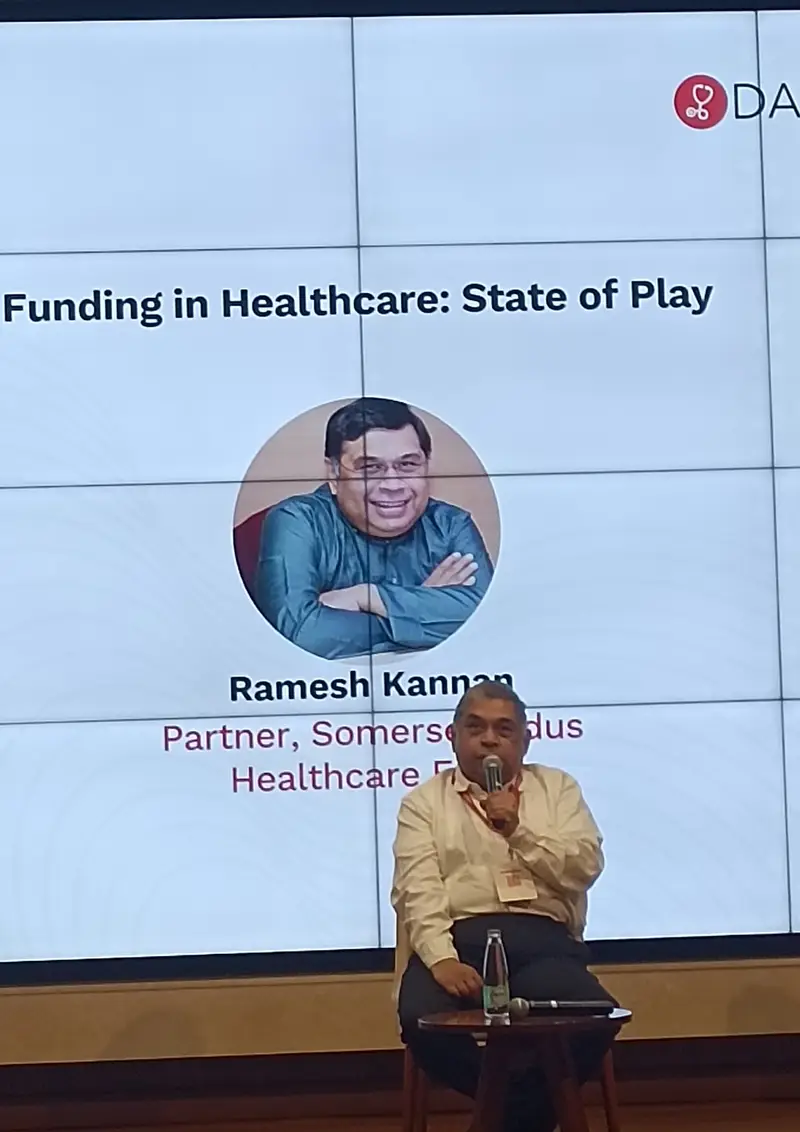
“India offers immense growth potential in healthcare and medical technology, driven by a large patient population, rising healthcare awareness, increasing insurance coverage, and growing demand for affordable medical solutions” said Ramesh Kannan, Partner, Somerset Indus Healthcare Fund.
Speaking at MedTech Day 2026, organised by NSRCEL in partnership with DailyRounds and Marrow, on the topic “Funding in Healthcare – State of Play” Ramesh Kannan, said investors are increasingly focusing on opportunities across segments such as MedTech manufacturing, healthcare robotics, preventive diagnostics, remote patient monitoring, and geriatric care services.
He noted that India currently imports nearly 85 percent of its medical devices, which presents a significant opportunity for domestic manufacturing, particularly in segments such as orthopedic implants, diagnostic equipment, and laboratory reagents. According to Kannan, companies manufacturing medical consumables are especially attractive to investors because they generate recurring demand and predictable revenue streams, unlike capital equipment such as CT or MRI machines that are typically one-time purchases and involve higher cost pressures.
Kannan also pointed to the growing role of point-of-care diagnostic devices and home healthcare services, which are transforming how healthcare is delivered. Portable diagnostic technologies are enabling paramedics or healthcare workers to conduct tests closer to patients, while doctors can interpret the results remotely through connected platforms. Such solutions are particularly important in India, where there is a significant shortage of doctors and uneven access to healthcare across urban and rural areas.
Technologies enabling remote patient monitoring, tele-ECG systems, and continuous vital tracking are gaining traction as healthcare providers look for ways to improve early diagnosis and reduce the burden on hospitals. He added that preventive healthcare is becoming a key focus area, with devices capable of detecting diseases such as breast, cervical, or lung cancer at an early stage attracting increasing interest from both investors and healthcare providers.
At the same time, Kannan emphasised that technology alone does not guarantee investment. Investors, he said, are more interested in understanding the commercial viability of a startup’s solution—including who the target customer is, how the product will reach the market, and whether there is a clear pathway to scale. Many founders, he noted, tend to focus heavily on explaining the technical aspects of their innovations, whereas investors are more concerned with the real-world impact and market adoption of the product.
Increasingly, MedTech startups are adopting asset-light models, where they develop proprietary technology but outsource manufacturing to existing facilities in order to reduce capital expenditure and accelerate market entry. Kannan also highlighted the importance of strong distribution partnerships, noting that India’s healthcare market varies widely across metropolitan cities and smaller towns, making local partners essential for reaching hospitals, diagnostic centres, and patients effectively. Startups that combine innovative solutions with clear commercialization strategies and strong market access plans, he said, are most likely to attract funding and scale successfully in India’s rapidly evolving healthcare ecosystem.