- Rivian’s R2 hides a neat trick that keeps costs down.
- The California startup wants go become a global player, but that comes with a lot of headaches.
- By using the same hardware for all markets, Rivian can rely on software to make relevant changes.
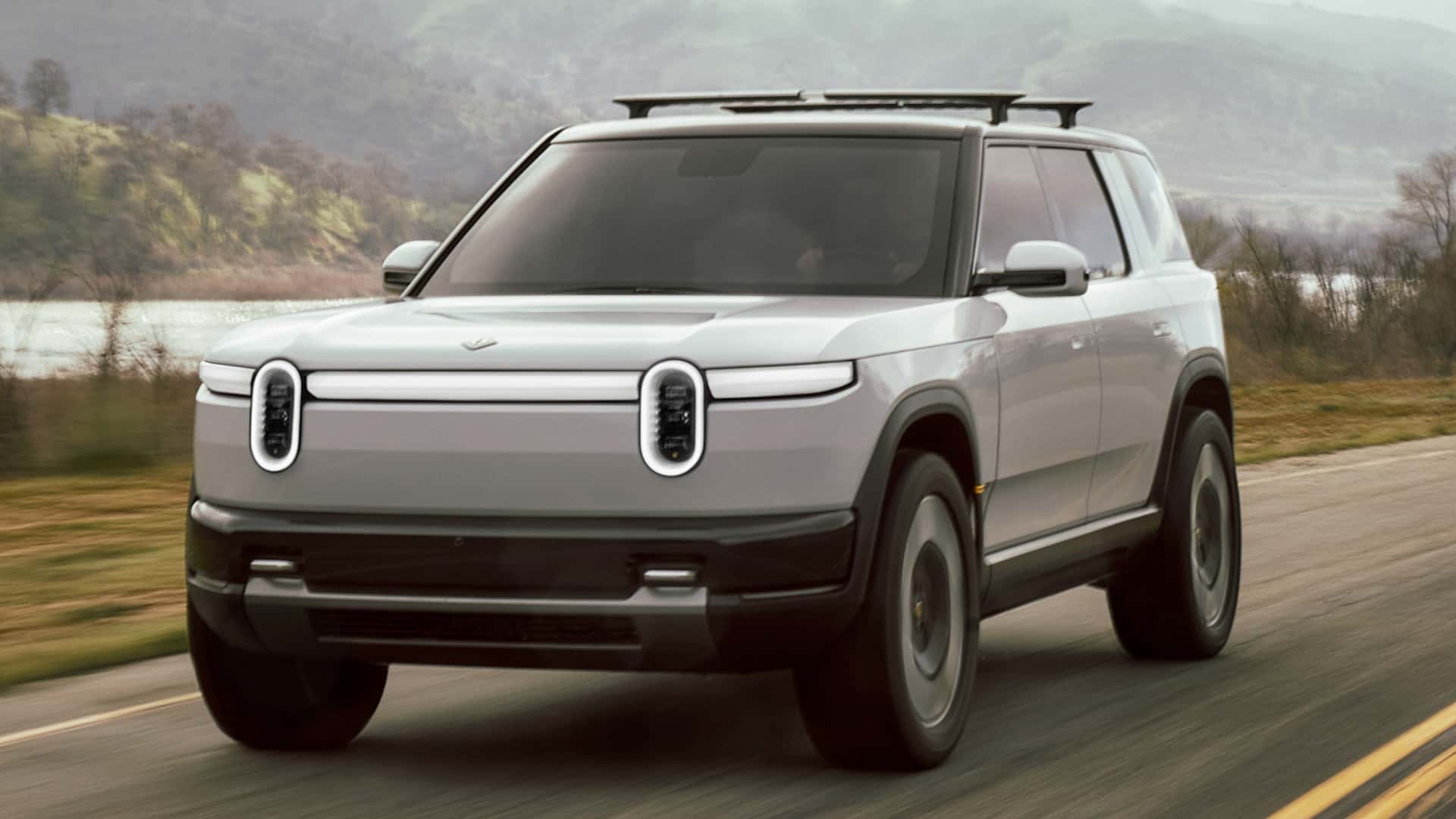
The Rivian R2 is a huge deal for the American EV startup. Besides having a more affordable price tag than the flagship R1 models, the R2 will be the California company’s first global model, going head-to-head with European and Asian competitors on their home turf.
But while Rivian has a lot going for it, its cars will be exported from the United States, which can lead to high logistical costs. To stay competitive, the company had to make cuts in other areas without sacrificing quality.

Photo by: Patrick George
One of those cuts has to do with the way the R2 is connected to the internet. Like all modern EVs, it will have a 5G connection that enables it to receive over-the-air software updates and remote commands from a smartphone. However, what makes the R2 different from most other cars on the market today is that its internet connectivity hardware will be identical on all cars, irrespective of the country it will be sold in.
This allows the startup to keep the number of parts to a minimum, which in turn leads to some cost savings. To make it all work, the Rivian R2 is one of the first cars in the world that implements the newly implemented GSMA SGP.32 standard for eSIM 5G connectivity. The standard was specifically developed for Internet of Things (IoT) applications and allows Rivian to remotely manage carrier profiles in bulk without having to change the hardware in the car.
In the United States, the R2 will come with AT&T connectivity, but Rivian will ship cars with the same hardware in other regions of the world where AT&T doesn’t operate. Furthermore, if Rivian decides to switch operators down the line, it can do it without asking owners to bring their cars in to a service center.
The architecture allows the company to remotely enable, disable, or delete eSIM profiles without manual intervention. On the R2, Rivian used automotive-grade eSIM hardware developed by Germany’s Giesecke+Devrient, which will also supply the remote management infrastructure.
This is in addition to the improvements made to the wiring looms, electric motors, battery packs, and manufacturing processes.
“SGP.32 represents a major step forward for the automotive industry,” said BeekGek Lim, Global Head of Business Line Digital Offerings for Giesecke+Devrient. “With G+D’s secure eSIM hardware and compliant remote management capabilities, Rivian can deploy a single global hardware SKU while retaining full flexibility to manage connectivity remotely and securely throughout the vehicle lifecycle.”
The Rivian R2 goes on sale in the U.S. this spring with a starting price of $59,485 and an EPA-estimated range of 330 miles–that’s for the top-spec R2 Performance All-Wheel Drive with an 87.9-kilowatt-hour battery, 656 horsepower, and 609 pound-feet of torque.
More affordable versions are scheduled to launch later this year and early next year. The first Europe-bound units are expected to ship next year.
22
Source: Rivian