Neurotechnology startup Mave Health has raised $2.1 million (approximately Rs 18 crore) in a seed funding round led by Blume Ventures, with participation from Inuka Capital, Stanford Angels, founders of Groww, Raymond Russell, Aureolis Ventures, Juhi Bhatnagar, and existing investor All In Capital, among others.
This follows the company’s $750K pre-seed round raised in November 2023.
According to a press release, the fresh capital will be used to launch its wearable headset in the United States and India, as well as to scale manufacturing capabilities.
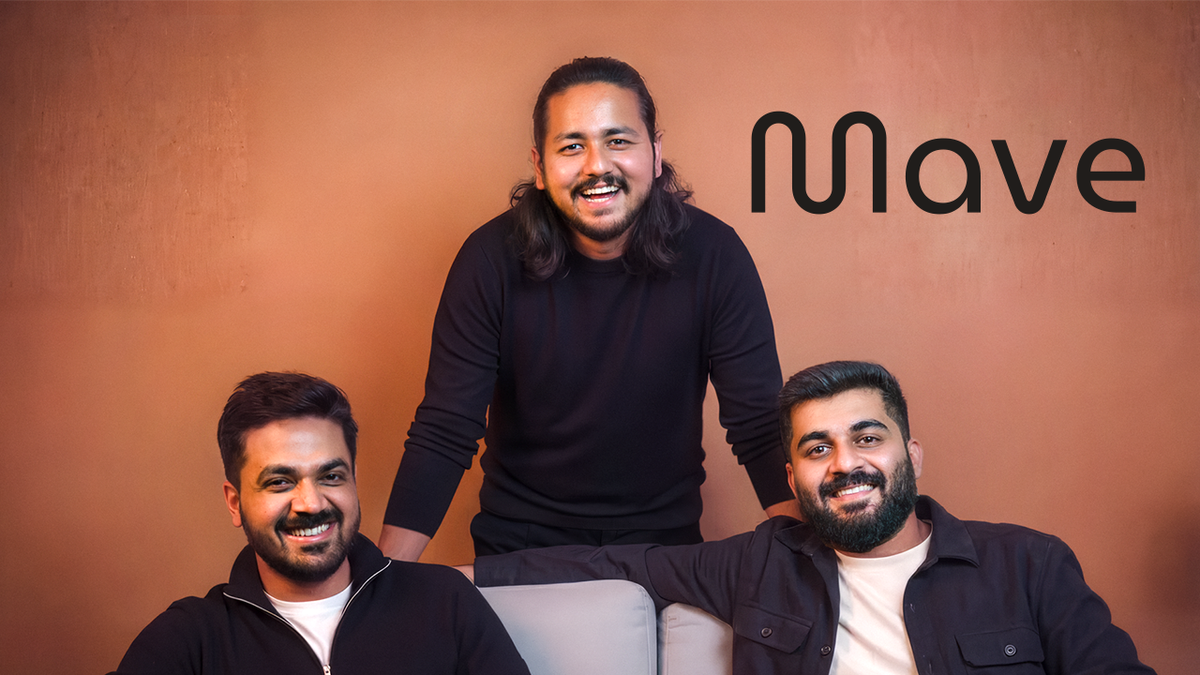
Founded in 2023 by Dhawal Jain, Jai Sharma, and Aman Kumar, Mave Health develops non-invasive wearable headsets designed to improve focus, mood, and stress regulation. The device uses transcranial direct current stimulation (tDCS) to target the prefrontal cortex through 20-minute daily sessions.
The lightweight (approximately 100g) headset delivers low-intensity electrical stimulation to brain regions associated with attention and emotional regulation. It can be used during daily routines and lasts up to a month on a single charge with regular usage.
Mave’s companion app enables users to log sessions, personalize protocols, and track progress without collecting brain data. Users typically report noticeable improvements within 15 to 20 days, with benefits compounding over time. The device is currently available for pre-order in the US and India, with shipments scheduled to begin in April 2026.
The company claims strong early traction, with three limited batches selling out within 36 hours. Its launch video has garnered over a million impressions across social platforms, and the product has attracted interest from global technology leaders and athletes, including UFC fighter Max Griffin.
Mave entered the market with over 500 beta users ahead of its public release last month. Based on self-reported data after four weeks of usage, 80% of users reported productivity gains exceeding 60%, 75% reported stress reductions above 50%, and users reported an average mood improvement of 77%.