









Key Takeaways
- VR mental health platforms: Use immersive environments and avatars to deliver scalable, privacy-first therapy.
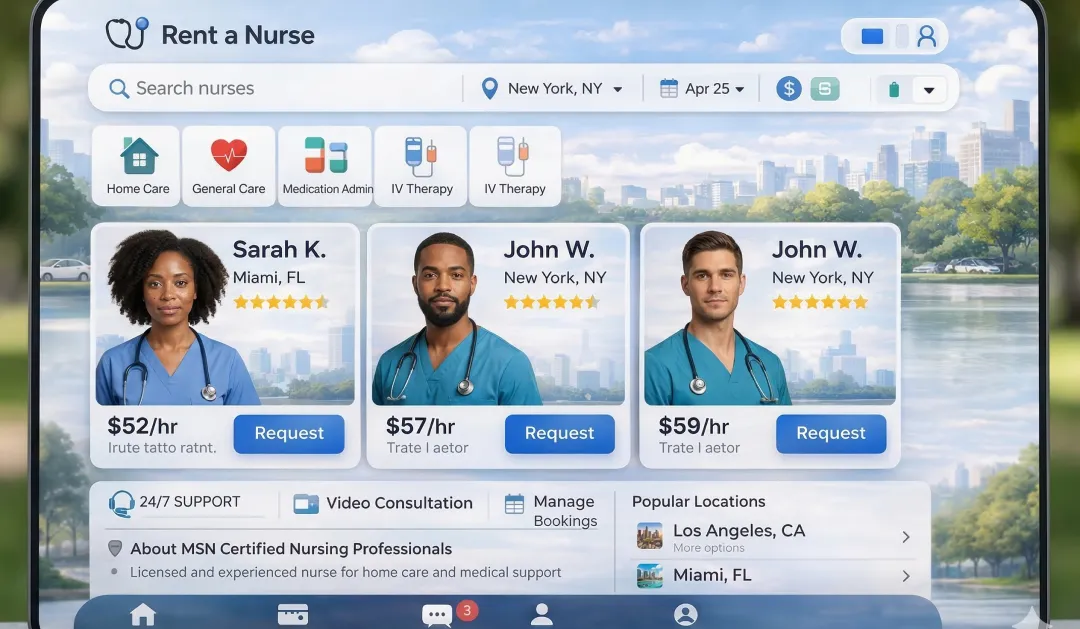
- Rent-a-nurse platforms: Digitize short-term care with real-time scheduling, verification, and on-demand access.
- AI-powered EHR systems: Apply NLP and ML to automate records, extract insights, and improve clinical workflows.
- Telehealth platforms: Integrate monitoring, AI triage, and e-prescriptions to function as core care infrastructure.
- Predictive AI systems: Enable proactive care through diagnostics, triage engines, and claim denial forecasting.
How to Start a Healthcare Business?
Start by identifying a validated problem, choosing a compliant business model, and building an MVP aligned with regulations (HIPAA, FDA). Partner with healthcare and tech experts early to ensure scalability and compliance.
What are some innovative healthcare business ideas with proven market success?
Proven ideas include telehealth platforms, AI-powered diagnostics, VR mental health apps, rent-a-nurse platforms, and personalized nutrition systems with strong adoption and scalability.
Which healthcare startups have recently gained significant investment in the US?
Recent U.S. healthcare funding is concentrated in AI-driven and infrastructure-level startups. Notable examples include:
- Abridge – raised $250 million for AI-powered clinical documentation used across 100+ health systems
- OpenEvidence – secured $250 million, reaching a $12 billion valuation for AI tools used by physicians
- Hippocratic AI – raised $141 million Series B for AI-driven healthcare agents
- Aidoc – raised $150 million for AI-based medical imaging and diagnostics
- Big Health – raised $23.7 million for digital therapeutics (DTx) platforms
- Nabla – raised $70 million for AI clinical assistant and documentation tools
Overall, U.S. digital health startups raised $14.2 billion in 2025, with AI-focused companies capturing over 50% of total funding, signaling strong investor preference for scalable, data-driven healthcare models
How to develop a telehealth platform business model?
Build a telehealth model around consultations, subscriptions, or B2B services, integrating video calls, e-prescriptions, AI triage, and remote monitoring while ensuring compliance and interoperability.
Why should you outsource your healthcare business idea to Appinventiv?
Appinventiv helps you build compliant, scalable healthcare products faster by combining domain expertise with end-to-end development, reducing risk and accelerating time-to-market.
It’s a common but flawed assumption that most profitable healthcare business ideas have already been taken. What’s actually happened is that many have been attempted, but very few have been executed well.
Healthcare isn’t a saturated market; it’s an underbuilt one, full of gaps that only become visible when you understand how systems, compliance, and patient behavior intersect. This list of 24 healthcare startup ideas you can leverage in 2026 and beyond focuses on those gaps—the ones that are commercially viable, technically feasible, and still wide open.
But in this space, ideas don’t fail because of a lack of demand; they fail because they’re built without the right foundation. If the team behind the product doesn’t understand compliance, hasn’t shipped at scale, or can’t collaborate through complexity, the idea rarely makes it past the concept stage.
Healthcare Isn’t Forgiving to First-Time Builders.
Get it right with people who’ve done it before!
1. VR and Metaverse Apps for Mental Health
While the Metaverse might not be as big a hype today as it was a couple of years back, focusing on it still prepares you for the future, as the Metaverse for the mental health market is growing at a 25.91% CAGR between 2026 and 2035. So, it’s not a dead technology as the internet myths suggest. Instead, it’s slowly developing itself for a stronger comeback.
Thus, building a mental health app that leverages the metaverse and VR can be one of the most profitable healthcare business ideas for any of you aspiring to be successful entrepreneurs.
Some successful examples already exist to inspire you. For instance, Innerworld, a VR and metaverse app that offers its users virtual mental health support using anonymous avatars. Peer-led mental health sessions come with trained guides, privacy, personalized support, and much more.
Such VR therapy applications represent cutting-edge digital health business ideas, with proven efficacy for treating arachnophobia, claustrophobia, anxiety, sleep disturbances, chronic pain, and post-traumatic stress disorder.
Another example can be Amelia, formerly Psious VR, which is a Virtual Reality software that leverages this next-gen technology for mental therapy. Amelia leverages VR to provide immersive treatment for individuals dealing with various anxiety disorders, phobias, and stress-related conditions.
While these solutions are great, it is also a fact that their popularity is very limited. That’s the kind of gap you can leverage.
2. Rent-a-Nurse Platform
Home healthcare already exists. The issue isn’t awareness—it’s access and coordination.
A lot of patients coming out of hospitals don’t need full-time care. They need a nurse for a few hours. Sometimes for a few days. Families usually end up calling multiple agencies, comparing availability, and still not being sure about quality.
That gap is where a Rent-a-Nurse platform starts to make sense.
Instead of a traditional setup, this healthcare startup business model focuses on on-demand access to verified nurses, backed by a simple digital layer. The idea is straightforward—match patients with the right professional, without the usual back-and-forth.
What tends to work in practice:
- short-duration bookings (hourly or shift-based)
- clear service categories (post-op, elderly care, injections, monitoring)
- upfront visibility into availability and pricing
On the tech side, it doesn’t need to be overbuilt on day one. But a few things matter:
- verified profiles and basic credential checks
- scheduling that actually reflects real availability
- simple booking + tracking (who’s coming, when, for what)
- optional add-ons later, like vitals tracking or follow-ups
In markets where the elderly population is growing—or where hospitals are overloaded—this kind of model usually finds demand without much push.
From a business angle, it falls into the bucket of profitable healthcare business ideas, but not because it’s flashy. Mostly because usage tends to repeat once trust is built.
Revenue doesn’t come from one place. It usually builds over time:
- a cut on each booking
- Higher pricing for specialized care
- Repeat users moving to some form of plan
- hospital tie-ups if things scale
A reference point would be HCAH. They already provide nurses and in-home care. What’s different here is the structure—you’re adding a layer that makes access faster and a bit more predictable.
It’s still home healthcare. Just organized in a way that people can actually use without chasing it.
3. Personalized Nutrition Platforms
Personalized nutrition isn’t new. But the way it’s scaling now is.
What used to sit inside niche clinics or expensive testing programs is slowly turning into productized platforms. That shift alone is opening up a much bigger market.
Estimates from MarketsandMarkets suggest the space could grow from roughly $15–16 billion in the mid-2020s to over $30 billion by the end of the decade. That kind of jump isn’t unusual in digital health—but it does signal strong demand building underneath.
A big part of that demand is behavioral.
McKinsey & Company has pointed out that a large share of consumers now expect personalized experiences. In health and wellness, that expectation feels even stronger—people don’t want generic plans anymore.
What these personalized healthcare solutions actually do is fairly simple on paper.
They take in user data—anything from lifestyle inputs to biomarkers—and turn it into:
- meal plans
- supplement suggestions
- small, ongoing nudges
The output isn’t new. The specificity is what makes it stick. From a business perspective, most platforms don’t rely on just one stream. Subscriptions are the base layer. But revenue often expands through:
- testing kits
- coaching
- wearable integrations
- ecosystem partnerships
That’s also why platform-led models dominate here. And then there’s the bigger driver in the background.
Lifestyle-related health issues are rising, and more users are leaning toward preventive care instead of reactive treatment. Whether every platform delivers on outcomes is still up for debate—but demand itself is clearly moving in one direction.
4. AI-Powered Medical Records Administration
Hospitals are practically suffocating under mountains of paperwork and fragmented digital files every single day just to keep the lights on. Whether it’s a tiny neighborhood clinic or a massive medical center, healthcare facilities are constantly losing the battle to track patient histories, test results, and administrative bloat.
This ongoing struggle makes AI-powered medical records management one of the most lucrative, high-impact, and innovative ideas for healthcare business entrepreneurs who know how to wield real technology. You aren’t just storing files; you need to make them intelligent. There are basically two ways you can tackle this problem and drag these facilities out of the dark ages:
- Develop an intelligent Electronic Health Record (EHR) system where Natural Language Processing (NLP) extracts billing codes from physician notes, automates medical inventory, and utilizes an intuitive, predictive interface that drastically cuts down the hours medical personnel waste on software training.
- Start an AI-driven records management (digital preservation) business that offers services to global clinics that don’t just archive data, but use machine learning to clean, organize, and proactively secure decades of legacy medical records against breaches.
You can even go one step further and assist patients in finding their ideal physicians by developing a predictive Electronic Medical Records (EMR) system. When records aren’t just managed—but actively analyzed by AI—the actual level of care services improves dramatically.
Similarly, Health-e-People is an application that our team created for users to save and track all their data from their mobile devices, discover medical care for their friends and family, and interact with others who are creating a network within the global healthcare industry.
Also Read: EMR Vs EHR Development – What Should you Choose for your Healthcare Business?
Turn your healthcare idea into a HIPAA-compliant product
Shake hands with our teams that know regulations in and out!
5. Telehealth Apps
Telehealth isn’t riding a pandemic wave anymore. It’s settling into something more permanent—and arguably more useful.
What started as a forced alternative has now become a preferred layer of care delivery. Virtual consultations, follow-ups, mental health sessions, and chronic care management are increasingly happening outside traditional clinics.
That shift is exactly why telehealth apps continue to rank among the most practical and scalable digital healthcare startup ideas today. The demand now isn’t about replacing in-person care. It’s about reducing friction around it.
Patients don’t want to visit a clinic for everything. And providers don’t want overloaded systems for cases that can be handled remotely.
According to Grand View Research, telehealth utilization has stabilized at levels significantly higher than pre-2020 baselines, especially in areas like mental health and routine consultations. That signals long-term behavioral change—not a temporary spike. From a product standpoint, modern telehealth software goes beyond basic video calls.
Strong platforms typically include:
- remote patient monitoring
- e-prescriptions and digital records
- AI-assisted triaging or symptom checking
- integrations with wearables and diagnostics
The real opportunity lies in building systems that fit into existing healthcare workflows rather than trying to replace them entirely.
For any aspiring founders among you, planning a full-featured telehealth app budget and scratching their heads over revenue opportunities, this means there’s still plenty of room to build—whether it’s:
- niche-focused telehealth apps (mental health, chronic care, elderly care)
- B2B platforms for hospitals and clinics,
- or hybrid care models that combine online and offline touchpoints
The market is no longer early-stage hype. It’s infrastructure now. And infrastructure businesses, when done right, tend to last.
If you need an existing example, check out Teladoc, a multifunctional platform. It’s a good example of a telehealth solution focused on treating non-emergency conditions, such as pink eye, sinus infections, the flu, and other health issues.
The platform has more than 3000 healthcare professionals offering medical services. However, the cost of building an advanced app like Teladoc can go up to $300,000 in the USA.
Does Teladoc Inspire You To Build Something?
Let our experts make the best out of your idea!
6. AI-Driven Diagnostic Tools
The human body is an incredibly complex system, and diagnosing ailments often requires interpreting vast amounts of data, from imaging scans to lab results and patient histories. This is where Artificial Intelligence is truly revolutionizing healthcare, making AI-driven diagnostic tools one of the most impactful and profitable healthcare entrepreneurship ideas in the modern landscape.
These intelligent systems leverage machine learning and deep learning algorithms to analyze medical data with unparalleled speed and accuracy, often identifying subtle patterns that might elude the human eye.
You can tap into this booming sector by developing AI-powered medical diagnosis solutions that also assist in improving diagnostic precision and even predicting potential health risks. This could involve creating software that analyzes X-rays, MRIs, or CT scans to detect early-stage cancers, or systems that interpret genetic data to inform personalized treatment plans.
The ability of AI to reduce diagnostic time, minimize human error, and enable proactive interventions presents immense value for both healthcare providers and patients. Companies in this space are not just building tools; they are building the future of accurate and efficient healthcare.
The best part? This segment is continuously exploding. You’re targeting a market growing at a 21.74% CAGR until 2033, reaching a $9.68 billion market. If we look at the numbers, opportunities are clearly visible. All you need is the right research and strategy team by your side.
Bonus Read: AI in Radiology Reimagined
7. Personalized Health & Wellness Coaching Services Powered by AI
For service-oriented entrepreneurs, digital wellness coaching represents one of the best medical businesses to start by combining human expertise with AI-driven technological efficiency. This model addresses the growing demand for hyper-personalized guidance while overcoming traditional limitations of cost, scalability, and accessibility.
AI-enhanced coaching platforms enable certified professionals to serve significantly more clients through video consultations, mobile apps, and intelligent progress tracking. Coaches provide lifestyle modification support, fitness guidance, stress management, and accountability partnerships, all delivered through intuitive digital interfaces that adapt to individual user behavior and health data.
- High-margin service delivery with tiered pricing maximizes market reach and profitability, with AI helping automate personalization at scale.
- 86% of new consumers come through recommendations and reviews, driven by exceptional client outcomes.
- Recurring coaching relationships create predictable revenue, with AI-powered digital delivery enabling global reach and continuous engagement.
8. AI-Powered Drug Rehabilitation Facilities
There is a narcotic plague in society that almost never disappears– drug addiction. Drug use in global communities has risen to the level of a national catastrophe. According to a National Center for Drug Abuse Statistics Report, over 1 million folks have died since 1999 just within the United States itself.
It presents a greater need than ever to establish reputable drug rehabilitation facilities where the sufferers can receive therapy for their addictions and restore the quality of their lives.
While not new, opening a drug rehab centre stands out as one of the most meaningful medical business ideas that tackle real societal problems while helping entire communities heal, similar to how home care services make a difference. You’d be creating solutions for people struggling with substance abuse, giving them a real shot at getting clean and staying that way.
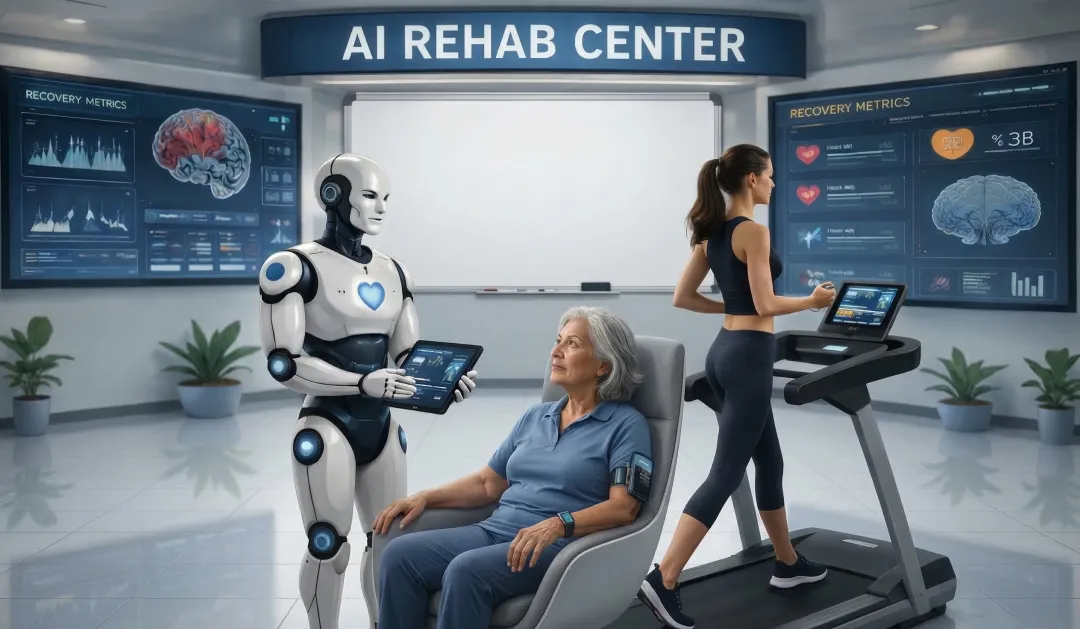
But let’s think beyond simple rehabs and integrate AI-powered monitoring and tracking systems to deliver personalized attention to each individual. When it comes to helping folks with addiction issues, you might want to zero in on specific groups – maybe teenagers dealing with early addiction or seniors who’ve developed dependencies later in life.
Integrating AI in healthcare business ideas can make that job more effective using datasets like patient data, behavior, medical history, etc. Appinventiv’s AI expertise is here to help you out with that.
This could be a really comprehensive business venture if you’ve got serious funding and want to make a broad impact on society. To run your facility effectively, you might want to develop some tech-savvy tools that track how patients are doing and deliver care that’s tailored to each person’s needs.
Real-world examples already point in this direction. For instance, Eleos Health provides AI tools used within rehab and behavioral health centers to automate clinical documentation and extract insights from therapy sessions, helping clinicians focus more on patient care.
Similarly, Click Therapeutics is developing AI-enabled digital therapeutics for substance use disorders, combining behavioral therapy with personalized, data-driven treatment delivered through mobile platforms.
9. Digital Therapeutics (DTx): Software as a Prescription
Pills have limitations, and the future of chronic care isn’t just biochemical—it’s digital. We are looking at a paradigm shift where doctors literally prescribe software.
The problem is that chronic disease management currently relies on patient memory and occasional check-ins, leading to abysmal adherence and clinical blind spots. In other cases, the process makes the patient entirely reliant on human intervention, which, for some, can be beyond their ability to afford.
The framework for the solution is Digital Therapeutics (DTx)—evidence-based, clinically evaluated software that prevents, manages, or treats a medical disorder.
Specifically, we’re talking about building FDA-cleared applications that deliver Cognitive Behavioral Therapy (CBT) for insomnia, or gamified respiratory training for asthma patients. Building this isn’t like throwing together a calorie counter; it requires rigorous clinical trial validation, heavy data encryption, and an architecture that can seamlessly integrate with existing EHR (Electronic Health Record) systems.
If you have the clinical backing, you need a development team that understands how to build medical-grade, HIPAA-compliant software from the ground up, not just a flashy frontend.
10. Predictive Hospital Triage & Surge Engines
Emergency rooms operate on controlled chaos, and they are bleeding money and losing critical time because of it. Relying on a human bottleneck at the triage desk to evaluate patient flow is an archaic system begging for disruption.
The solution is a predictive triage engine powered by machine learning. Instead of reacting to a waiting room that’s already overflowing, this framework ingests historical admission data, local epidemiological trends, weather patterns, and real-time patient vitals to predict surges before they happen.
In practice, such managed IT services in healthcare mean building an AI model that dynamically reroutes staff and flags high-risk patients the moment their data hits the system. You aren’t just building an app; you are building a hospital’s central nervous system.
Getting this right requires deep data science capabilities and the ability to process unstructured data at scale. It’s a heavy lift, but the ROI for hospital networks is astronomical. Just make sure you have the best team by your side to help you build this.
11. Decentralized Clinical Trial (DCT) Platforms
The traditional clinical trial model is broken. It’s historically slow, geographically biased, and bleeding capital due to high patient dropout rates. Forcing sick patients to commute to a central facility for a blood pressure reading is an engineering failure.
The framework here is a Decentralized Clinical Trial (DCT) platform. You bring the trial to the patient’s living room.
You need to build an ecosystem that handles eConsent, integrates securely with consumer wearables and medical-grade IoT devices, and automates real-time data collection directly into a clinical database. The specifics involve creating a tamper-proof, time-stamped audit trail for regulatory bodies while keeping the patient-facing app incredibly intuitive.
While this stands among the most solid healthcare startup ideas, it’s not easy to build without the right kind of experts. It’s a high-stakes architecture. A single data leak ruins the trial. You need a development partner who speaks the language of regulatory compliance fluently.
Also Read: The Impact of Technology on Healthcare Supply Chain Management
12. Automated Claim Denial Prediction Models
Here is the unvarnished truth: hospitals are leaving millions of dollars on the table simply because their billing departments are playing a guessing game with insurance providers.
The problem is the reactive nature of medical billing—you submit a claim, wait 30 days, get denied for a coding error, and spend another 30 days appealing. The solution is an AI-driven claim denial prediction model.
This software framework analyzes historical clearinghouse data to flag claims that have a high probability of rejection before they are submitted. It looks for missing modifiers, mismatched diagnostic codes, and patient eligibility gaps in milliseconds.
Building this requires integrating complex healthcare Natural Language Processing (NLP) solutions to read physician notes and translating them into predictive billing logic. Such healthcare startup ideas are B2B SaaS goldmines if you can execute the backend plumbing flawlessly.
13. AR-Assisted Surgical Navigation Tools
Surgeons shouldn’t have to look away from a patient’s open body to check a 2D monitor on the wall. The cognitive load required to translate a 2D MRI into a 3D surgical reality is a massive point of friction.
The framework to solve this is Augmented Reality (AR) surgical navigation. By utilizing spatial computing, you overlay 3D anatomical models directly onto the patient’s body in real-time.
Specifics dictate creating software that takes standard DICOM images (CT/MRI scans) and renders them into interactive, sub-millimeter accurate holograms using headsets like the Apple Vision Pro or HoloLens.
This isn’t theoretical; it’s happening now in orthopedic and neurological surgeries. Developing this requires a team of spatial computing engineers and 3D rendering experts who know how to eliminate latency—because in surgery, a half-second of lag is unacceptable.
As a startup owner, you have the opportunity to deploy such a tech in the form of a ready-to-use SaaS platform that can bring continuous revenue through licensing or subscription fees.
14. Enterprise IoMT (Internet of Medical Things) Middleware
Hospitals are packed with smart devices—infusion pumps, smart beds, heart monitors—that are incredibly slow or out of sync when talking to each other. They operate in siloed vendor ecosystems, forcing nurses to act as human data-bridges.
The solution is a unified IoMT middleware platform. You need a centralized hub that securely ingests data from thousands of disparate edge devices, normalizes that data, and feeds it into the hospital’s central EHR system in real-time.
Building this means wrestling with a dozen different communication protocols (Bluetooth LE, Wi-Fi, Zigbee) and ensuring zero packet loss. It’s a pure infrastructure play. If you want to pitch this to a hospital CIO, your tech stack needs to be bulletproof, scalable, and relentlessly secure.
The best part? You can always outsource to a reliable HIPAA-compliant development team and work in collaboration. You focus on bringing leads, and these teams build the solution for you.
You’re Just Click Away From Enterprise IoMT Experts
Our experts can help you build a HIPAA-compliant healthcare business!
15. Virtual Wards & eICU Infrastructure
Physical hospital beds are the ultimate bottleneck. When the ICU is full, the system breaks. But a large percentage of patients occupying those beds just need constant monitoring, not constant physical intervention.
The framework is the Virtual Ward. We are moving hospital-level monitoring into the patient’s home.
This requires building a high-fidelity telehealth infrastructure that goes far beyond a Zoom call. The specifics involve continuous streaming of continuous biometric data—ECG, blood oxygen, respiratory rate—into a central command center where one physician can monitor 50 patients simultaneously using AI alerts to spot deterioration.
The development challenge here is robust edge-computing; the system must know how to filter out “noise” (like a sensor falling off) from a genuine cardiac event, and that is where you can take our help.
16. Voice-Biomarker Diagnostic Applications
What if a cough, a specific pause in speech, or the subtle tremor in a voice could diagnose a respiratory failure or early-onset Parkinson’s?
The problem with current diagnostics is that they are invasive, expensive, and episodic. The solution framework is leveraging voice as a biomarker.
You need to deploy an application that utilizes deep learning audio analysis to detect microscopic acoustic variations invisible to the human ear. The specifics involve training neural networks on massive datasets of pathological speech and deploying that model securely to a smartphone.
This is the bleeding edge of HealthTech. You don’t hand a project like this to a budget dev shop; such healthcare startup ideas are sensitive and demand proven expertise. You need serious AI/ML architects who know how to deploy lightweight models on edge devices.
17. Blockchain-Secured Patient Identity Networks
Patient data breaches aren’t just PR nightmares anymore; they are multi-million dollar class-action lawsuits. The current model of storing massive honeypots of patient data on centralized servers is a ticking time bomb.
The solution framework is decentralized identity management using blockchain technology.
Instead of a hospital owning the data, the patient owns their encrypted health identity on a distributed ledger, granting temporary cryptographic access keys to doctors or researchers as needed.
Building this involves smart contract development, cryptographic key management, and creating an interface so simple that an 80-year-old patient can use it without knowing what a blockchain is. If you want to solve the biggest security anxiety in healthcare, this is the architecture you build.
18. Online Pharmacy
The online pharmacy market is expected to reach $224.79 billion by 2034. Within a decade, that’s a 7.9% growth you need to tap into. Now, it’s true the concept of Online Pharmacy isn’t something new; it has been there since the 1990s, probably. But the way it’s evolving, becoming user-friendly as each day passes, that’s something you need to look into.
For instance, Soma, widely recognized as one of the earliest online pharmacies, lacked precautions that modern pharmacies take care of. Users could fill out forms and simply self-declare symptoms, making meds accessible to them. That is one of the reasons why Soma doesn’t exist anymore.
But now, there are very accessible options like Walmart Pharmacy that require prescriptions and can deliver within 30 minutes. That is how your online pharmacy needs to fill the gap. Identify a market you can work with, explore gaps, and revolutionize the medicine delivery system that exists locally.
Here are our top three innovative healthcare business ideas that can fall under the ‘Online Pharmacy’ category:
- Build a hyperlocal healthcare ecommerce app. Make delivery accessible to even the remotest areas where populations exist.
- Provide online prescriptions. Some brands like Blink-it have already started doing it. You get a call once you order a prescription medicine without a prescription, and once the doctor verifies your symptoms, you get meds delivered.
- Plan an Autonomous Chronic Care Platform. An AI-powered solution that delivers personalized reminders, keeps track of patients’ health, and supports emergency contacts to help save patients who live alone, while also delivering meds at any time of the day or night.
Also Read: Medicine Delivery App Development: Step-by-Step Guide, Features & Cost Analysis
19. NEMT Service
Non-Emergency Medical Transportation (NEMT) is one of those areas in healthcare that looks simple from the outside—but starts breaking the moment you rely on it.
Patients missing appointments isn’t always a medical problem. A lot of times, it’s just logistics. No car, no reliable driver, no one to coordinate timing with the hospital. It sounds basic, but it shows up everywhere—especially with elderly patients, dialysis cases, or people who need recurring visits.
That’s where a NEMT service actually starts to make sense as a business. Not as a fleet-first play. More like a coordination layer.
Right now, most setups are still stuck on phone calls, fixed schedules, and zero visibility once the ride is booked. If something shifts—even slightly—the whole thing falls apart. Delays, no-shows, rescheduling loops… pretty standard.
A better approach is to treat this like a small piece of healthcare infrastructure instead of “just transport.”
So the platform side starts doing the heavy lifting:
- bookings that account for appointment time, not just pickup
- basic routing so drivers aren’t zig-zagging across the city
- visibility for both patient and provider (who’s coming, where they are)
- simple flags like wheelchair access or assisted pickup
Nothing overly complex. Just things that actually reduce friction. On the revenue side, it’s not complicated either, but it stacks:
- per-trip margins
- long-term contracts with clinics or dialysis centers
- insurance-linked reimbursements, where applicable
- repeat users who don’t want to figure this out every week
There are already players in the space, sure. But coverage is patchy, and the experience isn’t great in a lot of regions. That usually means the problem isn’t solved—it’s just partially served.
And as more care shifts outside hospitals, this layer becomes harder to ignore. People can’t show up digitally if they can’t show up physically first.
20. Autism Support Programs
There’s a real surge in demand for businesses that provide specialized care for people with autism. You could offer individual therapy sessions, group activities, or mix different services together – things like speech therapy, occupational therapy, and applied behavioral analysis.
This ranks as one of the most fulfilling public health business concepts because you’re actually making a visible difference in people’s lives and helping entire families navigate their journey.
When you consider that roughly 1 out of every 100 kids globally falls somewhere on the autism spectrum, what used to be considered a specialized niche has become a worldwide health concern that can’t be ignored.
These aren’t just numbers on a page – we’re talking about millions of families actively searching for ways to help their children build connections, learn to communicate better, and really flourish in their own unique ways.
This reality opens up meaningful opportunities for businesses ready to provide caring, research-backed support through individual sessions, group settings, or comprehensive programs that blend speech therapy, occupational therapy, and Applied Behavioral Analysis approaches.
21. Surgical Scrubs and Uniforms
Scrubs, robes, shoes, and all the other medical uniforms are really the backbone of what healthcare workers wear every day.
Doctors, nurses, and other medical pros who live in these outfits are constantly hunting for options that actually feel good and look decent, which turns out to be way harder than it should be.
This creates a real opportunity that makes medical clothing one of those under-the-radar yet seriously profitable business ideas in the healthcare industry, especially when you consider there are millions of healthcare workers out there who want gear that works well and doesn’t make them look like they’re wearing potato sacks.
So getting into the uniform business for medical folks could be a smart way to break into healthcare while actually helping the people who take care of the rest of us.
You can start an online store and create an inventory of scrubs, shoes, lab coats, and other gear for medical professionals that comply with healthcare guidelines. You can design the goods yourself or source them from different places. The fabric can be strengthened and made less abrasive.
FIGS, an American clothing company, makes scrubs and other medical gear with a strong focus on aesthetics, fabric, material, composition, and comfort for medical professionals. So, when a doctor reports to work, they have the choice of wearing scrubs or uniforms.
22. Alternative Medical Services
Alternative medical services that are growing in popularity are homeopathy, acupuncture, and massage therapy. Many individuals are adopting these offerings either as a quality improvement idea in primary care or as a supplement to more conventional medical care.
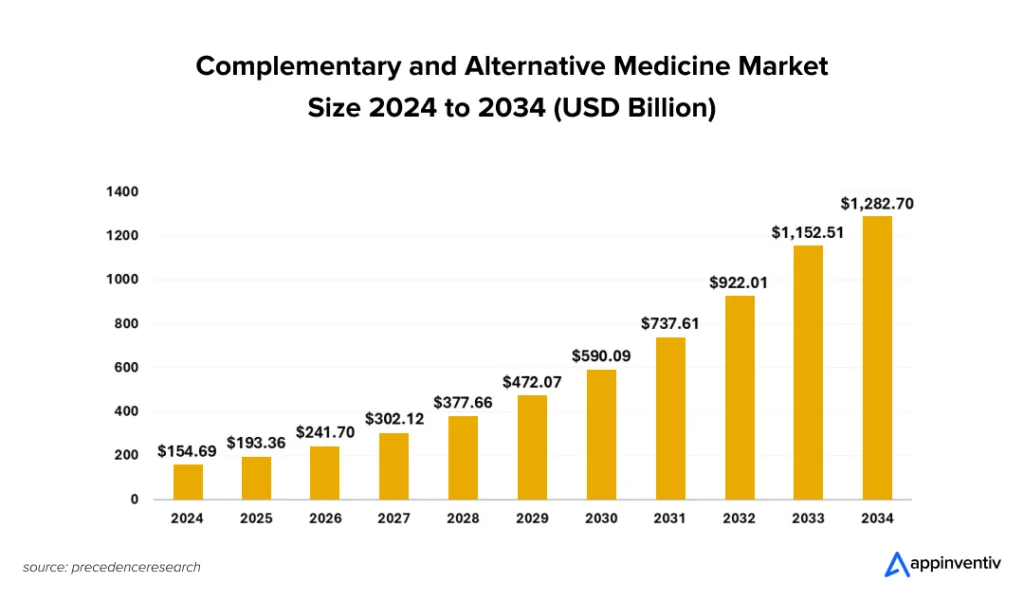
According to Precedence Research, the alternative medicine world is experiencing its industrial revolution – what started as a $155 billion industry in 2024 is poised to grow into a $1.3 trillion sector by 2034. That’s not just growth, that’s a complete metamorphosis happening at warp speed with a staggering 23.56% annual expansion rate.
Think of it as the great wellness awakening – ancient healing practices are getting a modern makeover, and people are embracing everything from acupuncture apps to AI-powered herbal consultations.
As a startup offering alternative healthcare to patients, you can typically provide services such as chiropractic medicine, magnetic field therapy, acupuncture, and energy therapies. None of these are new, sure, but lots of untapped markets are still out there waiting for you to launch your idea in.
If you have the knowledge and credentials to operate in one or more of these fields, you might establish your own independent company. You can also employ experts to work at a center or provide mobile services if you desire to develop a bigger business.
Allen Laboratories Ltd is an alternative medicine company. It is the leading manufacturer and distributor of global alternative health, naturopathic, and homeopathic medications and is widely popular.
23. Nurturing Health Awareness
Healthcare professionals, including doctors, health coaches, and nutritionists, are dealing with a system that’s become more layered than it used to be. Clinical knowledge alone isn’t enough anymore. There’s data coming in from multiple sources, tools that don’t always talk to each other, and workflows that vary from one setup to another.
In practice, this creates a different kind of demand.
Most professionals aren’t just looking for answers—they’re trying to make sense of fragmented information. What matters is context. What applies to their patients, their setup, and their constraints.
At the same time, medical technology hasn’t exactly simplified things. If anything, it’s added more abstraction. Unless someone is deeply involved in both clinical and technical sides, there’s usually a gap in understanding how these systems actually work together.
That gap is where some of the more profitable healthcare business ideas are quietly taking shape. Platforms that focus on medical education, structured content, or even simple explainability are starting to do well—not because they’re new, but because they’re usable.
There’s also room to build beyond static content. AI-led healthcare platforms can help organize information in a way that feels practical, not overwhelming. Not everything needs to be automated—sometimes just surfacing the right insight at the right time is enough.
On the business side, growth in this space rarely comes from a single lever. Most platforms evolve their monetization strategies gradually—starting with distribution and visibility, then layering ads, partnerships, affiliate models, or premium access depending on what actually works. It’s usually iterative.
A familiar example is WebMD. It didn’t scale because it was complex. It scaled because it stayed useful, consistent, and easy to access—something a lot of newer platforms still underestimate.
24. Medical Tourism
Medical tourism ranks among the most lucrative healthcare business ideas out there. These services help people who need to cross borders – whether state lines or international boundaries – to get the medical care they need.
Learning how to start a medical business in this space means doing your homework on top-notch facilities around the world and forming solid partnerships that let you offer affordable healthcare options globally.
Apps like TravelDoc, GetTreated, GapDoc, Medigo, and GloboMD have become major players in medical tourism. These platforms are taking what used to be an overwhelming nightmare – trying to get treatment in another country – and turning it into something people can actually handle with confidence.
Instead of spending forever trying to figure out how to connect with hospitals overseas, patients can now easily look through options, compare what’s available, and book complete medical packages straight from their phones.
These apps basically become your personal healthcare assistant, taking care of everything from finding the right doctor to sorting out your travel plans, which gives people the confidence they need when they’re already dealing with health concerns.
Don’t Let a Strong Idea Fail on Execution.
Validate, structure, and build it with a team that understands healthcare end-to-end.
Navigating Implementation Challenges: Strategic Solutions for Market Entry
While the wellness and preventive healthcare sector presents exceptional opportunities, startups face distinct challenges that require strategic navigation. Understanding these obstacles and their solutions is crucial for successful market entry and sustainable growth.
| Challenge | Solution |
|---|---|
| Regulatory Compliance | Build compliance early. Work with experts. Start with low-regulation use cases. |
| Trust & Credibility | Partner with institutions. Secure certifications. Validate through pilots. |
| High CAC & Long Sales Cycles | Focus on referrals. Integrate with providers. Use freemium/pilot models. |
| Integration & Interoperability | Use standard APIs. Go cloud-first. Partner for legacy integrations. |
| Scaling Without Quality Loss | Automate basics. Keep a human touch where needed. Standardize processes. |
| Data Security & Privacy Risks | Implement strong encryption. Follow HIPAA/GDPR. Audit regularly. |
| Clinical Validation Requirements | Run trials early. Back claims with data. Work with clinicians. |
| User Adoption Resistance | Design for simplicity. Fit into existing workflows. Reduce friction. |
| Fragmented Stakeholder Ecosystem | Align incentives across patients, providers, and payers. Build for all. |
| Reimbursement & Monetization Complexity | Explore hybrid models. Align with insurance systems. Validate pricing early. |
| Talent & Domain Expertise Gap | Hire healthcare + tech talent. Partner where needed. Avoid generalists. |
| Long Development Cycles | Build MVPs fast. Iterate in controlled environments. Avoid overbuilding. |
Let Appinventiv Drive You Towards Excellence
Navigating the complex landscape of healthcare technology challenges becomes seamless when you partner with Appinventiv, a leading firm providing healthcare software development services for over a decade now.
As the healthcare industry undergoes rapid digital transformation, we stand as your strategic technology partner, empowering healthcare organizations to enhance patient care, streamline operations, and achieve sustainable growth through cutting-edge digital solutions.
Appinventiv’s healthcare expertise is demonstrated through successful partnerships with leading healthcare organizations and innovative startups. Our portfolio includes groundbreaking projects such as:
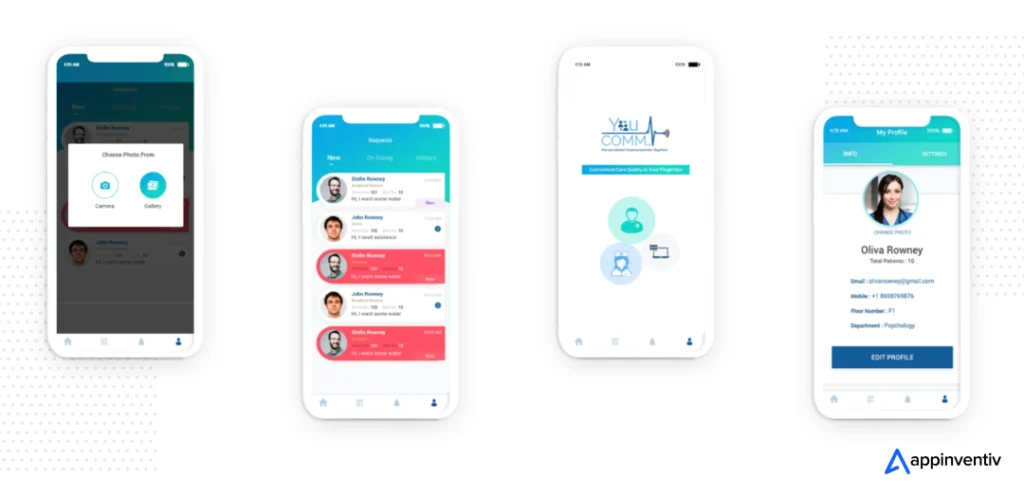
- YouComm: A revolutionary multi-request platform for in-hospital patients that enables communication with nurses through voice commands and head gestures, resulting in 5+ hospital chains in the US adopting the solution. The app resulted in a 60% growth in Nurses’ real-time responses.
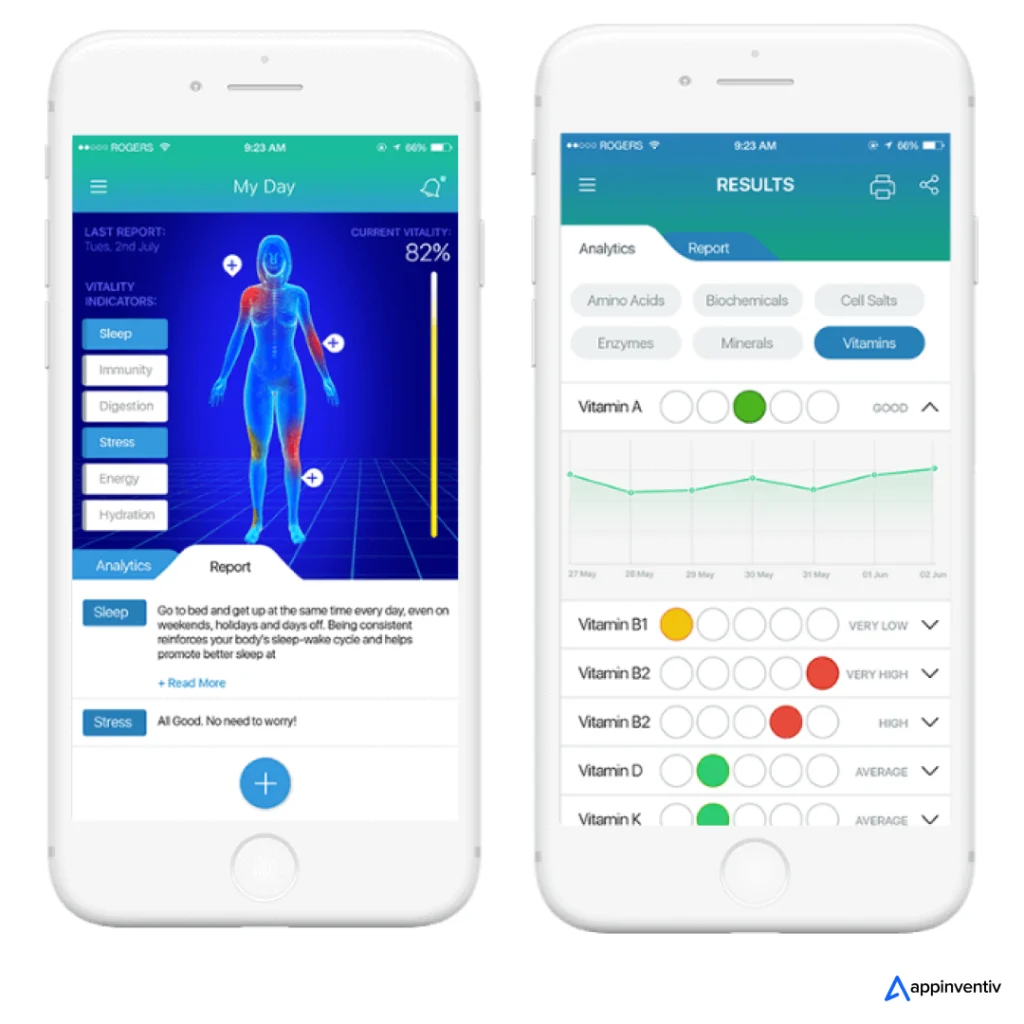
- Soniphi: An innovative health monitoring solution that enhances real-time health monitoring through vocal frequency analysis, boosting user engagement and wellness tracking
With 16+ awards from leading industry portals and 1600+ tech experts delivering 3000+ successful projects, Appinventiv’s commitment to excellence is validated through prestigious recognitions:
Our healthcare software development services encompass the full spectrum of digital health services, from HIPAA-compliant applications to AI-driven diagnostics and EHR integration systems.
We specialize in creating secure, scalable, and user-centric solutions that address the unique challenges of modern healthcare delivery, ensuring your organization stays at the forefront of medical innovation while maintaining the highest standards of patient data security and regulatory compliance.
Additional FAQs
Q. What Is the Most Profitable Medical Business?
A. Highly profitable healthcare businesses include telehealth platforms, AI diagnostics, personalized nutrition platforms, and digital therapeutics, driven by recurring revenue models and scalable technology.
Q. How Are Enterprises Using AI to Build New Healthcare Business Models?
A. Enterprises use AI for diagnostics, predictive analytics, automated medical records (EHR), claim denial prediction, and personalized treatment planning to improve efficiency, reduce costs, and enhance patient outcomes.
Q. How Can Healthcare Entrepreneurs Navigate Regulatory Compliance and Build Trust in AI Solutions?
A. You must embed compliance from the start, follow standards like HIPAA/GDPR, validate solutions clinically, and build trust through certifications, partnerships, and transparent data practices.
Q. How can I start a home healthcare business with existing franchise options?
A. You can start by partnering with established home healthcare franchises, ensuring licensing compliance, hiring certified staff, and integrating scheduling and patient management software for operations.
Q. What are the top healthcare technology products to incorporate into a new clinic?
A. Key technologies include EHR/EMR systems, telehealth platforms, remote patient monitoring tools, AI diagnostics, and billing automation systems to improve efficiency and patient care.
Q. What is the market demand for personalized nutrition services in healthcare?
A. Demand is rapidly growing due to preventive care trends, with platforms leveraging biomarkers, AI, and wearables to deliver customized nutrition plans and recurring subscription-based services.
Source link