It’s been hard times lately for local lithium battery startups, as US automakers back away from their commitments to build more electric vehicles. But there’s a high-profile exception: Factorial Energy of Billerica, where founder Siyu Huang says auto giants Mercedes-Benz and Stellantis still hope to bring Factorial’s semi-solid-state batteries to market in their vehicles.
And the US military-industrial complex has also come calling. IQT, a nonprofit investment firm founded by the Central Intelligence Agency, has injected additional cash into Factorial, in partnership with Philenergy and POSCO Future M, a pair of South Korean companies that make supplies and equipment for battery manufacturing.
The amount of the investment hasn’t been revealed. But IQT said the goal is to provide the US and its allies with a secure supply chain for high-density lithium-ion batteries suitable for use not only in cars, but also in drones and robots.
“The ability of Factorial’s solid-state batteries to deliver high power and operate in low temperature environments makes them very attractive for use in high-altitude or high-latitude applications,” said IQT senior partner Brian Smith.
Factorial made its first moves into the drone market last June, when it began shipping product to Avidrone Aerospace, a Canadian firm that makes commercial and military drones, including some weighing more than half a ton.
The development of drone batteries became more urgent last October. That’s when China, the world’s dominant maker of lithium-ion batteries, announced tough restrictions on the export of its most advanced batteries. These are capable of storing over 300 watt-hours for every kilogram of weight, well above the energy density of the batteries in most US electric vehicles.
The Chinese move “is really escalating the situation,” said Huang. “That’s where the US government found us and said they need our battery.”
Factorial has developed a battery that uses a semi-solid electrolyte, different from the liquids used in most lithium-ion batteries. It’s a bridge technology on the way to building an all-solid-state battery called Solstice.
Both batteries offer energy density well in excess of the standard EV battery — up to 375 watt-hours per kilo for semi-solid battery and as much as 450 watt-hours for Solstice. That’s performance that matches or exceeds China’s best.
High energy density means a electric car can travel farther with the same size of battery. Or carmakers could could make cheaper EVs with smaller batteries that still have plenty of range.
But energy density is even more vital for military drones, said Huang. “If my car is running twice the range of your car, it’s really nice to have,” she said. “But if you’re talking about, my drone can run twice as much distance as the enemy’s drone, it completely changes the game.”
Alan Webber, a national security technology analyst at Boston’s IDC Corp., said the IQT investment in Factorial reflects the US government’s determination to build a high-density battery supply chain, and fast.
“Right now Ukraine is producing more drones in a month than we produce in a year,” he said. “When you look at the defense industrial base, there’s not a whole lot of companies that can do this type of battery work … so the investment by IQT makes a lot of sense to me.”
Having seen the effectiveness of surveillance and attack drones in Ukraine and in the war against Iran, the Pentagon is scrambling to buy its own arsenal. But to maximize their effectiveness, they’ll need much better lithium batteries than US providers can presently offer. Otherwise, US drones won’t be able to fly as far or as fast, or carry as big a weapons load, as drones powered by Chinese batteries.
Still, Huang said that Factorial’s primary focus remains the automotive market.
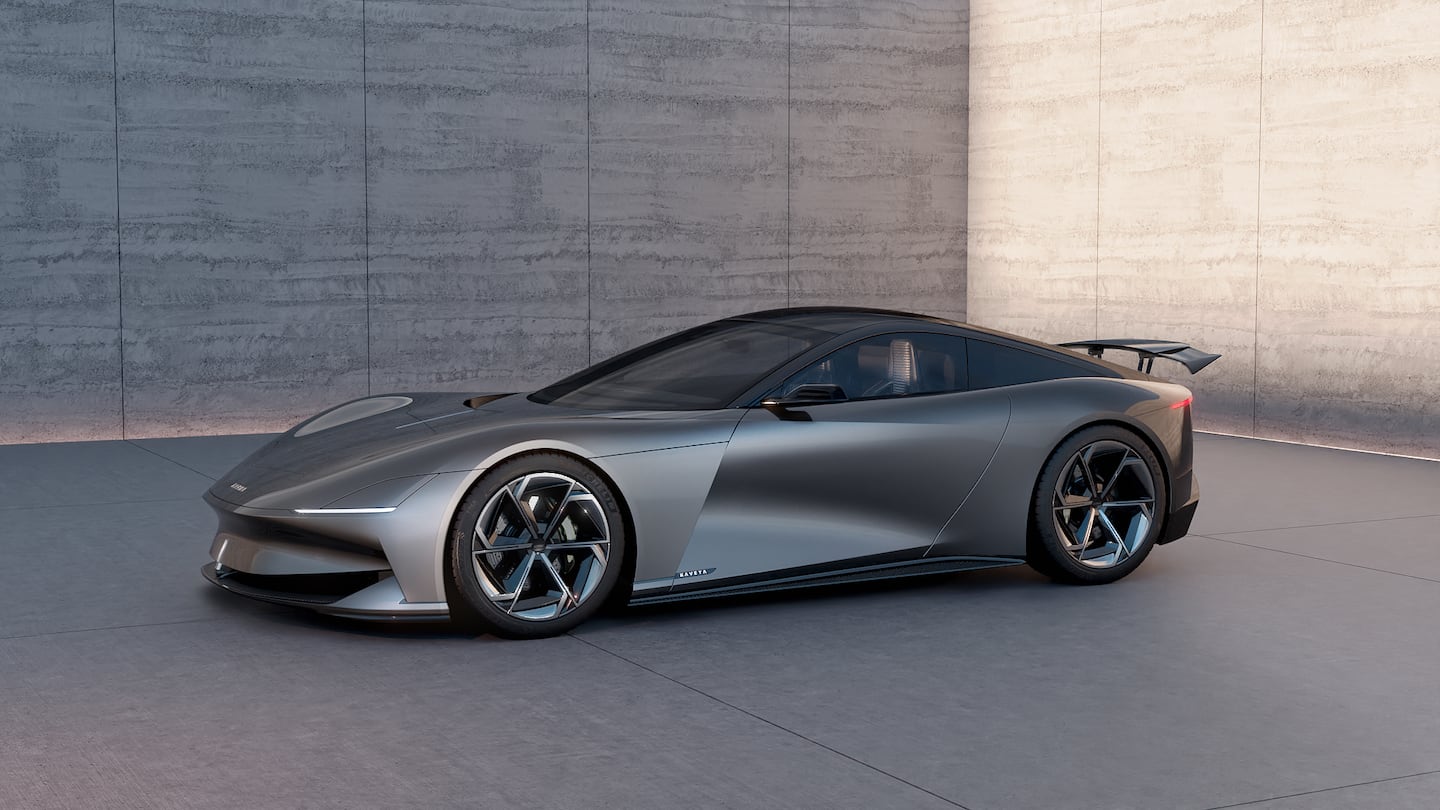
Karma Automotive, a US startup that’s building a Lamborghini-like electric supercar, will use semi-solid-state Factorial batteries in a vehicle that’s expected to come to market next year.
Auto giant Mercedes-Benz is testing them as well. Last fall, one of the company’s EQS cars powered by Factorial batteries drove 745 miles on a single charge. Automaker Stellantis has committed to building a “demonstration fleet” of Factorial-powered Dodge Charger test vehicles this year. Factorial also has development deals with Korean carmakers Hyundai and Kia. Factorial is even planning to go public later this year.
It’s all happening as other local lithium battery startups are on the ropes. 24M Technologies in Cambridge has laid off workers and may be on the verge of closing, according to a report in the newsletter The Information. Meanwhile, SES AI in Woburn is pivoting to drone batteries, but unlike Factorial, SES is losing its automotive partners Hyundai and Honda, which are cutting back on their EV investments.
Hiawatha Bray can be reached at [email protected]. Follow him @GlobeTechLab.