The School of Engineering and Applied Science announced a new $200 million fund to support faculty research and startups in areas impacted by federal funding cuts.
The fund — titled the Futures Fund Partnership for Innovation — provides $200 million in monetary support to various projects across human health, sustainable infrastructure, and physical intelligence research frontiers. It will receive funding from several philanthropic partners, including Penn Engineering alumni and industry leaders.
The Futures Fund seeks to enable faculty to “provide timely, flexible support for leading-edge research and educational advancements over the next five years,” according to the press release. It will support faculty efforts to secure external grants, launch startups, and develop research collaborations.
“If we are to generate the resources necessary to lead in technology and innovation, drive meaningful social impact, and help shape the future, we must take matters into our own hands,” Penn Engineering Dean Vijay Kumar wrote in a statement to The Daily Pennsylvanian.
The effort to support research comes after a series of federal policy moves in 2025 that led to widespread funding cuts, including a 15% cut to National Institutes of Health funding projected to cost Penn $240 million.
Kumar told the Philadelphia Business Journal that he “saw the writing on the wall” as a result of the cuts. He added that Penn Engineering’s reliance on research funding meant that the impacts across the school were drastic.
One contributor to the fund is 1984 Wharton and Engineering graduate, University Trustee, and Chair of Penn Engineering’s Board of Advisors Rob Stavis, who is also a partner at Bessemer Venture Partners.
Stavis wrote in the press release that funding for early-stage research projects can be “the hardest to find and the highest in impact,” heightening the impact of federal constraints. The Futures Fund aims to fill that gap by providing seed capital for research in its infancy.
Other fund contributors include 2002 Engineering graduate and JPMorgan Chase Senior Advisor Rohan Amin, 1996 Wharton and Engineering graduate Alex Krueger, 1995 College and Engineering graduate Robin Ren, and philanthropist Linda Ye.
Beyond providing seed funding for research and startups, the fund also aims to enhance engineering education efforts. It will help faculty integrate artificial intelligence and new digital tools into classrooms — an effort that has already beguAn at Penn.
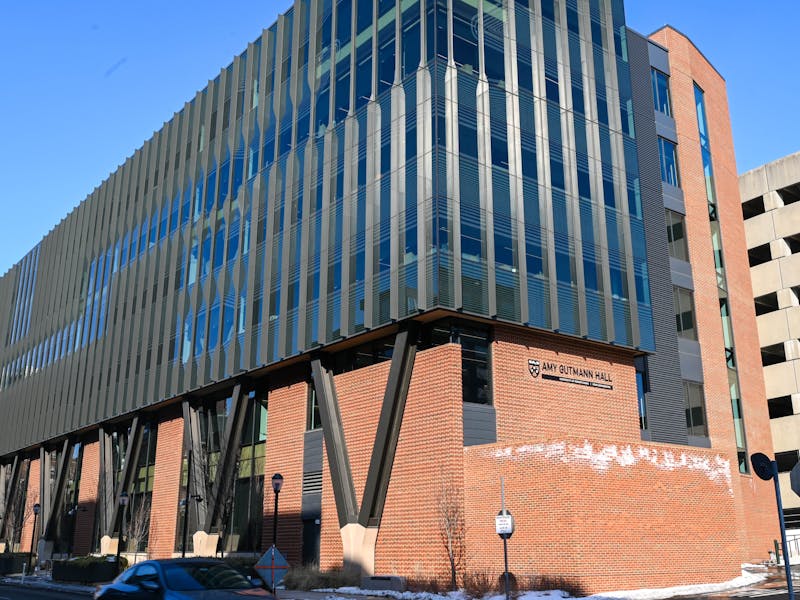
The Futures Fund is one of the latest components of Penn’s commitment to AI incorporation across campus, from the introduction of the new AI major in 2024 to the 2025 opening of Amy Gutmann Hall, a dedicated space for AI and data science research.
In January, Penn announced a $50 million life sciences venture fund, alongside the global biotechnology firm BioNTech and the Philadelphia-based venture capital firm Osage University Partners. That month, Penn also launched a $10 million fund to provide early investment in companies founded by University researchers.
Staff reporter Sameeksha Panda covers Penn Medicine and can be reached at [email protected]. At Penn, she studies chemistry.