Following a boom in corporate wellness programs in the 2010s, data shows that companies are now significantly pulling back on workplace wellness offerings. Nike, for example, has scrapped its employees’ annual wellness week.
At a time when cardiovascular complications, 80% of which are preventable through healthier lifestyles, are a leading cause of mortality in the U.S. and mental health conditions affect over a billion people globally, promoting healthy mental and physical habits in the workplace seems more relevant than ever.
What’s more, research conducted by the McKinsey Health Institute and the World Economic Forum, enhanced employee health and well-being could generate up to $11.7 trillion in global economic value.
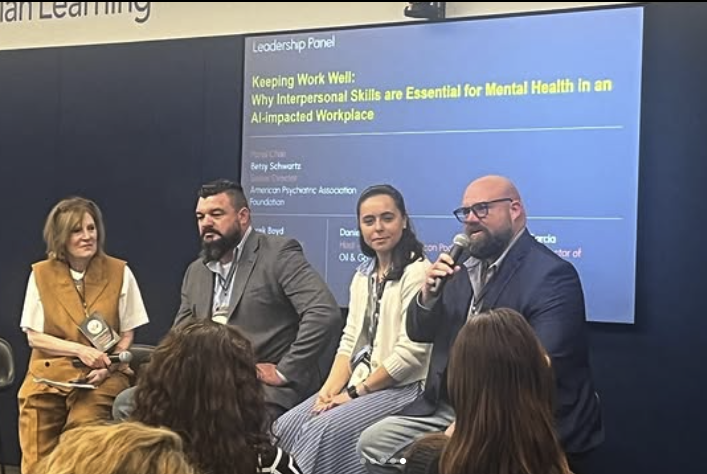
At a recent Wellbeing at Work (WAW) summit in New York, wellbeing experts from companies like UBS, Cisco, EY and Netflix gathered to discuss the future of wellness in the workplace.
Speaking to 150Sec after this most recent meeting, Wellbeing at Work CEO Mark Rix noted that AI is now inevitably going to form a key part of the wellbeing industry. Debates about the benefits and drawbacks of AI “permeate every single discussion that we have at our events”, Rix said.
However, the CEO explained, “AI needn’t be a threat … it can actually enable improved performance … [by] unlocking opportunities for upskilling and reskilling and professional development” while facilitating large-scale international recruitment through efficient data analysis.
Preparing people in the wellbeing space for that shift towards automation, Rix warns, must be a priority: “It won’t be AI that replaces you, it will be somebody that understands AI that replaces you”.
AI in the physical wellbeing space
Some startups are proving AI’s potential in the wellbeing space by using it in order to reintegrate physical wellness into the working day effectively and cost-efficiently.
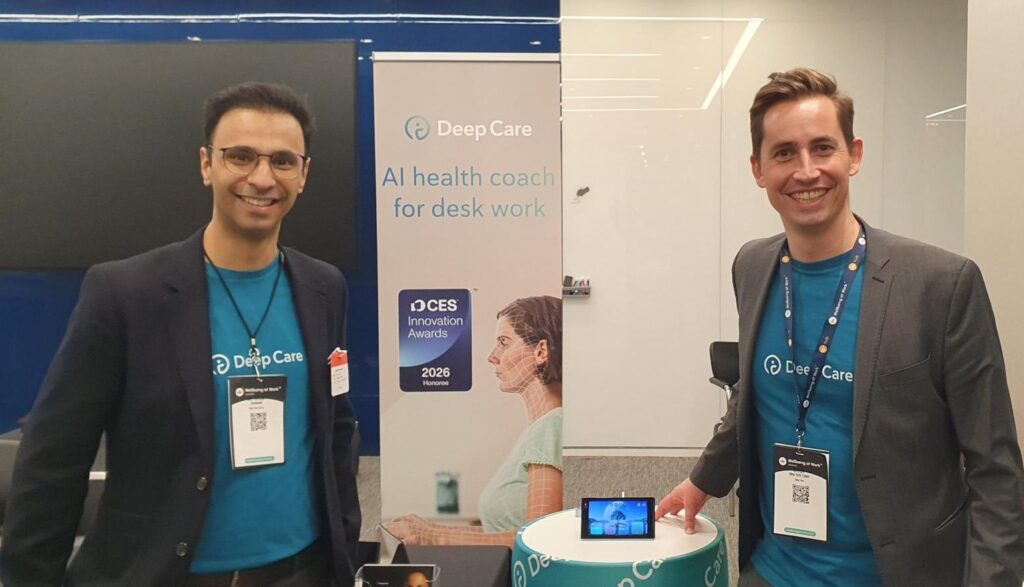
Deepcare, a German healthcare startup that recently expanded into the U.S. and attended the New York summit, has developed an AI-powered workplace health assistant called Isa which uses AI to analyze breathing, gaze behavior and micro-movements.
Isa’s privacy-safe sensors detect prolonged sitting, poor posture and lack of hydration. Once poor habits are detected, Isa prompts employees to make small, frequent changes throughout the day, such as standing up, walking briefly or resetting their posture.
Deepcare CEO and founder Dr Milad Geravand told 150Sec the importance of the company’s mission to reintroduce physical activity into the workplace: “work is where behavior becomes routine. Most age-related diseases do not start with illness, but with years of unnoticed [bad] habits”. These patterns are cemented in the workplace.
The appropriate response to this accumulation of bad habits, according to Geravand, is “small adjustments [which], taken consistently at the right moment reshape posture, movement, breathing and recovery over time”.
Isa “allows these moments to be identified objectively and delivered without burden”, the CEO explained. Deepcare’s Isa tool now has 50,000 users and has been integrated into over 280 organizations across Europe.
Some AI-native startups are seeking to improve employee physical health by including diagnostic and palliative care in their wellbeing offerings.
DocHQ, a UK-based health technology company and workplace health partner, offers clients use of its AI-driven skin search engine where users can upload photos of skin concerns – moles, spots and rashes – and receive advice about whether or not to seek medical treatment.
DocHQ also provides employers with AI-assisted physiotherapy programs for employees with musculoskeletal (MSK) concerns, a primary driver of sick leave and a large portion of private medical insurance claims. The offering includes AI-powered exercise plans to both help MSK sufferers and help employees prevent the onset of MSK conditions.
The UK health start ups customers include British-American professional services firm AON, New York-based multinational Teladoc Health and B2B SaaS platform Ludo. Case studies indicate that DocHQ’s clients have reported reduced absenteeism.
However, the rapid automation of these kinds of wellbeing offerings has also caused concern.
Jeanette Bronée, a keynote speaker on leadership and culture who has written about the work-life balance, corporate culture and mental health, spoke to 150Sec about the risks of allowing AI programs to micromanage human behaviors.
Although Bronée acknowledged the potential usefulness of AI in promoting physical workplace wellbeing, she warned that “we have, as human beings, outsourced our power for centuries and we are 1774990715 in the process of letting AI … tell us when to stand up, when to eat, when to drink a glass of water”.
Such dependence on automation, the speaker cautioned, could have a stultifying effect on the workplace, instead of employees instead of encouraging them to “solve problems, think better and innovate”.
Mental wellness at work and AI
The aforementioned global mental health crisis also has serious implications for the workplace; globally, an estimated 12 billion working days are lost annually because of depression and anxiety, which produces an approximate annual loss of $1 trillion USD in productivity.
However, the WHO reports that the global median number of mental health workers is 13 per 100,000. This shortage of human healthcare workers and the prevalence of mental health conditions have created a void in the workplace mental health space that AI-oriented solutions could well fill.
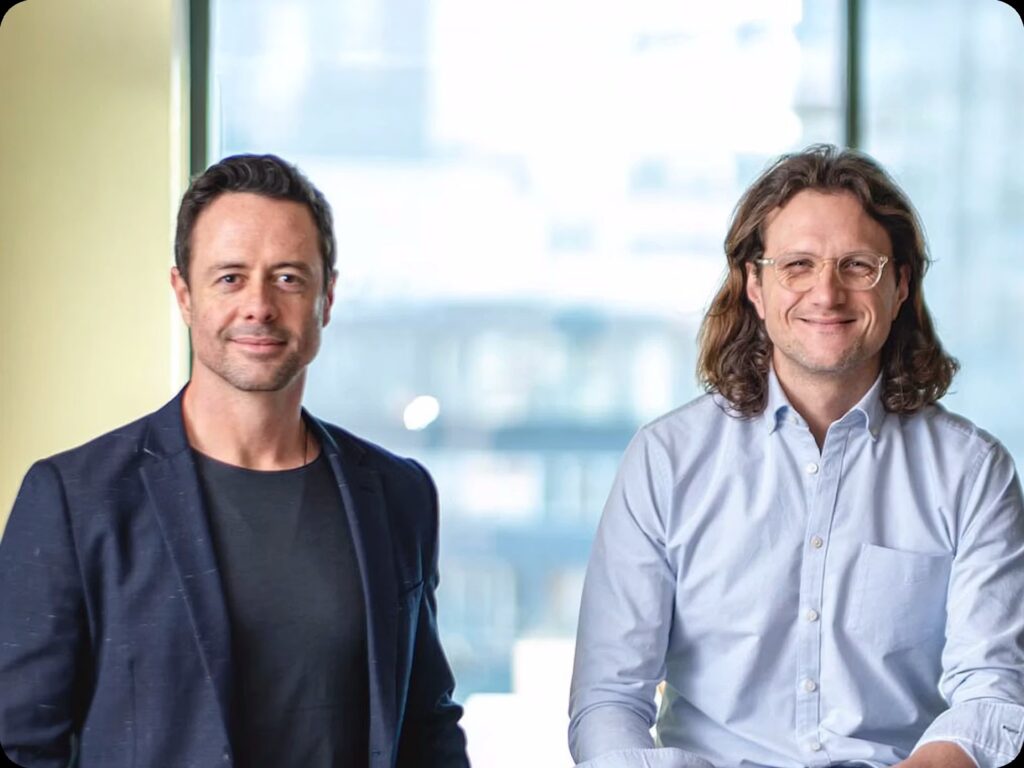
Dr Nick Taylor, CEO of mental health platform Unmind, told 150Sec that “when used responsibly, AI can help close that gap: offering confidential, in-the-moment guidance and then connecting people to human care where it’s appropriate”.
Taylor explained that Unmind, which helps organizations measure, manage and improve employee wellbeing, uses its AI-powered mental health agent – Nova – to provide employees with “quick, confidential mental health support at scale”. Nova helps “people work through stress, sleep, relationships, confidence, workload and more”.
The AI-powered services of Unmind have been integrated into the operations of large companies such as Uber, Samsung, Disney and British Airways. Crucially, however, Unmind is not discarding the human element; Nova, Taylor stressed, “does not diagnose or provide medical treatment. When someone would benefit from therapy, coaching, or urgent human support, Nova guides them there”.
Some, however, have expressed concern about the increasing presence of AI in the mental health field. AI occasionally produces hallucinations, AI-generated outputs that are inaccurate or nonsensical.
There have been recorded instances of these hallucinations affecting mental health chatbots, with drug addicts being advised to take small hits of methamphetamine and sufferers of eating disorders being given dieting advice. These hallucinations have led to the the American Psychological Association labeling the use of AI chatbots for mental health support “a dangerous trend”.
Taylor, however, emphasised that Nova has inbuilt safeguards to prevent AI-generated hallucinations or the spread of misinformation: the data provided by Nova, he explained, comes from “structured, clinician-designed prompts and evidence-based psychological frameworks – not open-ended, unconstrained generation. It is designed specifically to avoid hallucinations”.
Deepcare and Unmind’s forays into the wellbeing space reflect a growing interest by AI-native startups in the industry, but Rix warns that these AI innovations should not seek to replace the human element of wellbeing, but rather complement it.
AI “dominates the agenda” and “is going to offer a source of advantage and efficiency for managers in organisations [all] around the world”, the CEO recognized. “But the soft skills, the human skills” of talking, listening and helping one another through work-related difficulties remain “really, really important”, Rix concluded.
Source link