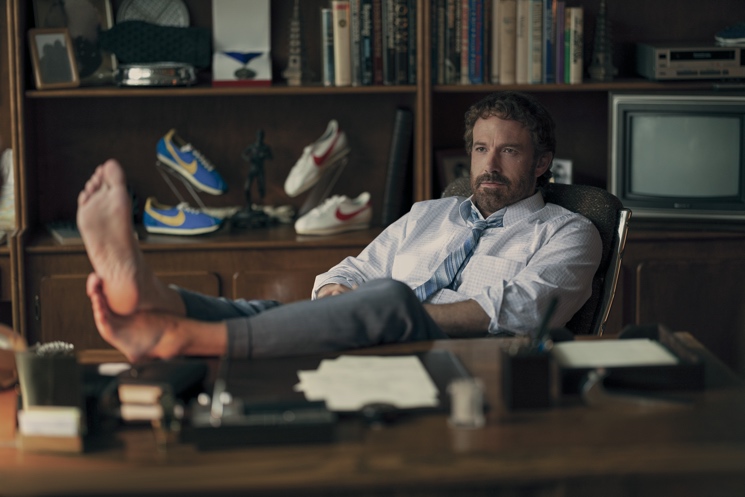
“I wouldn’t like to be in the visual effects business. They’re in trouble because what used to cost a lot of money is going to cost a lot less. And it’s going to hammer that space, and it already is. And maybe it shouldn’t take a thousand people to render something,” Ben Affleck foreshadowed in a CNBC conference back in November 2024.
Now in 2026, Affleck — of Gone Girl, The Accountant, Good Will Hunting, arguably some of the greatest films before AI filmmaking — finds himself wading in the ethically grey waters of artificial intelligence.
Last month, Affleck sold his AI startup, InterPositive, to Netflix for an estimated $600 million USD. During this period, in a promotional video with Netflix, Affleck emphasized that his invention is simply a tool — not something that relies on “text prompting or creating something from nothing.” Instead, he explained, the model is developed using your own material: “That’s how this works. You have to create your movie essentially first before you can really build your model.”
InterPositive’s mission, therefore, is “to use emerging technology in ways that protect and expand creative choice,” which Netflix says is “deeply aligned” with its “long-standing belief that innovation should serve storytellers and the creative process.”
Interesting, then, how an AI tool that threatens the job security of said storytellers happens to serve it, too.
Which brings us to the present: Deadline has obtained the patent filed for InterPositive in 2024, and its messaging appears to differ somewhat from what Affleck and Netflix previously promised.
Suddenly, the focus turns to “cutting costs,” a thinly veiled goal of reducing human labour, revealing the underlying intentions of these profit-driven ventures.
It reveals that Affleck’s technology is designed to deliver significant cost reductions across film and TV production, with some of the most striking figures including a 50 percent cut to visual effects budgets and up to 70 percent savings on background actors and stand-ins. Overall, below-the-line costs are projected to drop by 10 to 20 percent, while specific departments could see reductions of 40 percent for additional production units and set dressing, and 30 percent for the art department. Although much of the patent focuses on technical processes and efforts to normalize AI use through “ambassadors,” the scale of these projected savings stands out — especially given the lack of detail about how many jobs might be affected.
At that same CNBC conference in 2024, Affleck made his perspective clear, saying the goal is to “lower the barrier to entry and allow more voices to be heard,” making it easier for people who want to create films like Good Will Hunting to go out and make them.
And sure, a reasonable person might understand that argument — lowering expenses could make filmmaking more accessible to the average person. Yet it overlooks the fact that the “inconveniences” Affleck highlights — such as “removing stunt wires, reframing shots, capturing missed takes, adjusting lighting, and enhancing backgrounds” — are precisely where the artistry and skill of great filmmaking come to life. It is within those pockets of imperfections that separate good filmmakers from great ones. It is in those moments of frustration that filmmaking is epitomized and the human intellect leveraged.
It seems as though Ben Affleck is a walking contradiction — an advocate for human creativity but a supporter of the very thing that eliminates them.
In a press release, he says, “We also need to preserve what makes storytelling human, which is judgment. The kind that takes decades to build, experience to hone and that only people can have. I knew I had a responsibility to my peers and our industry, to protect the power of human creativity and the people behind it. In creating InterPositive, I sought to do just that.”
The writer, director and actor aims to preserve judgment by eliminating the costs of human judgment — undeniable logic!