Chinese EV Truck Startup Windrose Makes Its Debut In the U.S.
Chinese EV Truck Startup Windrose Makes Its Debut In the U.S. – Moby
Lo and behold!
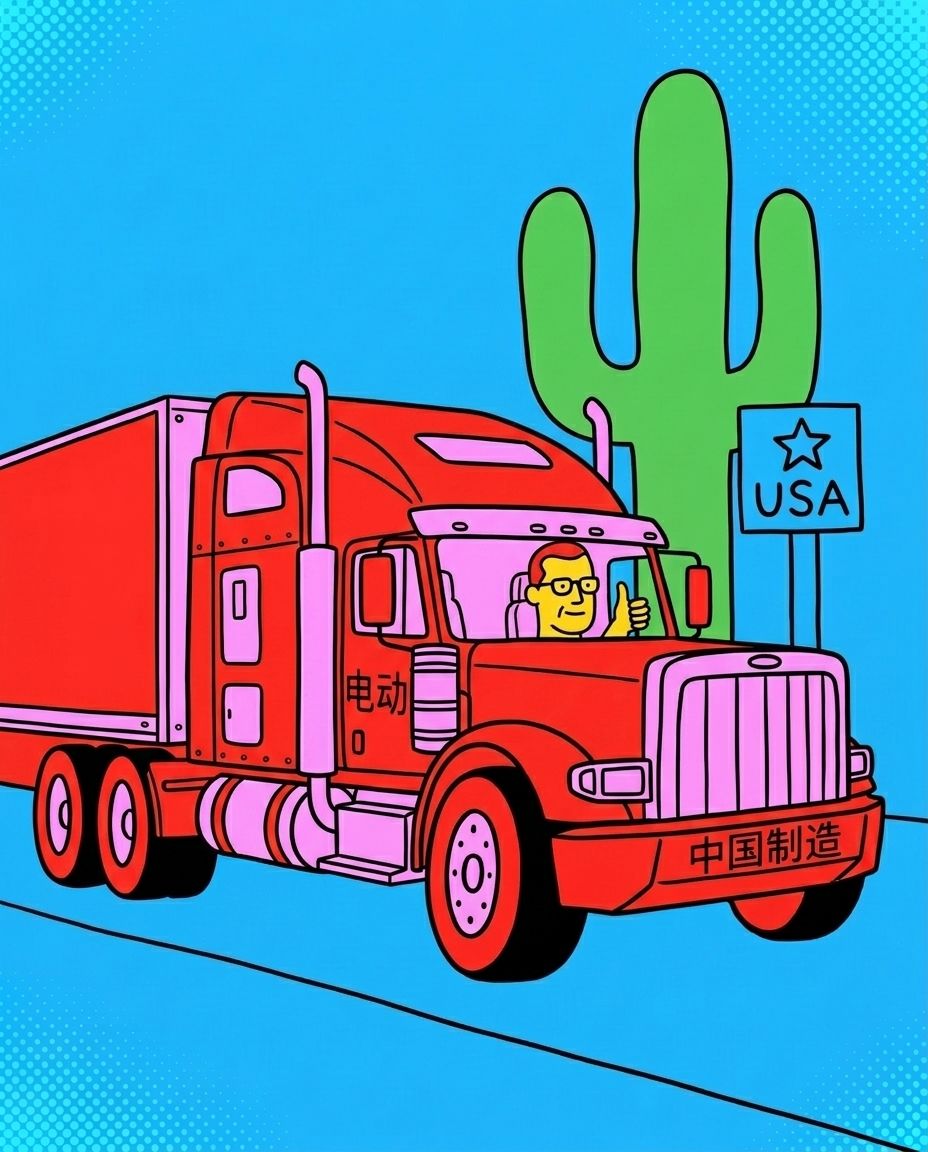
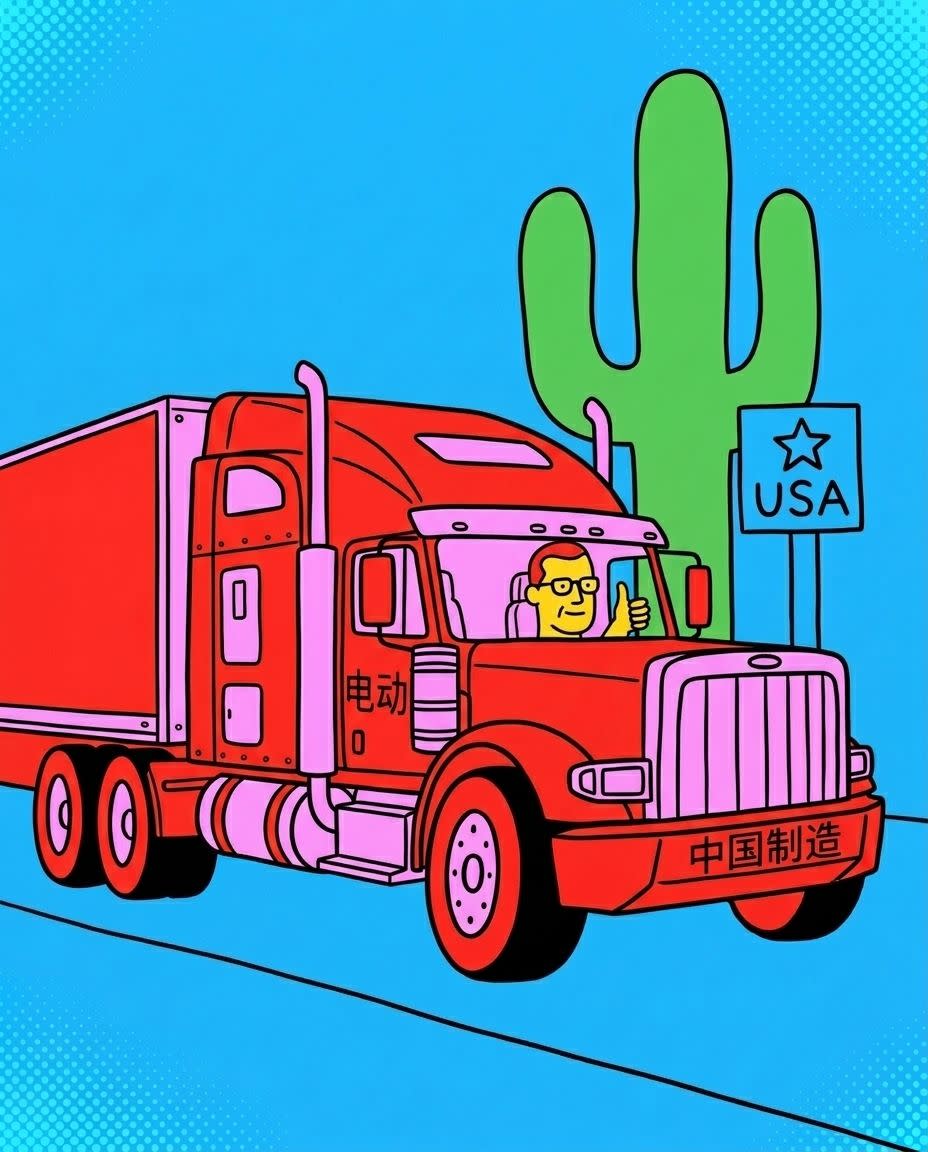
Chinese electric truck startup Windrose made its first delivery of a long-haul electric heavy truck in the U.S. The buyer is Texas logistics firm Allogic, which paid $285,000.
It’s a single truck for Windrose, but a giant leap for entrepreneurship. Windrose was founded in 2022 by Stanford graduate Han Wen and is now headquartered in Antwerp, Belgium. It’s the first electric heavy truck maker to obtain regulatory approval in China, the United States, Europe, and South America simultaneously. Windrose’s charging partner is Greenspace.
For the truck buffs: The R700 is priced around $300,000, offers approximately 640 kilometers of range per charge, and delivers 1,400 horsepower, positioning it as a direct competitor to the Tesla Semi. Windrose’s R700 carries a 729 kWh battery on an 800V platform with megawatt-level charging capability, while the Tesla Semi offers battery options of 500 and 800 kWh on a 1,000V system with up to 500 miles of range.
The company uses lithium-iron-phosphate cells from Chinese supplier CALB, which trade lower energy density for better thermal stability and durability, resulting in about 160 kilometers less range than Tesla’s configuration.
This isn’t the most opportune time to be doing business with the U.S. The Trump administration’s Section 232 tariffs on imported medium- and heavy-duty trucks are already baked into the price, and with that comes the cost pressure. But CEO Han Wen isn’t breaking a sweat. Wen is confident that his company can turn a profit even under this tariff regime.
And it will do one better to help the great American manufacturing dream, perhaps opening a U.S. assembly facility in Arizona, and explore manufacturing with partner Xos at its Tennessee plant to reduce exposure.
For now it has clear goals and plans: The company will manufacture up to 2,000 trucks in 2026, with several hundred allocated to the U.S. market, scaling to at least 10,000 units annually by 2027.
With Tesla ramping up its production of the Semi, it’s about to get real hot in the EV truck market.
CALB — Increased demand for its lithium-iron-phosphate battery cells as Windrose scales production for its heavy-duty electric trucks.
Xos — Potential for new revenue streams through a manufacturing partnership with Windrose for U.S. production in Tennessee.
Allogic — Benefits from being an early adopter of electric heavy trucks, potentially gaining operational efficiencies and meeting sustainability goals.
Greenspace — Increased demand for its EV charging solutions as Windrose trucks are deployed and require high-power charging infrastructure.
Electric Heavy Truck Manufacturing — Market expansion and increased innovation driven by new entrants and intensified competition.
EV Charging Infrastructure — Growth in demand for high-power charging solutions specifically designed for heavy-duty electric vehicles.
Battery Manufacturing — Increased demand for lithium-iron-phosphate (LFP) cells, favored for their thermal stability and durability in heavy-duty applications.
Logistics/Freight Transportation — Broader access to electric truck options, potentially leading to lower operating costs and reduced emissions for fleets.
Lithium — Increased demand for this critical raw material used in LFP batteries.
Iron — Increased demand for this raw material, a component of LFP batteries.
Phosphate — Increased demand for this raw material, a component of LFP batteries.
China — Benefits from a Chinese startup expanding globally and a Chinese battery supplier gaining market share.
U.S. — Potential for new manufacturing jobs and investment in states like Arizona and Tennessee if Windrose establishes local production.
Our analysts just identified a stock with the potential to be the next Nvidia. Tell us how you invest and we’ll show you why it’s our #1 pick. Tap here.
Traditional Internal Combustion Engine (ICE) Truck Manufacturing — While a long-term threat, the immediate impact of one new EV truck entrant is limited, though it signals an accelerating market shift.
U.S. — While potentially gaining manufacturing jobs, the U.S. also imposes tariffs on imported trucks, creating cost pressures for companies like Windrose.
Negative Impacts
Volvo (VOLV-B.ST) — Faces increased competition in the heavy-duty truck market from new electric entrants like Windrose.
Daimler Truck (DTG.DE) — Faces increased competition in the heavy-duty truck market from new electric entrants like Windrose.
PACCAR (PCAR) — Faces increased competition in the heavy-duty truck market from new electric entrants like Windrose.
Nikola (NKLA) — Faces intensified competition in the nascent electric heavy-duty truck market from a new, multi-region approved competitor with ambitious production plans.
Internal Combustion Engine (ICE) Truck Component Suppliers — Long-term threat to demand for traditional engine parts, fuel systems, and related components as electric truck adoption accelerates.
[Short-term] Increased Competition in EV Heavy Truck Market — Windrose’s entry into the U.S. market and ambitious production targets will intensify competition for existing players like Tesla, Volvo, Daimler Truck, PACCAR, and Nikola. This could lead to accelerated innovation and potentially price pressures in the segment. Confidence: High.
[Medium-term] Boost for LFP Battery Demand — Windrose’s choice of lithium-iron-phosphate (LFP) cells from CALB for its heavy trucks will drive increased demand for LFP batteries, benefiting suppliers and potentially influencing battery technology adoption trends in the heavy-duty sector. Confidence: High.
[Long-term] Potential for U.S. EV Manufacturing Expansion — Windrose’s stated intent to explore U.S. assembly facilities in Arizona or manufacturing partnerships with Xos in Tennessee could lead to new job creation and investment in American EV manufacturing infrastructure. This would help mitigate the impact of tariffs. Confidence: Medium.
[Short-term] Growth in Heavy-Duty EV Charging Infrastructure — The deployment of Windrose’s R700 trucks, with their megawatt-level charging capability, will necessitate and accelerate the development of robust, high-power charging infrastructure suitable for long-haul electric trucks. This benefits charging partners like Greenspace. Confidence: High.
[Medium-term] Pressure on Traditional Truck Manufacturers — The successful entry and scaling of Windrose, alongside Tesla’s ramp-up, will increase pressure on traditional internal combustion engine (ICE) truck manufacturers to accelerate their own electric heavy-duty vehicle development and market penetration. This could impact their R&D spending and market share. Confidence: Medium.
↑ [Lithium Prices] — Increased demand for lithium as LFP battery production for heavy-duty EVs scales up.
↑ [EV Charging Infrastructure Investment] — Growing need for high-power charging solutions to support the expanding electric heavy truck fleet.
↓ [Diesel Fuel Demand] — Long-term, as electric heavy trucks replace ICE trucks, there will be a gradual decrease in demand for diesel fuel.
→ [U.S. Manufacturing PMI] — Potential for slight positive impact from new EV truck manufacturing facilities in the U.S., but overall impact on broad manufacturing index is likely minor initially.
→ [Freight Transportation Costs] — While EV trucks offer potential fuel savings, initial purchase costs and infrastructure investments might keep overall freight costs stable or slightly increase them in the short term.
One stock. Nvidia-level potential. 30M+ investors trust Moby to find it first. Get the pick. Tap here.