


Over the past decade, Africa’s startup ecosystem has grown in visibility and ambition. More young people are attempting to build venture-scale companies, new sectors are emerging, and capital flows into African startups have expanded. Yet beneath this progress lies a persistent challenge: a large share of early-stage startups fail long before they generate meaningful revenue or scale.
This problem is not driven by a lack of ideas or ambition. It is rooted in weak founder readiness at the earliest stages of startup formation. Many first-time startup founders take steps that appear productive but are strategically premature, registering companies, purchasing domain names, or building products before validating the problem, understanding customers, or defining a viable business model. These early missteps often lead to long cycles of iteration without traction, inefficient use of time and resources, and eventual founder fatigue.
From an economic standpoint, this represents a structural inefficiency within the startup ecosystem. Capital, mentorship, and institutional support tend to concentrate around startups that have already passed the earliest validation stages. Meanwhile, the upstream layer, where founders should be learning how to think, test assumptions, and make disciplined decisions, remains thinly supported. As a result, many startups enter the ecosystem already weakened by avoidable early-stage errors, reducing survival rates and capital efficiency downstream.
Africa’s growing startup funding numbers further expose this imbalance. While billions of dollars have flowed into African startups in recent years, the majority of this capital targets a relatively small subset of companies that survive long enough to become investment-ready. For every startup that raises funding, hundreds struggle or fail quietly at the idea and pre-revenue stages, often without access to structured guidance. The consequence is a pipeline problem: too few well-prepared startups reaching later stages, and too much effort spent fixing problems that could have been avoided earlier.
SDC Startup School was created to address this gap in a systematic way.
SDC Startup School is a fully online, open-access startup education platform designed to help founders move from idea to startup with clarity, structure, and discipline. The school is self-paced, allowing learners to start at any time, from anywhere in the world, and complete the program at their own pace. Rather than offering motivational content or fragmented lessons, SDC Startup School delivers a cohesive, execution-focused curriculum built around how startups are actually formed and grown. Learners engage with practical case studies, assessments, templates, and tools that guide them through problem validation, customer discovery, business model design, revenue generation, and early execution.
This approach has demonstrated measurable traction. To date, SDC Startup School has supported over 3,500 learners across more than 30 cities in Africa and beyond, including participants from Nigeria, Chana, Kenya, Tanzania, Egypt, Ethiopia, and The Cambia. This geographic spread reflects both the pan-African relevance of the curriculum and the demand for startup education that is accessible, structured, and grounded in emerging-market realities. Building on this momentum, the platform plans to scale to 10,000 learners by the end of 2026.
The platform’s emphasis on practicality is intentional. By helping founders make better decisions earlier, SDC Startup School aims to reduce the number of startups that fail due to preventable mistakes. One participant, after comparing his experience with a foreign startup school, described SDC Startup School as “more practical, more applicable, and having everything needed in one place,” underscoring the value of structured, context-specific learning.
As Africa moves toward becoming the world’s most populous continent, the economic implications are clear. Millions of young people will seek opportunities within startups or attempt to build companies of their own. If the startup ecosystem is to absorb this talent productively, founder preparation must improve at scale.
Without stronger early-stage foundations, the ecosystem risks producing a high volume of fragile startups that struggle to survive, employ people, or generate long-term economic value.
SDC Startup School positions itself as foundational infrastructure within the startup ecosystem, operating before incubators, accelerators, and investment programs. By strengthening the earliest layer of startup formation, the platform contributes to healthier downstream outcomes: better-prepared founders, more resilient startups, and more efficient use of capital.
This approach has begun to attract institutional partners seeking scalable founder-development infrastructure. Universities, innovation hubs, government-backed startup support agencies, and ecosystem organizations,
including Futurize Global, Sterling Bank, Enugu SME Center, Benue State University (UniPod), and Women Techsters, are integrating SDC Startup School into their programs. At the regional level, initiatives such as the SkillUp Bauchi Fellowship and the TechRise Women Initiative (TWI), delivered by MHCI in partnership with the
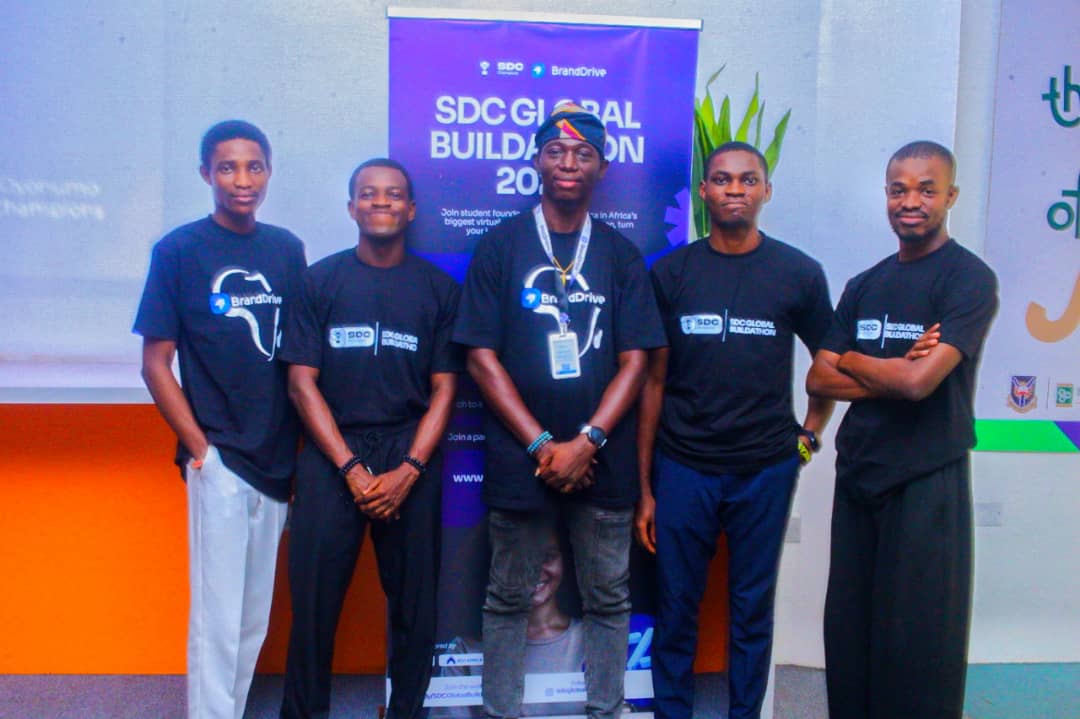
Office of the First Lady of Akwa Ibom State to train 1,000 women, are also leveraging the platform. These efforts are complemented by private-sector collaborators, including BrandDrive, CloudPlexo, Datamellon, and SendPulse. Through SDC Startup School, partner institutions are able to onboard aspiring founders at scale, track participation and progress, and gain visibility into learning outcomes, supporting more accountable program delivery and impact measurement.
By providing a shared foundation for early-stage startup education, SDC Startup School complements existing ecosystem initiatives rather than competing with them. It enables institutions to focus resources where they are most effective, while ensuring that founders arrive at later-stage programs better prepared and more grounded.
SDC Startup School is open, self-paced, and accessible to aspiring startup founders across Africa at no cost. It welcomes partnerships with universities, government agencies, innovation hubs, and development organizations seeking a scalable, context-specific approach to startup founder education and impact measurement. Aspiring founders can also enroll directly and begin their journey from idea to company.
Source link