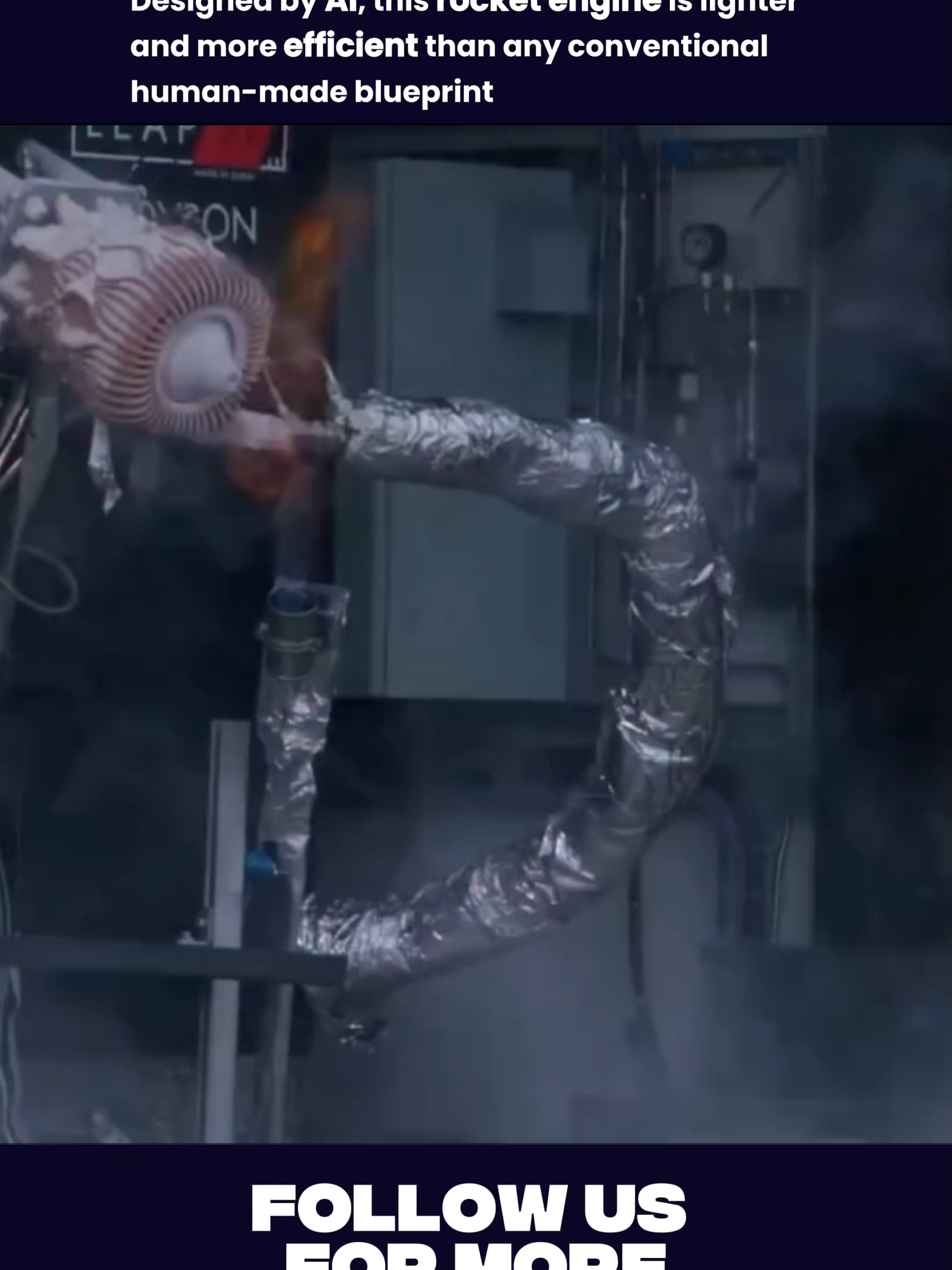
Human engineers design for simplicity. AI designs for something far stranger: pure, almost alien efficiency. 🤖🔥 What you’re seeing is a hot-fire test of a rocket engine created by LEAP 71’s generative AI system, Noyron. This isn’t the result of a human blueprint. It’s a physical structure generated by an algorithm with a single goal in mind: maximum performance. The engine’s organic, skeletal appearance comes from a process known as computational engineering. Instead of sketching designs, the AI runs millions of thermodynamic and fluid-dynamics simulations, iterating relentlessly until it discovers the most optimal form. The result is a structure that is lighter, stronger, and far more efficiently cooled than anything a traditional engineering team could realistically design. Look closely at the frost forming on the exterior. That’s regenerative cooling in action. The AI designed microscopic internal channels that route supercooled liquid methane through the engine walls, absorbing extreme heat before it can destroy the 3D-printed copper structure. This is a glimpse into a future where industrial design is no longer drawn by human hands—but generated, optimized, and grown by machines. Credit: @leap_71 @integza Like this content? Follow us @talkturo.ai DM for credit or removal request (no copyright intended) ©️ All rights and reserved to the respective owner(s) #AI #Engineering #RocketScience #Space #GenerativeAI #3DPrinting #Technology #futureme #Innovation #Aerospace
♬ Originalton – talkturo – talkturo
@talkturo.ai Human engineers design for simplicity. AI designs for something far stranger: pure, almost alien efficiency. 🤖🔥 What you’re seeing is a hot-fire test of a rocket engine created by LEAP 71’s generative AI system, Noyron. This isn’t the result of a human blueprint. It’s a physical structure generated by an algorithm with a single goal in mind: maximum performance. The engine’s organic, skeletal appearance comes from a process known as computational engineering. Instead of sketching designs, the AI runs millions of thermodynamic and fluid-dynamics simulations, iterating relentlessly until it discovers the most optimal form. The result is a structure that is lighter, stronger, and far more efficiently cooled than anything a traditional engineering team could realistically design. Look closely at the frost forming on the exterior. That’s regenerative cooling in action. The AI designed microscopic internal channels that route supercooled liquid methane through the engine walls, absorbing extreme heat before it can destroy the 3D-printed copper structure. This is a glimpse into a future where industrial design is no longer drawn by human hands—but generated, optimized, and grown by machines. Credit: @leap_71 @integza Like this content? Follow us @talkturo.ai DM for credit or removal request (no copyright intended) ©️ All rights and reserved to the respective owner(s) #AI #Engineering #RocketScience #Space #GenerativeAI #3DPrinting #Technology #futureme #Innovation #Aerospace