


When Andrew Parker started Papa almost a decade ago, “companion care” wasn’t a category anyone in healthcare took particularly seriously. The startup idea came to him when he was looking for a “a pal for Papa,” his grandfather, who needed some help with everyday tasks at home.
Today, his Miami-based venture-funded startup has facilitated more than 3 million in-home visits across over 10,000 U.S. cities and is working with more than 40 health plans. In the process, Papa has helped redefine what non-medical support in the home can mean for both members and healthcare systems.
“It’s been kind of a whirlwind,” says Parker, Papa’s founder and CEO, in an interview with Refresh Miami. “We’ve learned a lot about how to provide the best and safest service, and I’m proud of where we are today.”
That pride is tied not just to scale, but to what Parker calls Papa’s “phase two,” an expansion that moves the company way beyond companionship alone and into a broader, more measurable role in healthcare delivery.
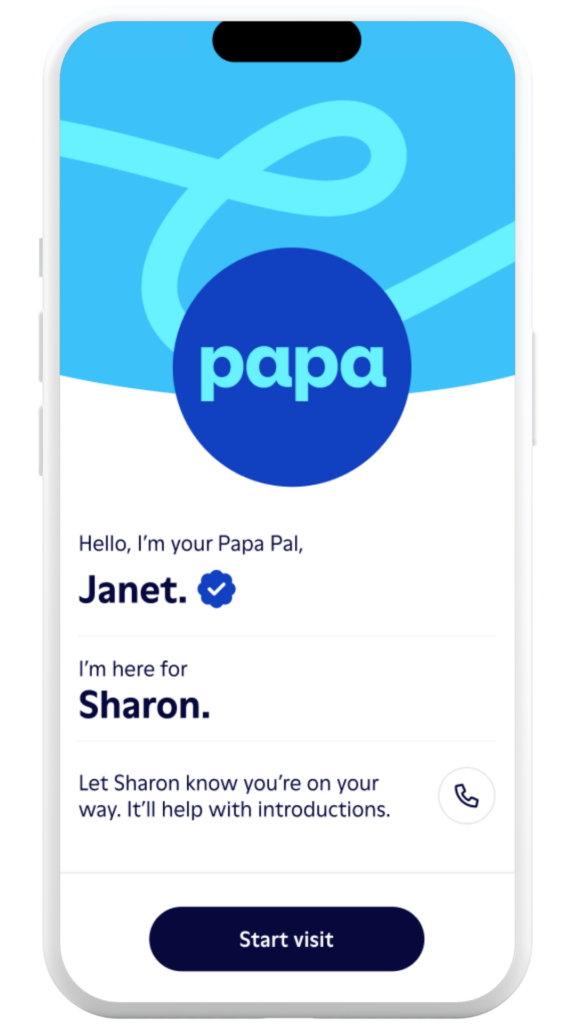
The heart of Papa’s business model is its national network of “Papa Pals.” These are fully vetted, mostly middle-aged adults with personal caregiving experience. They provide companionship and everyday help to older adults and other underserved populations. But Parker imagined those Pals as more than friendly visitors. “We built such amazing trust between our pals and members, and we want to be able to help them as much as possible,” Parker said.
Papa’s phase two is all about operationalizing this vision.
From nice to have to must have
“We’ve added a lot of capabilities to be not just a companion, but also someone that helps move the needle on that person’s healthcare needs and ultimately helps to lower costs for the healthcare providers and deliver outcomes for the members,” says Parker. “It’s a win, win, win.”
Papa has expanded its platform to support in-home health risk assessments, home safety evaluations, medication pickup and adherence support, care gap closure, and help with telehealth appointments and post-discharge needs. None of it is clinical, Parker emphasizes, but all of it is designed to improve healthcare outcomes: “The hard thing here is this is a new thing. This is outside traditional healthcare.”
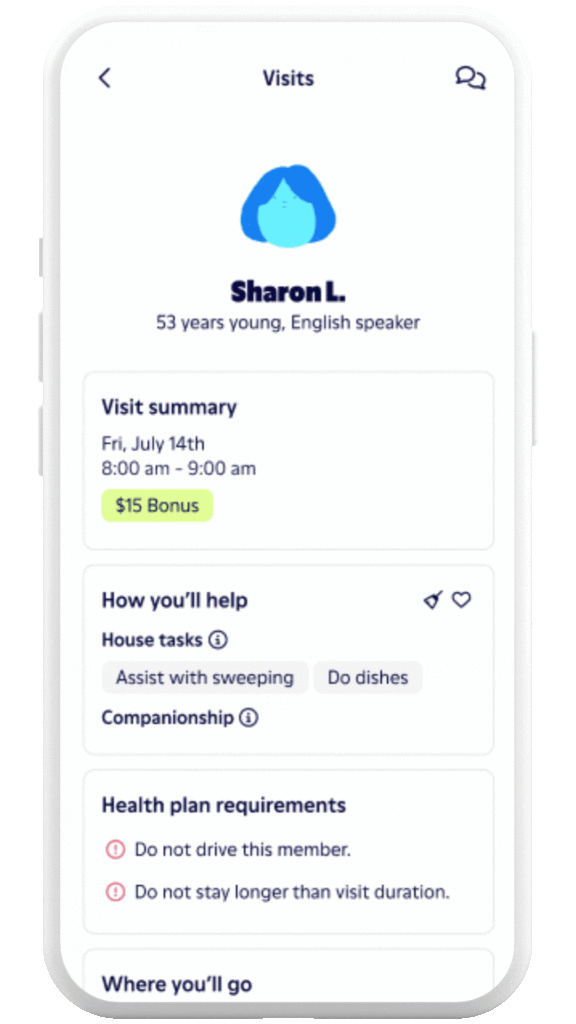
The company now has about 15,000 active Pals each month and they receive training. Tasks such as driving the member to an appointment or picking up medications are clearly defined in Papa’s app before a visit, allowing Pals to opt into visits that match their comfort level.
“I jokingly call it a national network of friendly moms,” Parker says. “There are dads too, but it’s people that have family caregiving experience. They know how to help.”
Data gets healthcare industry’s attention
Combating loneliness has always been important in Papa’s playbook – Parker calls it an epidemic and even did a TedX Miami talk in 2024 about it. But it’s data that has been making the startup’s business case. Over the years, Papa has commissioned and participated in multiple third-party, actuarially validated studies, including many run directly by health plans, that quantify the impact of companion care.
One study showed a 9% reduction in total cost of care; another, focused on higher-need and more isolated members, showed a 33% reduction. Papa has also seen a 14% reduction in all-cause hospital re-admissions for one health plan, and a 6% improvement in chronic condition management for another.
The result is meaningful progress on notoriously hard-to-close care gaps. In one new program, 41% of enrolled members completed a health risk assessment, and in another, 80% completed a home safety assessment – tasks that health plans traditionally struggle to get members to complete. Loneliness scores improved by 69%, with 39% of members reporting they no longer felt lonely at all. When the Papa Pal is trusted and shows up every week, suddenly these things aren’t abstract asks from a health plan but are just part of the relationship.
Papa now operates in 10,000 cities – 10 times more than Lyft, Parker noted – and Papa must serve deeply rural areas as well as urban ones. “It’s challenging, but we built the system for this,” he says. Indeed, in 2025, Papa reached a 97% visit fill rate, meaning a Pal arrives at the exact requested time nearly every time, Parker said.
New leadership, same mission
To support this next phase of growth, Papa recently has made several senior hires. Thomas Carlough, Papa’s new CTO, brings a rare blend of clinical and technical expertise, having started as a hospital pharmacist before leading technology at a large New Jersey health system and later joining Wider Circle, a health-related startup. “I’ve anchored my career in the belief that technology should make care more personal, not less. Papa shows what’s possible when insight, compassion, and real-world support come together to address health barriers where they happen: in the home,” says Carlough, in a statement.
Carlough now oversees product, technology, data, and design, with a focus on empowering Pals with better tools, including AI. Papa isn’t using AI to replace human connection, but to support it with recommendations, follow-ups, and help with understanding the data from the millions of visits. “I’m energized to help shape the next iteration of Papa’s platform, expanding its reach, strengthening its data and operational backbone, and enabling the kind of in-home support that improves outcomes at scale,” Carlough adds.
Papa has also added Austin Weaver, formerly VP at Hinge Health where he led that company’s Medicare business, as SVP of Healthcare Strategy, leading Papa’s go-to-market product strategy and commercial functions. Colin Routledge has joined as VP of Finance, most recently serving as SVP Finance at Project Canary. Amy Fan, previously CPO and co-founder of Twentyeight Health, is Papa’s General Manager of New Ventures, leading the launch and growth of a new community-focused business line that will be announced early this year. “Papa now has the leadership team in place to meet accelerating demand for trusted, in-home support as we drive toward our vision of a world where no one goes it alone,” Parker says.
What’s next
Papa currently operates almost entirely through health plans, employers, and retiree programs, but Parker says the addition of a consumer self-pay option could be coming soon, and it would be a return to the company’s earliest roots.
More broadly, Papa is doubling down on the home as a center for care.
“Healthcare plans are finally realizing … you can’t just wait for someone to come to the doctor, you have to help people in their home. Home is where the heart is, as they say, but also where the health is. People want to age gracefully in their homes, and Papa allows them to do that,” Parker says. “We’re doing that at scale.”
With 240 employees working remotely, a tightly documented operating model, and a singular focus on in-home impact, Papa is positioning itself not as a nice to have, but as a healthcare must have.
Phase two is all about closing the loop, Parker says. “It’s about really helping people, delivering more outcomes, and becoming what we’ve always envisioned: the most capable, scaled in-home care platform.”
READ MORE IN REFRESH MIAMI:
- How Papa is turning companion care into a healthcare must-have – December 30, 2025
- #MiamiTech in 2025: Growing up without slowing down – December 29, 2025
- 8+ things to know in #MiamiTech: Togal.AI plans hiring spree in 2026, plus news from Vitalis Ventures, PairSoft, Space Florida, Xpoint, Pillar Security, ACE Padel, Boats Group & more – December 23, 2025
Source link