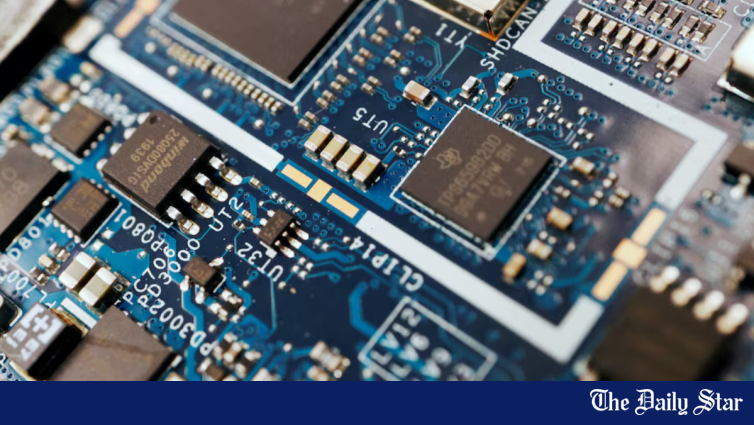
US President Trump issued a new national security directive on Wednesday, placing a 25% import tax on select advanced artificial intelligence chips. The order specifically names semiconductors like Nvidia’s H200 and AMD’s MI325X processors.
The proclamation follows a nine-month investigation under Section 232 of the Trade Expansion Act of 1962 and targets a number of high-end semiconductors meeting certain performance benchmarks and devices containing them for import duties.
The action is part of a broader effort to create incentives for chipmakers to produce more semiconductors in the US and decrease reliance on chip manufacturers in places like Taiwan.
“The United States currently fully manufactures only approximately 10% of the chips it requires, making it heavily reliant on foreign supply chains,” the proclamation said, adding that the reliance was a “significant economic and national security risk.”
The White House said in a fact sheet that the tariffs will be narrowly focused and will not apply to chips and derivative devices imported for US data centres – a huge consumer of AI chips – startups, non-data centre consumer applications, non-data centre civil industrial applications, and US public sector applications. Commerce Secretary Howard Lutnick has broad discretion to apply further exemptions, according to the proclamation.
Trump in December said he would slap tariffs on Chinese semiconductor imports over Beijing’s “unreasonable” pursuit of chip industry dominance, but delayed the action until June 2027. That move followed a year-long “Section 301” unfair trade practices investigation into China’s exports of “legacy,” or older-technology, chips to the US, launched by former President Joe Biden’s administration.
Questions had swirled around about the universe of products containing chips that would be hit by the tariffs, the tariff rates, and whether any countries, products, or companies would be exempt. Wednesday’s announcement, coupled with the news from December, suggests a light touch from the administration on chip imports, for now.
Last year, Trump announced he would allow Nvidia to sell H200 chips to China in exchange for a cut of the sales of those chips. Legal experts questioned whether such an arrangement would violate the US Constitution’s ban on taxing exports.
The Trump administration this week required that China-bound chips make a detour from Taiwan, where they are made, through the United States for testing by a third-party lab. When the chips enter the United States, they are subject to the 25% tariff announced on Wednesday.
Nvidia did not immediately respond to a request for comment. “We comply with all US export control laws and policies,” AMD said in a statement.