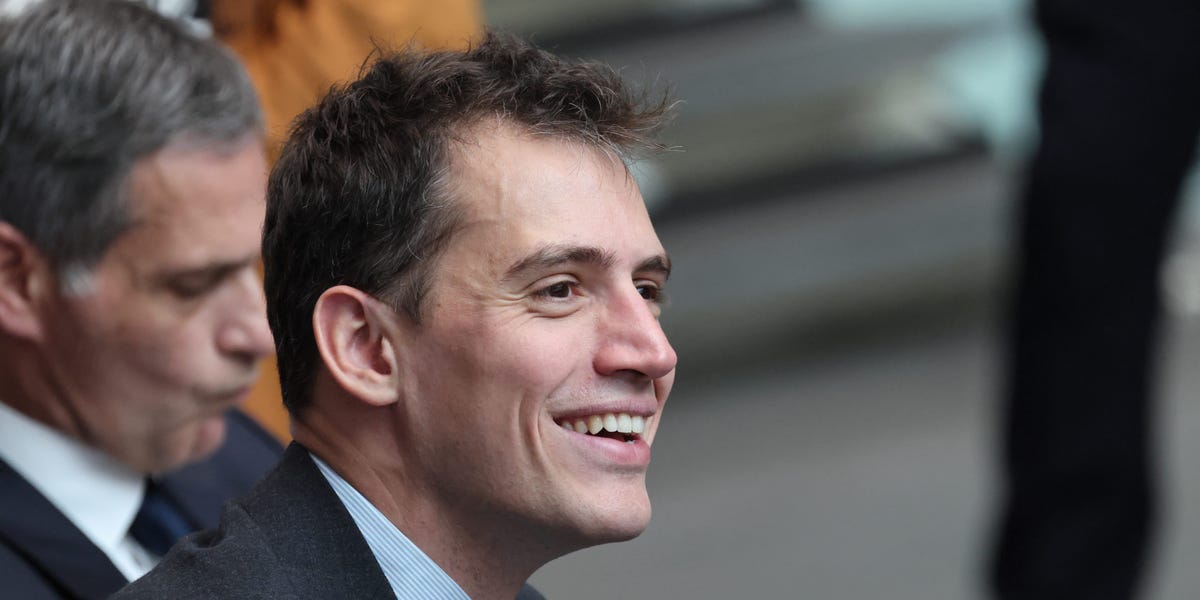
As the race to dominate AI accelerates, Europe’s most prominent AI startup is betting that geography — not just technology — can be a competitive advantage in its home market.
Arthur Mensch, the CEO and cofounder of French AI company Mistral, said the company’s edge in Europe over Silicon Valley rivals like OpenAI, Google, and Anthropic isn’t about having dramatically smarter models.
Instead, he said that many European governments and regulated enterprises are seeking AI systems they can control, customize, and operate independently, rather than relying on a small number of external providers.
“European governments are coming to us because they want to build the technology and they want to serve their citizens,” Mensch said on the “Big Technology Podcast” on Wednesday.
When models converge, control becomes the moat
Mistral, founded in 2023 and now valued at roughly $14 billion, develops large language models that rival those of leading US systems.
But Mensch said that frontier AI models are rapidly converging in performance as research spreads and training techniques become widely available.
As a result, the real battleground is shifting away from raw intelligence and toward deployment, control, and trust — a shift that plays directly into Mistral’s pitch in Europe.
Mensch said governments, banks, and heavily regulated industries want AI systems they can customize, deploy locally, and operate independently — without fear that a single vendor could change the rules or shut off access.
The approach has already paid off. France’s military recently selected Mistral for an AI deal that keeps sensitive systems running on French-controlled infrastructure.
AI sovereignty beats regulatory arbitrage
Mensch pushed back on the idea that the company benefits merely from EU regulation or protectionism.
Instead, he framed the demand as geopolitical and operational.
European governments, he said, want AI that they can govern themselves and use to serve citizens without depending on foreign platforms.
The same logic applies to regulated enterprises that need tighter control over data, compliance, and security.
Mistral’s embrace of open-source models is central to that strategy.
Open source allows customers to run AI on their own infrastructure, build redundancy, and avoid vendor lock-in — a sharp contrast to the closed, centralized platforms favored by many US firms.
A multi-polar AI future
The appeal isn’t limited to Europe. Mensch said Mistral also works with US and Asian customers who want to reduce dependence on a small group of American providers and retain more autonomy over how AI is used inside their organizations.
That approach is already extending beyond the West. Mistral recently deepened a partnership with Morocco’s government to co-build locally tailored AI models and launch a joint research and development lab aimed at strengthening the country’s technological autonomy.
Long term, Mensch said he doesn’t believe AI will be dominated by a single winner or country. Instead, he expects multiple regional centers of expertise shaped by local needs, industries, and political realities.
In that future, he suggested, Mistral’s biggest advantage may not be the models it builds — but where, and how, it builds them.
Do you work for Mistral and have a tip or story to share? Contact this reporter via email at [email protected] or Signal at thibaultspirlet.40. Use a personal email address, a nonwork WiFi network, and a nonwork device; here’s our guide to sharing information securely.