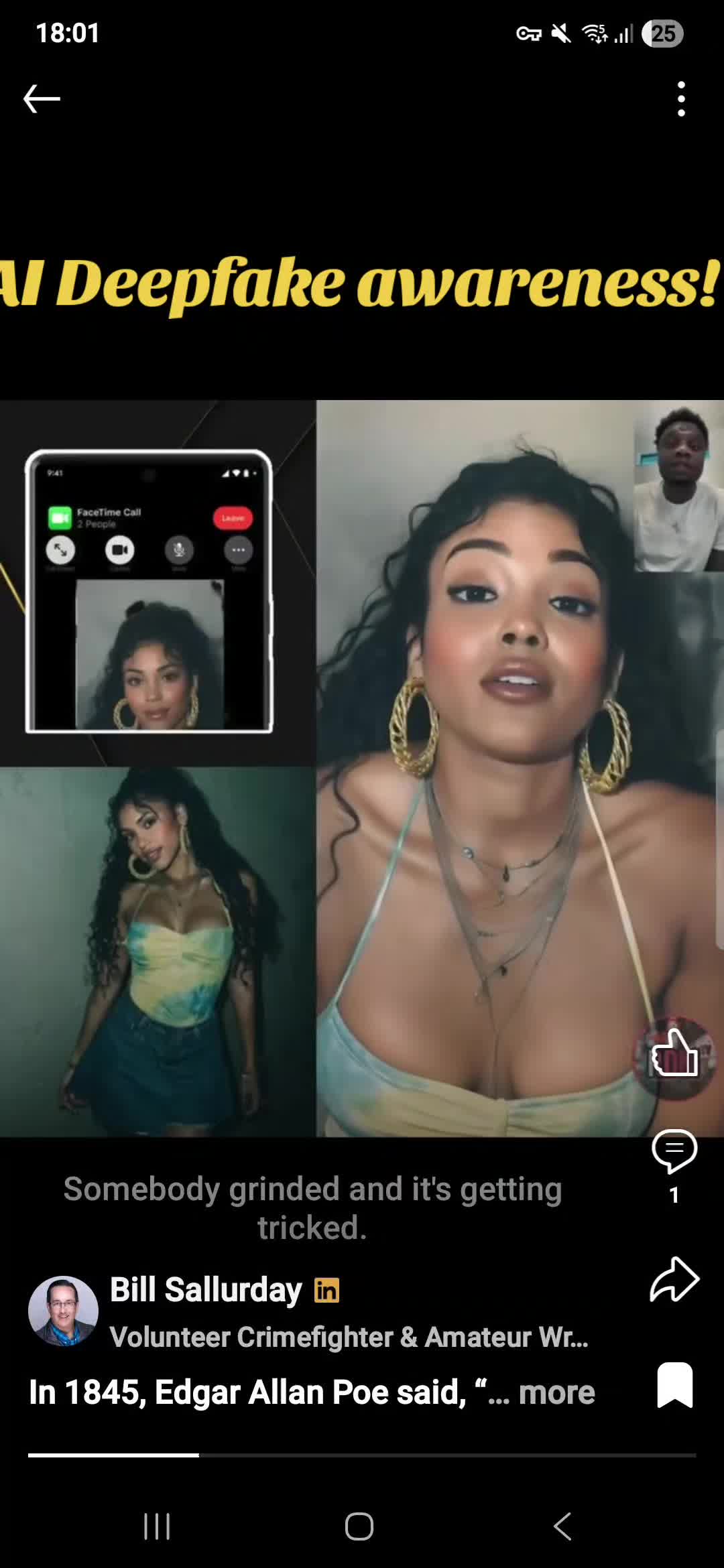
How scammers are using AI technology to produce deepfake impersonation. Scammers have started to leverage advanced AI technologies, including deepfake tools, to create highly realistic impersonations for various malicious purposes. Here are some common methods and applications of deepfake technology in scams: 1. Voice Cloning: Scammers can use AI to analyze and replicate a person’s voice, making it possible to create audio messages that sound like the victim. This technology can be used for impersonating executives or family members in order to extract money or sensitive information. 2. Video Deepfakes: By using deepfake technology, scammers can generate realistic videos of individuals saying or doing things that they have not actually done. This can be used to create fake endorsements, manipulate public perception, or even to create fake news. 3. Phishing Scams: Deepfakes can enhance phishing attempts, where scammers might use video or audio clips to impersonate trusted figures, such as CEOs or government officials, to persuade targets into divulging sensitive information or making financial transactions. 4. Social Engineering: By creating a realistic digital imitation of a person’s face or voice, scammers can build more trust with their targets. This manipulation makes it easier to carry out scams that require personal interactions, like phone calls or video chats. 5. Reputation Damage: Scammers can create deepfake content to harm an individual’s reputation by fabricating embarrassing or compromising scenarios. This can be leveraged for extortion or to discredit an individual or organization. 6. Financial Scams: Scammers can use deepfake technology as part of a larger fraud scheme, such as fake investment opportunities or Ponzi schemes that appear to be endorsed by legitimate public figures. Mitigation Strategies To combat the use of deepfakes in scams, various approaches are being developed: Awareness and Education: Increasing public understanding of deepfake technology helps individuals recognize potential scams. Verification Tools: Companies and organizations are developing tools to identify deepfakes. These technologies can analyze audio and video for inconsistencies that indicate manipulation. Regulatory Measures: Governments and regulatory bodies are proposing laws aimed at increasing accountability for the creation and dissemination of deepfake content, particularly for malicious use. Tools and strategies continue to evolve as the technology itself advances, underscoring the importance of vigilance and critical thinking in an increasingly digital world. #OnlineSafetyMatters #scamprevention #onlinecrime #identityfraud #fakelove
♬ original sound – Onlinesafe2025
@onlinesafe2025 How scammers are using AI technology to produce deepfake impersonation. Scammers have started to leverage advanced AI technologies, including deepfake tools, to create highly realistic impersonations for various malicious purposes. Here are some common methods and applications of deepfake technology in scams: 1. Voice Cloning: Scammers can use AI to analyze and replicate a person’s voice, making it possible to create audio messages that sound like the victim. This technology can be used for impersonating executives or family members in order to extract money or sensitive information. 2. Video Deepfakes: By using deepfake technology, scammers can generate realistic videos of individuals saying or doing things that they have not actually done. This can be used to create fake endorsements, manipulate public perception, or even to create fake news. 3. Phishing Scams: Deepfakes can enhance phishing attempts, where scammers might use video or audio clips to impersonate trusted figures, such as CEOs or government officials, to persuade targets into divulging sensitive information or making financial transactions. 4. Social Engineering: By creating a realistic digital imitation of a person’s face or voice, scammers can build more trust with their targets. This manipulation makes it easier to carry out scams that require personal interactions, like phone calls or video chats. 5. Reputation Damage: Scammers can create deepfake content to harm an individual’s reputation by fabricating embarrassing or compromising scenarios. This can be leveraged for extortion or to discredit an individual or organization. 6. Financial Scams: Scammers can use deepfake technology as part of a larger fraud scheme, such as fake investment opportunities or Ponzi schemes that appear to be endorsed by legitimate public figures. Mitigation Strategies To combat the use of deepfakes in scams, various approaches are being developed: Awareness and Education: Increasing public understanding of deepfake technology helps individuals recognize potential scams. Verification Tools: Companies and organizations are developing tools to identify deepfakes. These technologies can analyze audio and video for inconsistencies that indicate manipulation. Regulatory Measures: Governments and regulatory bodies are proposing laws aimed at increasing accountability for the creation and dissemination of deepfake content, particularly for malicious use. Tools and strategies continue to evolve as the technology itself advances, underscoring the importance of vigilance and critical thinking in an increasingly digital world. #OnlineSafetyMatters #scamprevention #onlinecrime #identityfraud #fakelove