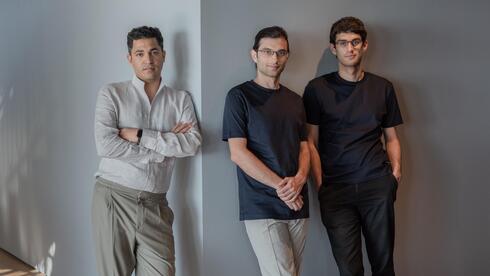
Antler’s report The Anatomy of Greatness, released on Jan. 7, which analyzed 3,512 founders of companies that reached valuations above $1 billion, found that the average age of AI unicorn founders fell to 29 in 2024 from 40 in 2020.
The shift is increasingly visible in 2025. Fueled by AI, there are more self-made billionaires under 30 than ever before, with 13 recorded this year, up from a previous record of seven, according to Forbes.
One example is Mercor, an AI-powered hiring platform co-founded by Brendan Foody, Adarsh Hiremath and Surya Midha, all aged 22. The startup was recently valued at more than US$10 billion.
Another prominent figure is Alexandr Wang, the 29-year-old co-founder of Scale AI, now valued at US$29 billion. Wang was recruited by Meta in June as part of a US$14.3 billion deal to lead the company’s new AI research unit, TBD Labs. The move followed a restructuring of Meta’s generative AI division, previously led by AI pioneer Yann LeCun, after its Llama 4 model underperformed.
Youth is also reshaping wealth records. Luana Lopes Lara, 29, became the world’s youngest self-made female billionaire after co-founding Kalshi, now valued at US$11 billion. A computer science graduate of Massachusetts Institute of Technology, she spent her college summers working at Bridgewater Associates and Citadel Securities, and helped scale Kalshi into a unicorn within six years.
 |
|
Luana Lopes Lara, 29, the world’s youngest self-made female billionaire and co-founder of Kalshi. Photo from Luana Lopes Lara’s Instagram |
Fridtjof Berge, cofounder and chief business officer at Antler, told CNBC Make It that several structural shifts are driving the rise of younger AI founders.
He said investors increasingly favor founders who can “move fast and break things,” and “continuously iterate and test and improve.”
Berge added that deep industry experience is no longer seen as essential, with greater emphasis placed on adaptability and entrepreneurial instinct, qualities often associated with founders in their twenties.
“I think that as I’ve been reflecting on this … the willingness and ability to experiment in the age of AI probably counts as more important than traditional corporate experience or corporate tenure,” he said.
He also noted that technical fluency at a young age can be an advantage, as founders are more likely to approach problems with a “blank-slate state” and apply the latest emerging technologies.
However, Berge cautioned that early success does not ensure long-term control of these companies.
“I guess it’s nothing new that early or young founders start companies … but it doesn’t guarantee that all of the ones creating unicorns now will be the ones leading those companies in five to 10 years,” he said.