



This article is part of Fintech Leaders, a newsletter with 90,000+ builders, entrepreneurs, investors, regulators, and students of financial services. I invite you to share and sign up. If you enjoy this conversation, please consider leaving a review on Apple, Spotify, or Youtube.
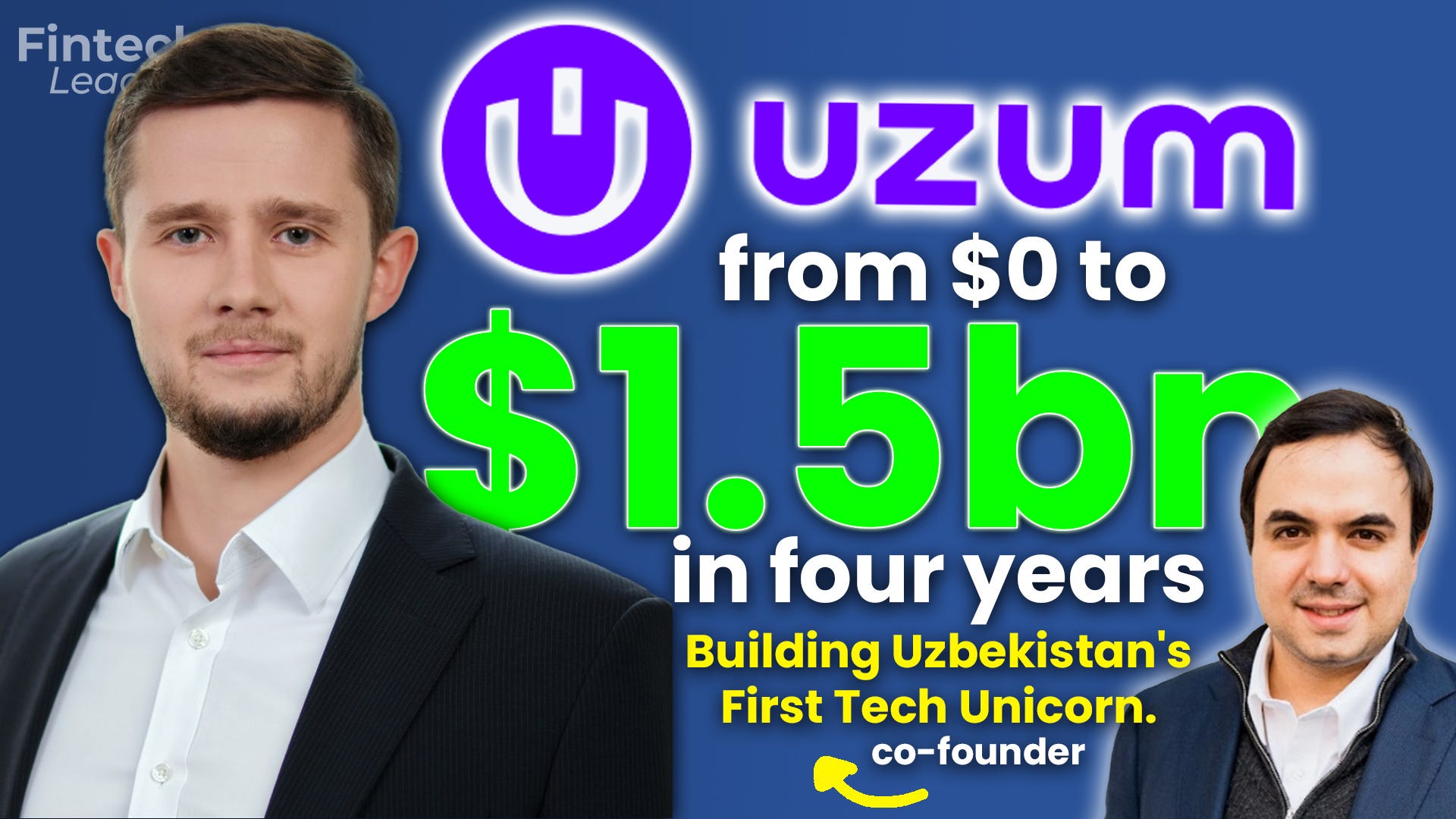
I sat down with Nikolay Seleznev, Co-Founder of Uzum, Uzbekistan’s first tech unicorn that’s redefining e-commerce and fintech in the country.
In just four years, Uzum has become one of the fastest-growing e-commerce and fintech companies out there. They’ve reached 20 million monthly active users, issued 4 million debit cards in 2025 alone, crossed $150 million in net income in 2024, and reached a $1.5Bn valuation backed by Tencent.
We discuss how they built a next-day delivery marketplace in a country with no infrastructure, why they believe time pressure is essential to building something great, the “quasi credit card” innovation that cracked a Muslim-majority market, and how they outperformed their first-year GMV forecast by 4x.
“To achieve great things, two things are needed: a plan and not quite enough time.”
Nikolay argues that from age 30 to 50, you have perhaps four or five real shots at building something significant. That awareness brings the kind of pressure that has taken Uzum to new heights. Rather than viewing time pressure as stress, Uzum treats it as a strategic advantage. When time is scarce, it forces clarity. It helps differentiate between projects and hypotheses that deserve resources and those that don’t. The founding team deliberately assembled what Nikolay calls a “player-type entrepreneurial team”. People who have the drive and capability to build something meaningful and who understand that the window to do so isn’t infinite.
This philosophy also extends to talent. Uzbekistan’s government has been investing heavily in education, and there’s now a generation of young people, in a country where 60% of the population is under 30, who are eager to learn and hungry to build.
When Uzum launched in early 2022, Uzbekistan had no logistics infrastructure to speak of. There were no warehouses, no fulfillment centers, no truck fleets, no 3PL providers… nothing that a traditional e-commerce company could plug into. The founders had a choice: wait for infrastructure to develop, or build it themselves.
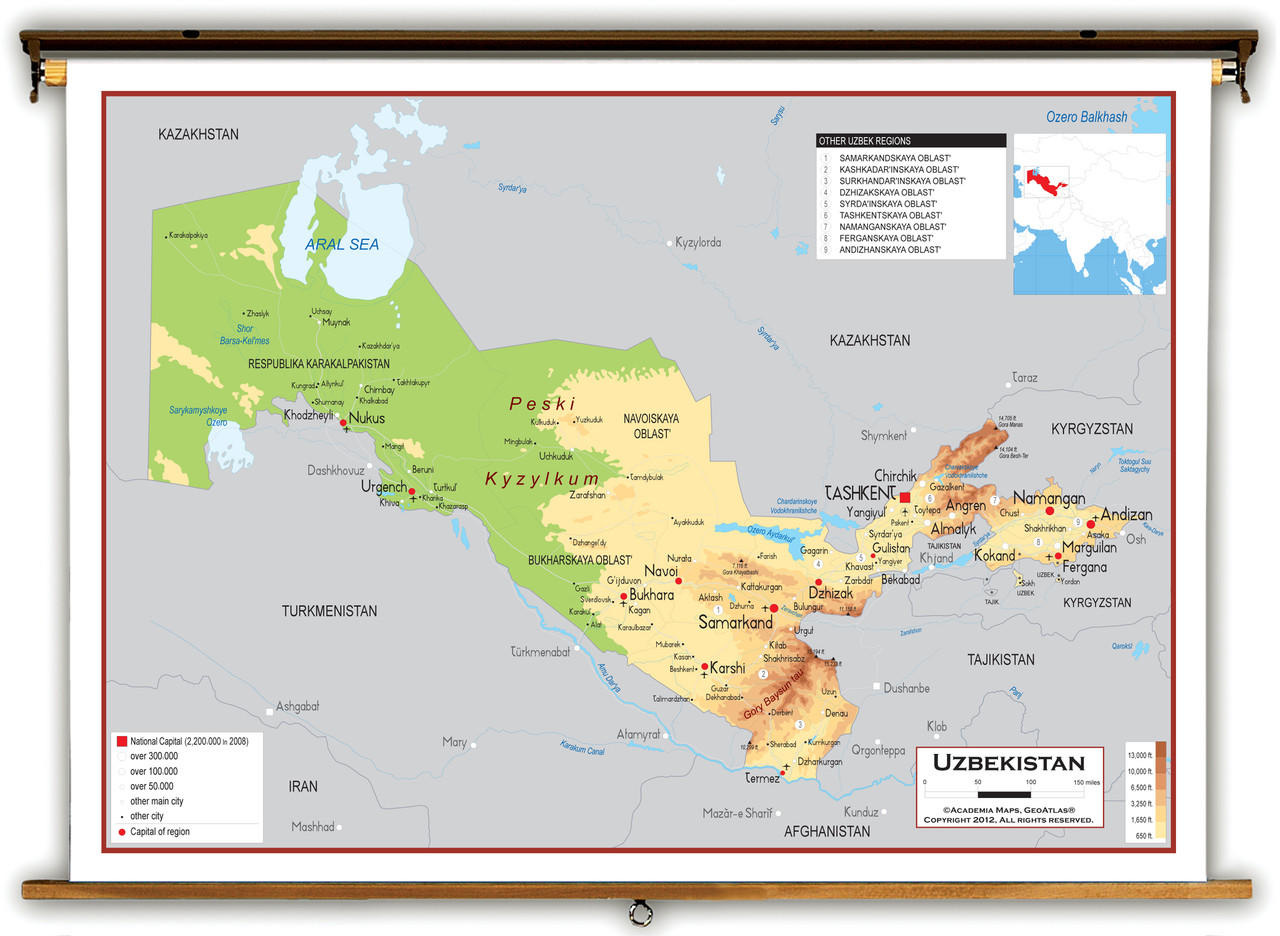
They chose to build everything from scratch. Uzum constructed warehouses, bought trucks, established last-mile delivery, and created a network of over 1,500 pick-up points across the country. It was capital-intensive, but Nikolay believes it was the only way to guarantee reliable service and reach everyone from Tashkent (the capital) to remote villages.
The pick-up points deserve special attention because they serve a different purpose than in developed markets. In the US or Europe, pick-up points are a cost optimization play that’s cheaper than last-mile delivery. In Uzbekistan, they function as trust infrastructure. When you’re asking people who have never shopped online to send money into the digital void, the pick-up point transforms the transaction. It’s a physical place in their neighborhood where they can see and touch products before committing, return items on the spot if something’s wrong, and even apply for financial products like debit cards or BNPL. This is their “phygital“ strategy, using physical infrastructure as a customer acquisition funnel and trust-building mechanism.
The infrastructure investments paid off dramatically. The original business plan forecast $25-35 million in GMV for the first year. They did $150 million. But the hypergrowth created its own challenges. “Our warehousing facility became a bottleneck,” Nikolay explains. “We had to improvise, build very light construction, almost a tent, to turn it into a fulfillment center while we were building a proper warehouse right next to it.”
In 2020, 50% of all adults in Uzbekistan didn’t have a bank account. And of the remaining 50%, only 3-4% had any actual money in their accounts. It was an overwhelmingly cash-driven country. Traditional credit cards faced a fundamental barrier: Uzbekistan is a Muslim-majority nation where interest-bearing debt violates Sharia law. The conventional BNPL and credit card models that work in the West face local resistance.
Uzum’s decided to reframe the product entirely. Instead of launching a credit card, they created a debit card with a pre-approved credit limit attached to it. The framing matters a great bit locally. It feels like a debit card to the user: their money, their account. But it functions like credit when needed. This subtle, but huge distinction helps avoid the psychological and religious baggage of “credit card debt” and still provides spending power to an underbanked population.
The results speak for themselves. Uzum issued 4+ million debit cards over the course of just 2025, with a product that only launched in late 2024. Nearly half of all marketplace purchases now happen through their installment products. They also developed their own processing capacity within Uzum Bank, which allowed them to drop all commissions for peer-to-peer transactions to zero. That zero-fee P2P transfer became a powerful customer acquisition and retention tool.
When the founders of Uzum drafted their original business plan, they saw the opportunity clearly: a country of 40 million people with a young population (60% under 30), high smartphone penetration, and e-commerce penetration of just 2-3%. The largest street bazaar had only 80,000 SKUs. People in remote areas had to travel to neighboring towns to buy anything not available locally. The market was ripe for transformation.
But even they underestimated the speed of adoption. What drove the outperformance wasn’t just the market opportunity, it was also the deliberate strategy to acquire customers on low-friction products and then expand their usage. Uzum developed a private-label brand, 100-200 SKUs of everyday products like cooking oil, canned goods, and basic apparel at affordable prices. These aren’t margin plays like Amazon Basics. They’re customer acquisition tools. If you’ve never ordered anything online and you’re nervous about getting scammed, you’re not going to start with a $200 smartphone. But sunflower oil for $2? The downside is minimal. And once you’ve completed one successful transaction, the psychological barrier to the next purchase drops dramatically.
The ecosystem design also drove growth. Uzum started with six separate apps, but as each product hit certain KPIs, they began converging them into bigger chunks. A customer might download Uzum Market for shopping, then discover they can get a debit card, then start using Uzum for food delivery, all within an increasingly integrated experience. The network effects compound: 20 million monthly users across services, millions of SKUs (compared to 80,000 at the largest bazaar), and presence in every city, town, and village with over 10,000 people.
“Thinking, Fast and Slow” by Daniel Kahneman, which Nikolay recommends as essential reading for any entrepreneur. The book explores how humans make decisions through two systems of thinking and offers frameworks that shape how he approaches problem solving and building at Uzum.
“Zero to One” by Peter Thiel, another book Nikolay considers foundational for builders. The classic startup manifesto on creating something new rather than copying what exists resonates with how Uzum built Uzbekistan’s first tech unicorn from scratch in a market no one had tackled before.
Nikolay Seleznev: The story begins with my co-founder Djasur, who is from Uzbekistan. He had previously built successful technology businesses in Russia, including one of the largest daily deal platforms. When the government began implementing reforms and opening up the economy, Djasur saw an opportunity to bring modern digital infrastructure to his home country. He assembled a team of experienced operators who had built and scaled technology companies before. I joined from a background in investment banking and strategy consulting at JP Morgan and Arthur D. Little. We were united by a shared conviction that Uzbekistan was at an inflection point. The combination of a young population, rapid smartphone adoption, and economic liberalization created conditions we had not seen anywhere else.
Nikolay Seleznev: To achieve great things, two things are needed: a plan and not quite enough time. That philosophy reflects how we think about opportunity cost. From age 30 to 50, you have perhaps four or five real shots at building something significant. We assembled what I call a player-type entrepreneurial team. These are people who want to build something meaningful, not just collect a paycheck. When you operate with a sense of urgency, you make decisions faster, you iterate faster, and you learn faster. The window for building transformative companies in emerging markets does not stay open forever. We wanted to move while conditions were favorable.
Nikolay Seleznev: In 2020, 50% of all the adult population in Uzbekistan did not have a bank account. And of the remaining 50%, only 3 to 4 percent had any actual money in them. It was a very cash-driven country. The largest street bazaar had only 80,000 SKUs on a given day. People were wearing the same four types of winter jackets. Now they have millions of SKUs available at their fingertips. Some people say Uzbekistan is like certain other countries 15 to 20 years ago. Sometimes they are correct. But what they are missing is the pace. This is the first country in the CIS region with internet available across the entire country. Everyone has a smartphone. Uzbekistan now leads the region in AI adoption.
Nikolay Seleznev: No big business has ever been built by foreigners. You do need to rely on local talent. We brought in experienced operators from companies like Yandex, Delivery Club, VK, and KazanExpress to establish best practices and build the initial infrastructure. But we invested heavily in developing Uzbek talent. The country has a young, ambitious population. When you give people the opportunity to work on something meaningful with real responsibility, you attract the best. Today we have over 12,000 people across the company, and the majority are Uzbek nationals who have grown into leadership roles.
Nikolay Seleznev: The original business plan forecast 25 to 35 million dollars in GMV for the first year. We did 150 million. That kind of outperformance created its own challenges. Our warehouse became the bottleneck. We had to build what was almost a tent and turn it into a fulfillment center while we were building a proper warehouse right next to it. We were scrambling to keep up with demand. But that is the kind of problem you want to have. It validated that the market was ready for what we were building.
Nikolay Seleznev: We invested heavily in pick-up points. These are like islands in the sea of uncertainty that allowed people to gain initial trust. When you are asking someone who has never shopped online to send money into the digital void, it feels like a leap of faith. The pick-up point transforms that experience. It is a physical place in their neighborhood. They can see and touch the product before committing. They can return it on the spot if something is wrong. We also developed our own trademark called “Family Choice” for affordable everyday products. This turned out to be a very effective customer acquisition tactic. If your first online purchase is a two dollar bottle of cooking oil, the downside is trivial. Once you complete one successful transaction, the psychological barrier to the next purchase drops dramatically.
Nikolay Seleznev: The most successful product we have to date is a debit card that comes with a pre-approved credit limit attached to it, essentially turning it into a quasi credit card. This matters in a Muslim-majority country where traditional interest-bearing credit cards face cultural resistance. By framing it as a debit card with a pre-approved limit rather than a credit card, we designed something that feels comfortable for our users. We also developed our own processing capacity within Uzum Bank, which allowed us to drop all commissions for peer-to-peer transactions to zero. Because essentially, you are just moving bits of information within the server of a bank. It cost me nothing. That became a powerful acquisition tool.
Nikolay Seleznev: We spent almost a year trying to find investors. The feedback was consistent: we understand the team, the execution, the numbers, but no one has built a technological unicorn out of Uzbekistan before. That skepticism was understandable. We were asking investors to believe in a market they had never considered. Djasur sold the majority of his previous businesses to fund Uzum in the early stages. It was like an all-in commitment from us. Eventually, FinSight Ventures led our Series A, and Tencent led our most recent round. Having Tencent on our cap table opened doors that were not available before. It validated the opportunity for other global investors.
Nikolay Seleznev: We started with six different apps. As they hit certain KPIs, we began to converge them into bigger chunks. We have not made the final super app decision yet. It is not a result, it is still a process. What I have learned is that you need to be local. You cannot just copy Kaspi or WeChat and expect it to work. The conditions that enable super apps include populations that skipped the desktop era, limited legacy infrastructure, and high mobile penetration. Uzbekistan has all of those. But we are taking a measured approach to integration, driven by what users actually need rather than what looks good on a strategy deck.
Nikolay Seleznev: I have seen too many entrepreneurs pursue geographical expansion too early, too fast, without properly winning their local market. We do not want to make that mistake. Our focus is 100% on Uzbekistan until IPO. We are planning to go public in 2027, with Hong Kong, Nasdaq, and Abu Dhabi under consideration. The longer-term vision is to be the platform that powers economic participation for the entire country. We want everyone to be part of the digital economy, from rural farmers to family-run grocery businesses. We are not just building a business. We are raising living standards, increasing incomes, and creating opportunities across Uzbekistan.
This interview has been edited and condensed for clarity.
Want more podcast episodes? Join me and follow Fintech Leaders today on Apple, Spotify, Youtube or your favorite podcast app for weekly conversations with today’s global leaders that will dominate the 21st century in fintech, business, and beyond.
Don’t forget to subscribe so you don’t miss big conversations and insights with the giants of Fintech.
Oliver Hughes, Leader at TBC Bank and ex Tinkoff CEO – Building The Most Profitable Digital Bank in the World, the Future of Personal Banking
Brex COO, Michael Tannenbaum – Dreaming Big, Building a Global Financial Powerhouse, Seizing Opportunities in a High Interest-Rates Era
How Deel Built a $17 Billion Company in 7 Years – Dan Westgarth, COO
Eric Glyman, Ramp Co-Founder/CEO – From Zero to $4 Billion in 30 Months, The Future of Business Banking, & Why you need to Double Down on your Strengths and Hire for Your Weaknesses
How Addi Reached $200M ARR with Better Margins Than Nubank, Affirm, and Klarna
Mikhail Lomtadze, Kaspi.kz CEO – Building a $24Bn Tech Titan, From Kazakhstan to the World
From Zero to $120M: How Cashea Rebuilt Credit And Trust in Venezuela
Source link