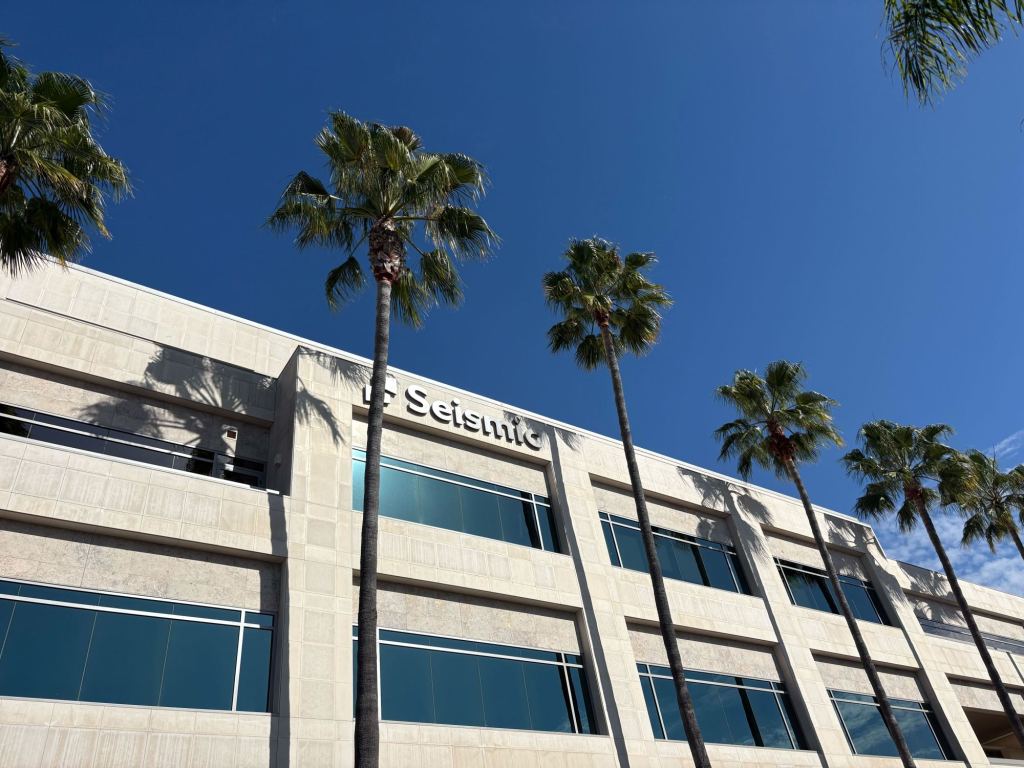
San Diego-based AI company Seismic on Thursday announced that it will merge with its longtime competitor Highspot. The software companies plan to integrate their platforms, which use AI analytics to help businesses work smarter.
The companies — which each have valuations over $3 billion — will combine and operate as Seismic, led by Rob Tarkoff, Seismic’s new CEO of four months. Robert Wahbe, Highspot’s founder and chief executive, will serve on the board of directors.
“There is a growing demand for technologies that better connect sales strategy to execution and help organizations drive consistent revenue performance at scale, especially in today’s go-to-market environment,” Tarkoff wrote on LinkedIn on Thursday.
Seismic declined a request for comment by the Union-Tribune on what the merger means for San Diego, layoffs and board transitions or details of the deal.
Both companies control major market share in “revenue enablement”—tools that provide insights on how businesses can grow — but they each do slightly different tasks.
Seismic is basically Google for work. Sales teams can ask the software questions about products, specific accounts and analyze sales performance. Seattle’s Highspot is like a sales coach that uses AI to watch what’s happening with customers and content, then tells employees what to do next.
Robert Looney, a sales and revenue enablement consultant in Oregon who has directed sales teams for a number of billion-dollar companies, isn’t surprised the two companies merged.
“The two coming together could be really, really good,” he said. “There’s going to be areas where they definitely overlap but bringing them together can reduce the noise in the system and cut friction” for sellers who are juggling too many tools already.
Looney is familiar with both software systems, as he spent almost 20 years at Intel as the director of go-to-market sales enablement.
“The tools and capabilities are so amazing. There is just too much to pick from. With consolidation there is less noise,” he said, making it easier for sellers to make decisions.
Today, Seismic serves over 2,000 enterprise customers with clients like Uber, UPS, IBM, Illumina and Oracle. Highspot’s customers include DocuSign, Workday, Siemens and Adobe.
The global sales enablement platform market is expected to reach $12.78 billion by 2030, according to Grand View Research.
And with more demand comes more investment. The private companies have kept numbers close to their vest and have not disclosed recent investment rounds.
Highspot’s most recent valuation was $3.65 billion, according to PitchBook data from 2022. Their most recent investment was in February 2025 led by Ritual Capital and West Coast Equity Partners for an undisclosed amount. At that time, they announced that the company had raised over $660.2 million year-to-date.
Seismic has raised over $1.26 billion, led by Permira, a European private equity fund, since 2010.
Post-merger, Permira will remain the controlling shareholder of the company, according to Thursday’s merger announcement.
Seismic — valued at $3 billion — was founded in 2010 by five guys in Solana Beach working out of a basement. By 2018, it had raked in enough venture capital money to become the most valuable tech startup in San Diego that year, with a valuation of $1 billion, making it the area’s newest unicorn.
Seismic has aggressively raised venture capital, grown its local headcount, acquired other fast-growing tech companies and opened over 10 offices around the globe.