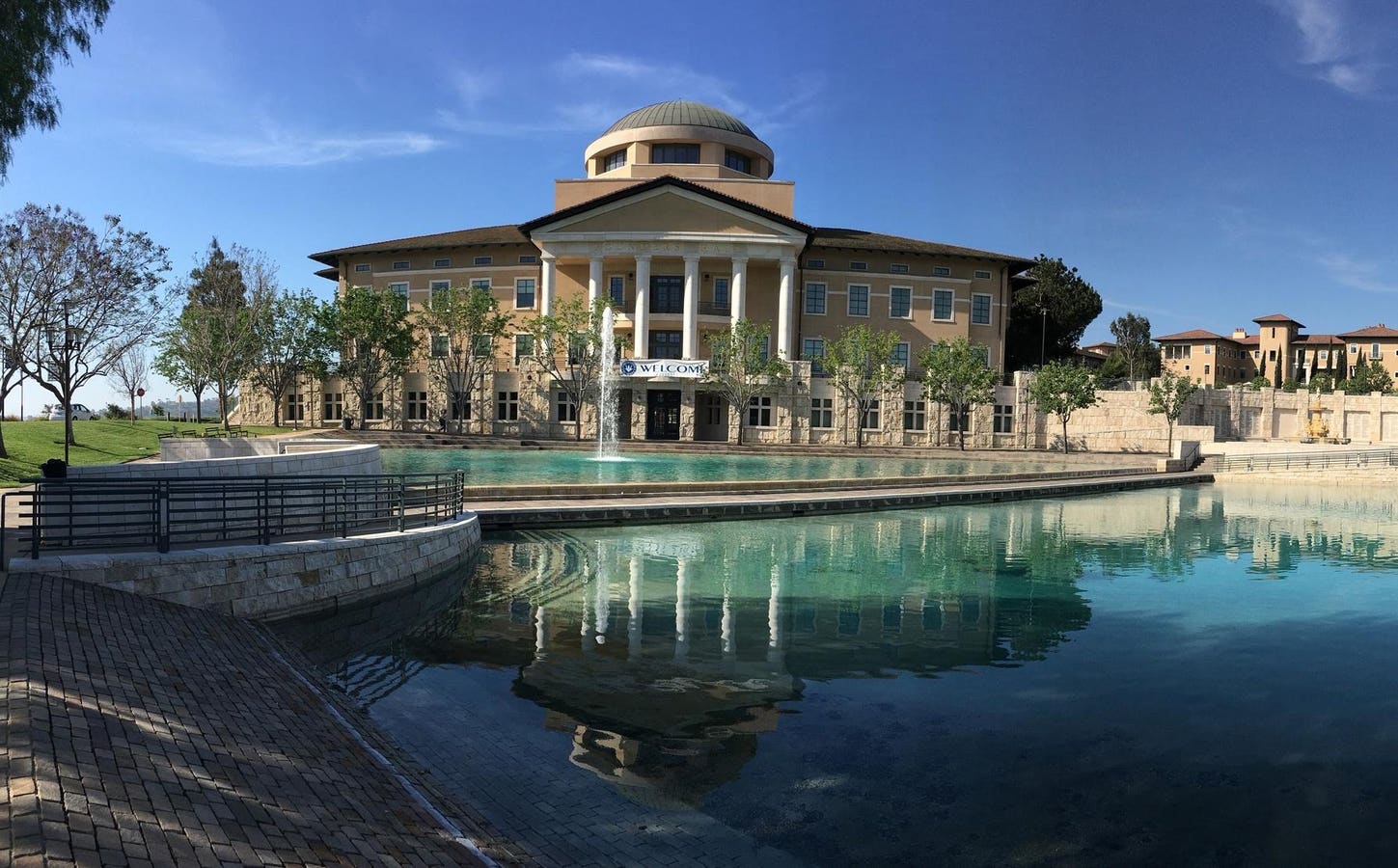
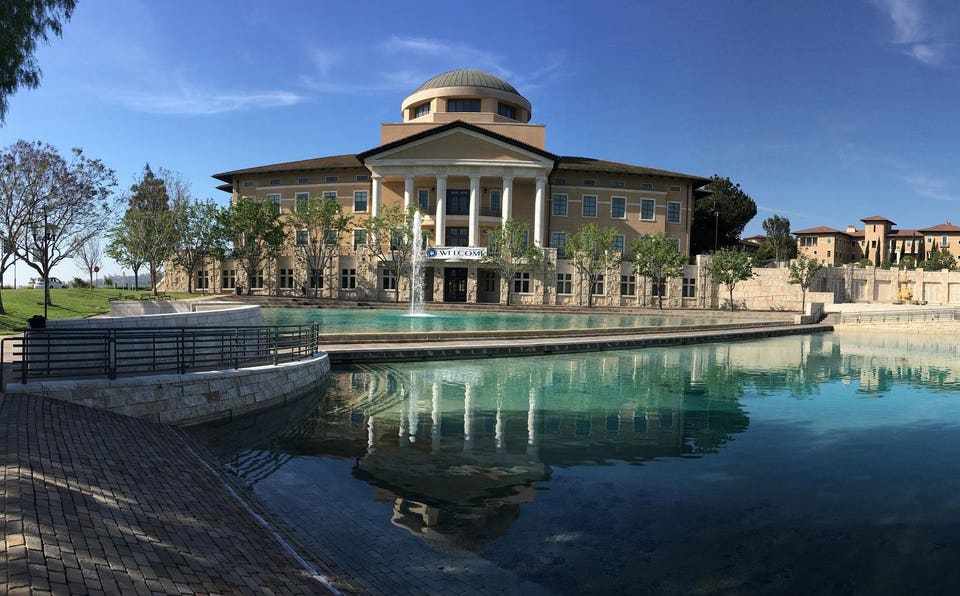
Soka University of America, an innovative new institution in Aliso Viejo, CA established in 2001, provides liberal arts education to promote global citizenship.
Bryan Penprase
For US higher education to survive as a system, there needs to be a balance between older universities and colleges, and new “startup” institutions. Like a forest ecosystem, new “green shoots” are needed to replace the longer-lived trees around them. By this standard, the “forest” of higher education is very unhealthy – with only handfuls of new 4-year institutions being founded amongst a multitude of older institutions competing for dwindling numbers of students. A recent report by the Postsecondary Commission (PSC), an organization founded by Harvard professor Stig Leschly in 2020, provides a detailed portrait of new colleges in the US. The PSC report combined data within the Department of Education DAPIP database with the Federal College Score Card Database to compile a listing of newly accredited colleges and universities. The report identified 1039 new colleges that have been founded since 2000, with a wide range of institutional missions and degree offerings. Most of these new colleges are specialized, with 78% of the new colleges providing 1-year specialized vocational certificates instead of bachelor’s degrees. Overall, 74% of new colleges are for-profit institutions, and only 14% offer 4-year degree programs.
Small but Innovative “Startup” Universities
While the report identifies many new institutions, most are very small, and comprise a tiny fraction of institutions by enrollment, and the PSC report notes that 98% of college students attend a college that is more than 20 years old. Among the 153 4-year accredited bachelor’s degree institutions in the sample are 112 private non-profit institutions, 30 private for-profit institutions and only 11 public institutions. Among the new 4-year institutions are 69 religious institutions, comprising nearly half of the sample. Most of these new 4-year institutions are very small, with a median size of 98 students.
New and Innovative 4-year Non-Profit Institutions
Examples of smaller innovative non-profit private 4-year “startup” institutions, include the Franklin W. Olin College of Engineering, which has reimagined engineering education through emphasis on interdisciplinary design studies, and also has eliminated departments, Soka University of America, which offers a distinctive liberal arts education based on Buddhist principles of peace and human rights, College Unbound, which is reinventing higher education for underserved adult learners, and the Harrisburg University of Science and Technology, the first independent science and technology focused nonprofit university established in Pennsylvania in over 100 years, and Minerva University (enrollment 656), founded by Silicon Valley entrepreneur Ben Nelson to compete with the best universities using a proprietary virtual platform.
Startups Redefining Higher Education
These small universities, most with fewer than 500 students, offer distinctive forms of education that are not possible within existing institutions. Among these new institutions are also remarkable successes. Olin College of Engineering has matched MIT in one report studying the leading institutions in engineering education. Minerva University enables students to attend classes together in 4 continents in 4 years, pioneering a new form of global residential liberal arts rooted in an innovative curriculum based on “Critical wisdom.” Soka University of America, with a unique mission to “foster a steady stream of global citizens committed to living a contributive life” based on the values of courage, compassion and wisdom, consistently ranks among the top 50 of the US liberal arts colleges. These three examples alone show how important new entrants can be for redefining higher education, and for innovating with more creative and interdisciplinary approaches to higher education.
Reaching New Populations of Students with New Universities
Several larger “startup” universities with 2500-10,000 students are in the sample, many of them public universities in states with rapidly growing populations. Examples and enrollment data from the report include Georgia Gwinnett College (enrollment 11,927), established as a 21st Century public liberal arts college, Texas A&M University San Antonio (enrollment 5906), Cal State University, Channel Islands (enrollment 7092), Cal State University, Monterey (enrollment 6615), Florida Polytechnic University (enrollment 1263), Florida’s first and only all-STEM university, Nevada State College (est. 200, enrollment 4106), and UC Merced (enrollment 8151, with 696 graduate students), the first UC campus in the underserved Central Valley of California. Many of these universities specifically target unmet needs in their state economies and often reach underserved students with innovative new curricula that would be difficult to develop in an existing college.
Making more Startups Possible by New Accreditation
One of the main authors of the report, Stig Leschly, would like to see more new colleges and in a recent interview said that “college startups seek really innovative designs that completely break the mold on cost and on quality.” Leschly has suggested that the complicated multi-year process for accreditation creates a very high barrier to entry, and his PSC has advocated for new college accreditors who specialize in evaluating, approving and monitoring startup colleges. Leschly’s own PSC could help new startup colleges get their start with fewer obstacles. The PSC has a distinguished board of commissioners that includes Ted Mitchell, President of the American Council on Education, Paul LeBlanc, former President of the University of Southern New Hampshire, Marni Stein, chief content officer from Coursera, and Timothy Knowles, President of the Carnegie Foundation for the Advancement of Teaching. The goal of the commission is to foster new institutions that can provide economic mobility, transparency, accountability, and innovation. The PSC’s own 2025 accreditation standards require each institution to have a mission statement that describes its educational purposes, and that is periodically reviewed by governing board. The standards also focus on student incomes, with standards that requires an institution to demonstrate that “institution-wide cohorts of entering students have value added earnings that exceed net costs,” along with minimum graduation rates comparable to peer institutions, transparency in grading policy and the assessment of student learning outcomes, and a policy for accepting transfer credit and credit for prior learning.
Improving Competition and Accountability among Incumbent Universities
These requirements mirror many of the components of existing accreditors, but critics such as the New America Higher Education Policy program questioned the rigor of the standards in a letter to the Commission. The letter questioned the ability for measuring “value-added earning outcomes” which are a comparison of earnings without attending college to earnings after college. These measurements could prove difficult to achieve and would also disadvantage certain students from being admitted. According to the letter, such requirements would “bake in existing earnings disparities that women and minoritized people face as the result of systemic racism” and that “attempting to predict earnings 10 years into the future, even with the best data available, seems like a hazardous endeavor with a high probability of error.” Other critics have noted that the rise of these new PSC standards coincide with growing political momentum in states such as Florida and North Carolina to change their state’s accrediting policies, and that measuring earnings gains can be “gameable” by institutions. Leschly countered these objections in a recent interview by noting our current system often fails to “let any new entrants come in to innovate” and that current accreditors “don’t really close any of the colleges and put pressure on them” resulting in “incumbents that are totally protected from competition and from accountability.” The PSC and others hope is that with more “startup” universities, students will have more exciting options and “incumbent” universities will become more competitive and accountable.