

At the Consumer Electronics Show (CES) 2026, “platforms” dominated nearly every keynote. From AMD, Nvidia, and Qualcomm to Google, global tech leaders conveyed a unified message: AI is extending beyond cloud data centers to edge computing and the physical world—physical AI. Chips, software, and systems are increasingly integrated into deployable computing frameworks, making this year’s CES a clear demonstration of platform-driven engineering.
However, beyond the mainstage keynotes, the Eureka Park startup area revealed the practical challenges of platform deployment. With platforms defined by major vendors, who tackles latency, power constraints, regulatory compliance, and integration with legacy systems?
It is precisely in this gap between platform vision and engineering reality that Taiwan’s tech startups are carving out a critical role. While global players focus on defining compute platforms, models, and ecosystems, another group of engineering teams is tasked with the tougher question: Who actually makes these platforms run? Edge application deployment, sensor integration, and system integration are no longer optional; they determine whether AI can operate effectively in real-world environments.
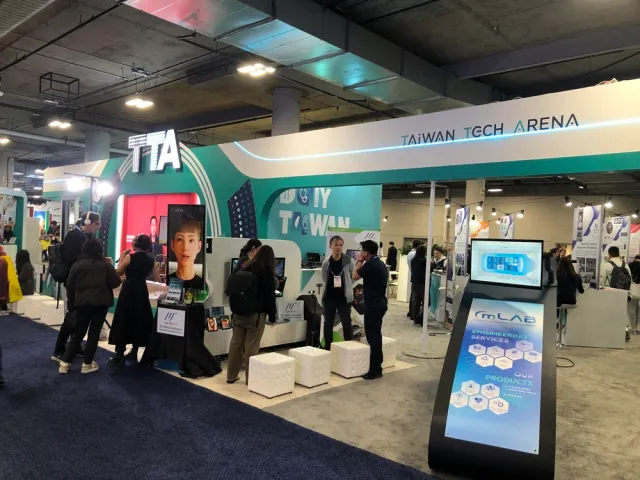
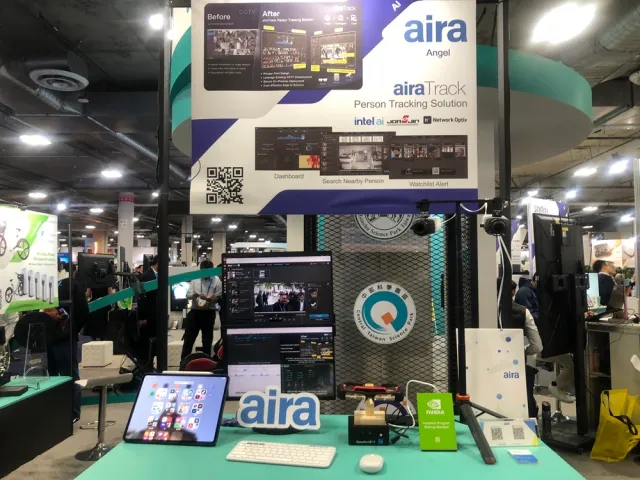
This year, under the guidance of Taiwan’s National Science and Technology Council (NSTC) and Taiwan Tech Arena (TTA), 57 Taiwanese startups participated in Eureka Park at CES, working alongside 83 local supply chain partners. Their focus spans generative AI and edge computing, precision healthcare and health monitoring, smart manufacturing and automation, and green energy and sustainability solutions.
By MRPeasy 04.01.2026
By Stefan Drouzas, Senior Application Marketing Manager at Rohm Semiconductor GmbH 03.31.2026
By DEEPX 03.27.2026
By leveraging a close-knit “joint operation” approach, Taiwan-based startups are converting long-standing ICT manufacturing and system integration experience into end-to-end capabilities, from research and development (R&D) and prototyping to deployable solutions.
Supply chain shifts the bar: non-red chains as gatekeepers
In an interview at CES, Lin Der-Sheng, director general of NSTC’s Academia-Industry Collaboration and Science Park Affairs Department, said, “Now is a critical moment for Taiwanese startups to scale internationally.”
Historically, startups were limited by market size and capital availability. Over the past two years, as semiconductor, AI server, and advanced ICT technologies regained strategic importance globally, Taiwan’s engineering capabilities have been revalued.
Regulatory and supply chain shifts are also redefining market access. International buyers increasingly demand reliable, traceable supply chains, elevating Taiwanese suppliers with proven engineering and security credentials as preferred partners. In sectors such as drones, safety and trust now outweigh cost competition, shifting the competitive focus from raw performance to deliverability and rapid system integration.
From ‘small AI’ to an ‘island of artificial intelligence’
These structural changes are reflected in startup demonstrations at CES. Lin noted that past showcases focused on conceptual prototypes, but this year, startups were expected to clearly articulate what problem is being solved, in which context, and how it is deployed.
This echoes CTA president Kinsey Fabrizio, who said that AI, quantum computing, mobility, robotics, and digital health are moving from conceptual ideas to operational solutions. The Taiwan Pavilion curated exhibits around “food, medical, living, and mobility,” showing AI’s penetration into fine-grained daily life and industrial workflows. NSTC describes this approach as deploying “small AI” across every scenario, cumulatively forming “big AI,” and effectively creating an “island of artificial intelligence.”
Startups no longer go it alone
Lin underscored another trend: Startups can no longer operate in isolation. Tight integration with established industrial supply chains provides three tangible benefits: product deliverability, credibility, and market access.
For example, iStaging entered the market via virtual-reality technology and partnered with international luxury brands to gain applied experience. The company later collaborated with Innolux to convert virtual displays into immersive hybrid experiences, transforming panels into full experiential solutions. Startups leverage manufacturing and distribution capabilities of large partners while maintaining agility.
Millilab illustrates another successful integration: Its 60-GHz millimeter-wave radar, combined with Innolux’s smart cockpit system, detects occupant vital signs through obstructions without compromising privacy, directly addressing upcoming EU Child Presence Detection regulations. Millilab’s algorithmic expertise also enabled collaborations with Japan’s Socionext and European Tier 1 suppliers such as MAXI-COSI, successfully entering automotive supply chains.
Deploying AI in constrained spaces
For embedded and wearable system engineers, integrating AI under strict size and power budgets remains a top challenge. In audio applications, Otowahr partnered with Motech Electronics to develop ultra-compact MEMS speakers delivering clinical-grade sound in true-wireless-stereo earbuds, with extensions to hearing aids and head-mounted devices. Their zone-specific audio control allows OEMs to upgrade to higher-value system offerings.
To tackle electronic waste from hardware aging, Epic Tech, supported by Taiwan Secom’s supply chain, developed a “plug-and-play” sensing tag solution. Combining low-carbon, AI-enabled, hardware-light communication software, the system closes the final mile of deployment cost and ESG compliance.
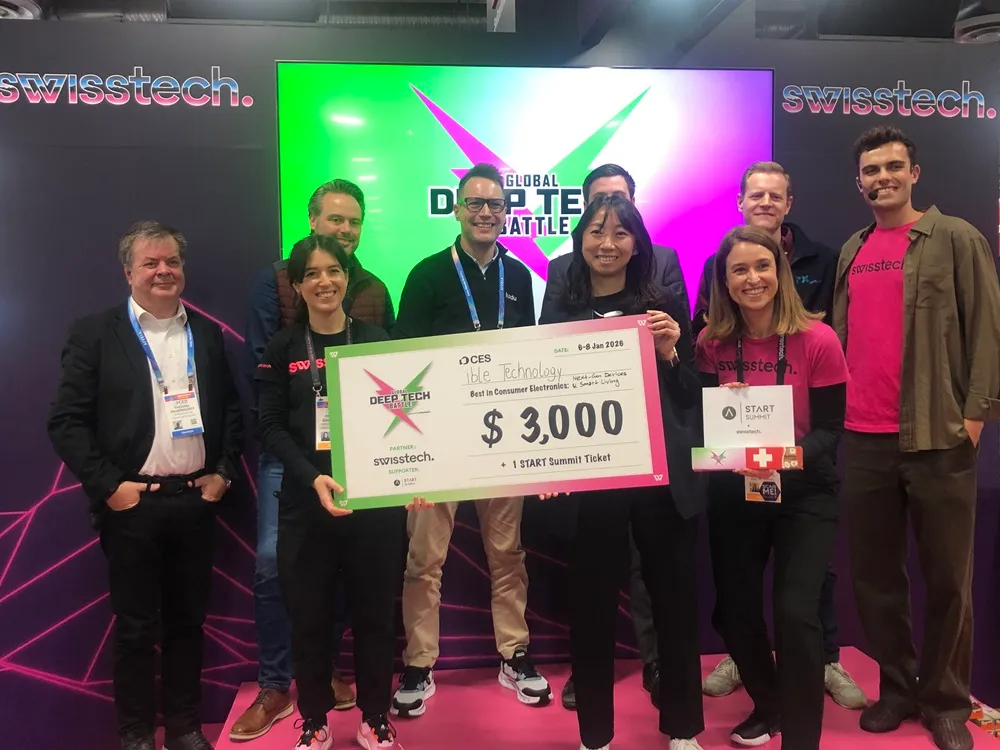
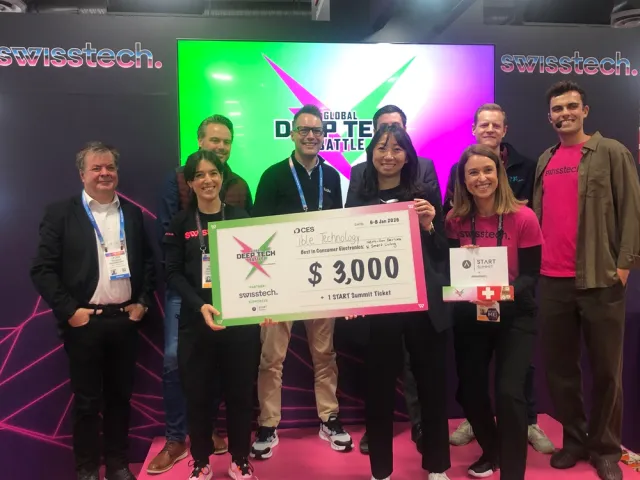
Ible Technology focuses on air purification modules and dedicated control ICs. For audio and Bluetooth connectivity, it partnered with Foxconn, demonstrating “startup innovation + major platform” collaboration. “Proprietary chips we developed allow miniaturization to earbud scale while maintaining long battery life,” Elaine Lin, senior manager of strategic sales at ible, explained. “Mature supply chains ensure high audio and wireless performance.”
Awards as a launchpad: entry into global supply chains
Participation in CES and VivaTech, led by TTA, provides startups with exposure and access to international ecosystems. TTA connects startups with global supply chain leaders such as Foxconn and Taiwan Secom, allowing technology to be validated in real-world environments.
Since 2018, TTA has incubated over 1,000 startups, including 1,069 teams across AI, semiconductors, green energy, and medical technologies, attracting nearly US$400 million in investment. At CES 2026, DeCloak Intelligences, Epic Tech Taiwan, HUA TEC International, and Memorence AI earned CES Innovation Awards, underscoring maturity in bridging R&D and deployable solutions. Additional teams, including Anchor Film, HUA TEC, ible, and Anivance AI, won national pavilion pitch competitions, securing entry points to international markets.
HUA TEC co-founder Tang Chien-Hsiang noted that participation in major exhibitions boosts global visibility and accelerates overseas growth. HUA TEC’s Nano CAST semiconductor biochip and AI-powered automated cancer detection platform, requiring only 16 mL of blood to achieve over 90% tumor cell capture, exemplifies translating engineering innovation into operational applications.
Who actually makes platforms work?
Across CES 2026, Taiwan’s startup role is clear. While global firms expand platform footprints, teams that understand engineering limits, regulatory requirements, and deployment context ultimately determine whether platforms can be operationalized.
For engineers worldwide, Taiwan’s value lies not in defining the next platform but in translating processors such as Nvidia graphics processing units and Qualcomm system-on-chips into deployable solutions for automated production lines, EU-compliant smart cockpits, and secure drone and energy systems.
As the industry competes over “who owns the most powerful large language model,” Taiwan quietly tackles another, arguably tougher task: making AI truly operate in the physical world.
See also:
eBook: Taiwan’s Tech Industry
The Made in Taiwan report examines Taiwan’s technology industry, focusing on its role in semiconductor manufacturing, power electronics, embedded systems design, and AI.
Source link