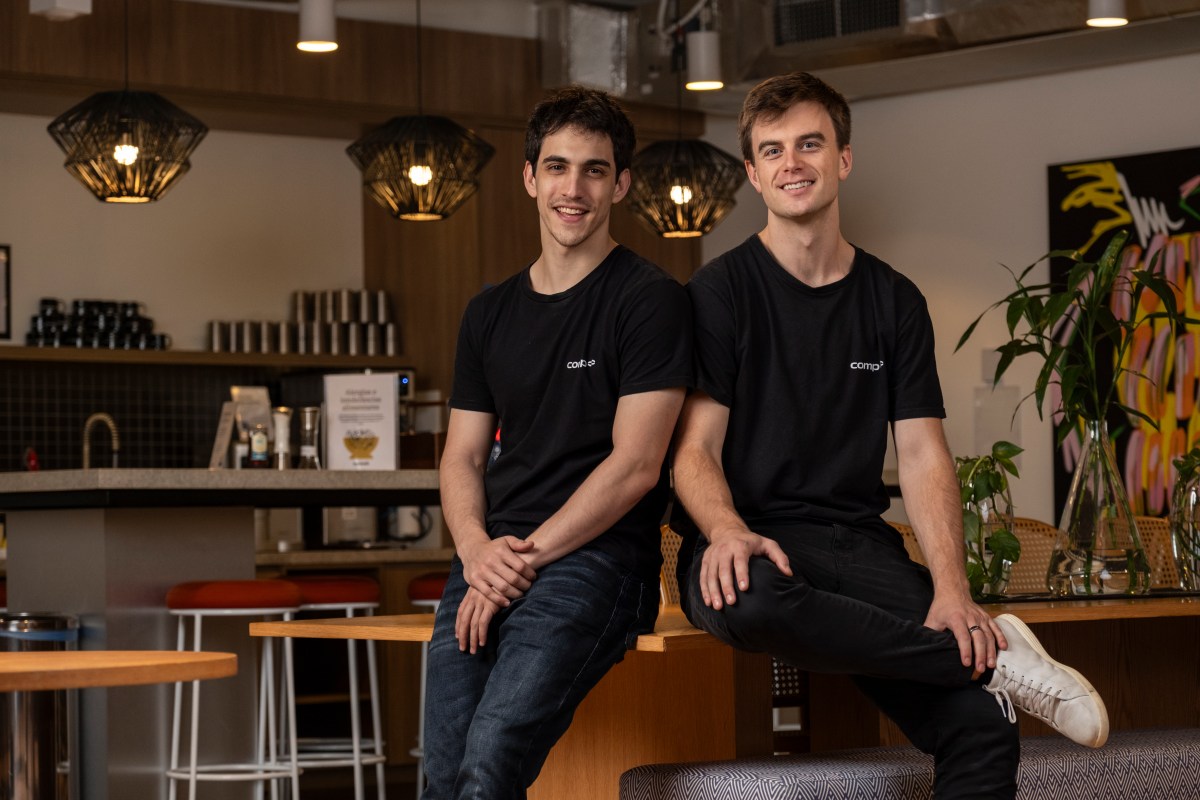
The Mexico-based tech startup Neo.Menu promises restaurants an 18% revenue boost – not through higher prices or more covers, but by using AI to get customers in, served and out the door faster.
Amid globally high inflation and rising competition across service industries, businesses are looking for ways to improve efficiency without sacrificing quality, and AI-driven tools are increasingly finding a place in that process.
The shift toward digital table ordering gained significant momentum during the COVID-19 pandemic, when restaurants worldwide replaced physical menus with contactless alternatives, and QR code usage surged severalfold.
Neo.Menu, led by Dmitry Molchanov, CEO of the technology firm Axiom Atlas, aims to give restaurants, bars and cafés full control over every stage of ordering and payment, and shorter wait times for customers.
Molchanov and his team have done more than put menus on a screen. The goal was to move restaurants off legacy software onto something closer to a full operating system, which would go well beyond basic point-of-sale logic. Molchanov’s background in complex mathematics shaped his approach as he used analytical expertise to build an AI-based system.
“The software of the last decade forced restaurant owners to become IT administrators, navigating dashboards with thousands of settings buried under three layers of hierarchy,” Molchanov explained. “We eliminated that entirely. With Neo.Menu, you simply talk to your menu constructor in English, Spanish, or any other language, and make changes on the fly.”
Rather than scrolling through a list of dishes, guests can interact with an AI sous-chef via chat or voice, getting personalized recommendations and placing orders the way they’d talk to staff. When the meal is over, the app lets them pay instantly at the table without waiting to catch a waiter’s eye for the bill.
“We all go to restaurants and know how slow it can be sometimes. With all due respect to chefs, bartenders and waiters, customers would prefer getting their first orders faster and managing their time at a bar or café based on their own plans and preferences. And that’s where Neo.Menu comes into play – ensuring positive customer feedback and supporting the business,” Molchanov said.
Deployed across more than 110 restaurants in Mexico in 2025, Neo.Menu enabled waiters to serve double the number of tables, with table turnover rising by 40% and the average check increasing by 18%, according to Molchanov.
“To survive, businesses must optimize efficiency without sacrificing the human touch of hospitality,” he said.
Built into the platform, an AI hostess operates 24/7 via phone and WhatsApp, handling table management, reservations and waiting lists without human intervention.
Mexico is a strong market for this kind of tech. The country’s foodservice industry is valued at approximately $104 billion in 2026 and is projected to grow to $157 billion by 2030, driven by rising urbanization, growing tourism and shifting consumer habits, according to market research and advisory firm Mordor Intelligence.
The tourism numbers add to that: Mexico welcomed 45 million international visitors in 2024, with numbers rising through 2025, and 2026 on track to be a record year as World Cup fixtures in Mexico City, Monterrey and Guadalajara bring a new wave of visitors expecting fast and high-quality service.
From table to kitchen
Neo.Menu has gone beyond digital menus, integrating ordering, payment and real-time kitchen communication into a single system. Originally launched as a tool to enhance dish images on menus, Neo.Menu made items more visually appealing and easier to order. It became clear during development that one of the core challenges for restaurants and cafés was staff turnover.
Instead of spending time and resources recruiting waiters – who typically change jobs every few months – business owners can now focus on the dining experience itself and optimize staffing costs. The system handles operational issues in real time, flagging only the most complicated cases for human attention.
Installed on tablets at restaurant tables or on customers’ own phones, the app lets guests place orders, pay and browse a visual menu in their preferred language. Each dish comes with details and options to customize before ordering. When a customer chooses a dish or drink, the order instantly appears on kitchen displays.
On the business side, the app allows managers to track which tables have ordered, are dining or are ready to pay – helping optimize staff routes and table assignments.
Molchanov, the Russia-born entrepreneur who began his career in real estate before developing online projects, built his work around mathematics and practical efficiency – an approach that has since evolved toward AI and machine learning.
“Neo.Menu allows restaurants to double their service capacity without hiring extra staff,” he said.
Mexico’s restaurant and foodservice sector supports around 3.8 million direct jobs across more than 680,000 establishments and, as of 2025, accounted for 3.2% of national GDP, according to industry body CANIRAC.
While the technology offers clear business benefits, it also raises questions about the role of people in the modern economy, with rising unemployment a growing concern amid rapid AI development.
Molchanov sees it differently, arguing that technologies like Neo.Menu free staff from order-taking and payment processing – allowing them to focus on hospitality and the guest experience.
“It simply means no more running back and forth. You can keep the same team and double the revenue. Your staff focuses on service, on a better guest experience, while the AI handles the rest – the routing, the payments and the real-time analytics,” Molchanov said.