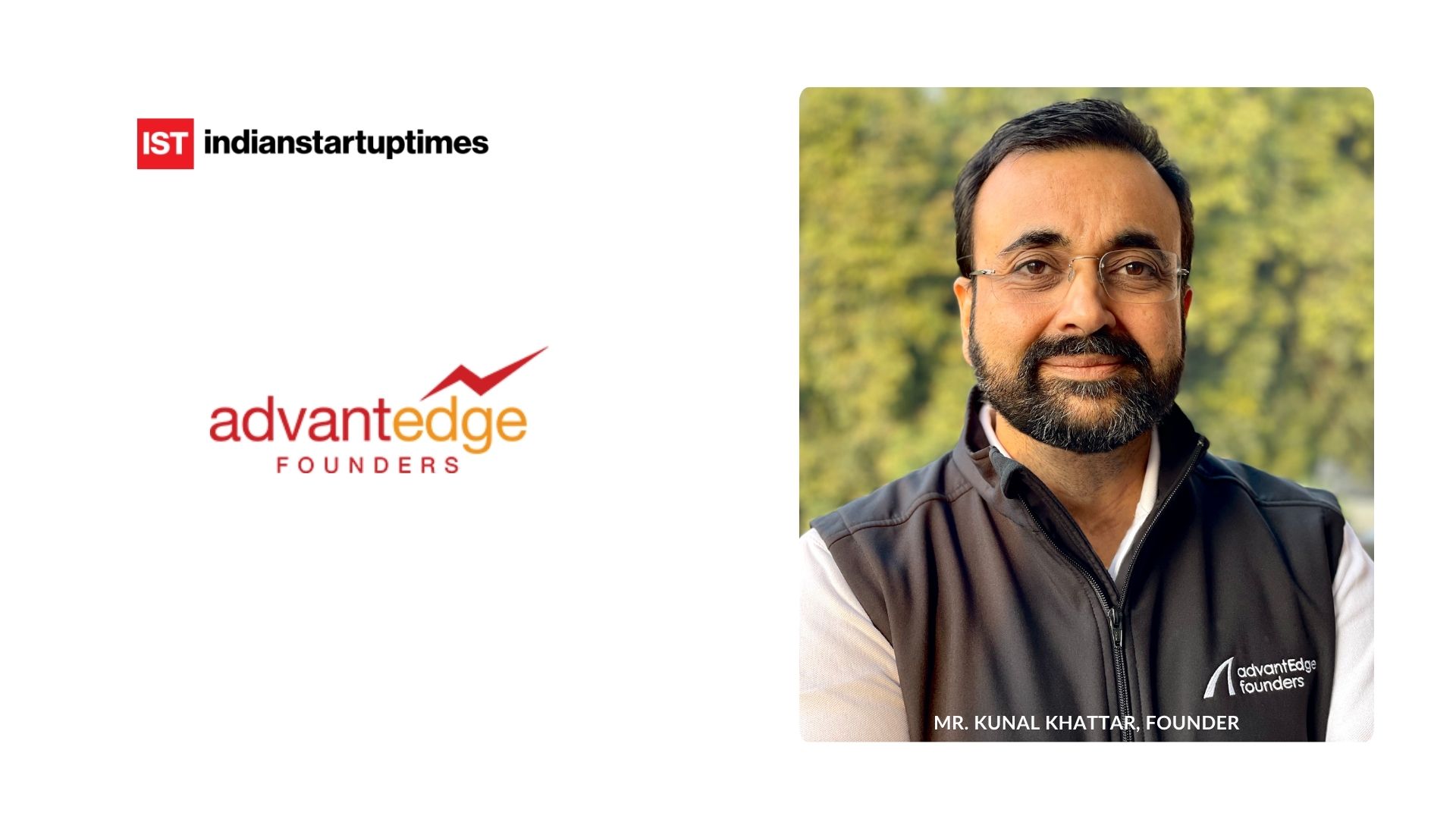
In a rapidly transforming mobility landscape, few investors bring the depth of operator experience and long-term sector conviction that Kunal Khattar does. As the Founder of AdvantEdge Founders, Khattar has consistently backed category-defining startups across mobility, logistics, and emerging EV ecosystems.
With over two decades of global experience spanning entrepreneurship, consulting, private equity, and venture capital, his journey reflects a rare blend of strategic insight and hands-on execution. In this conversation with Indian Startup Times, Khattar shares how his diverse background shaped his investment philosophy, why India’s EV transition presents a trillion-dollar opportunity, and what founders need to build enduring companies in today’s environment.
A Journey Shaped by Reinvention and Operator Experience
Kunal Khattar’s career has been defined by deliberate reinvention. Every phase of his professional journey—from working with global corporations like Ford in the US to building and exiting startups—has added a new lens to how he evaluates businesses today.
His early exposure to Silicon Valley, consulting, and investment banking helped him understand how technology companies scale and how marketplaces are built. This was followed by entrepreneurial stints, including building Carnation Auto in India, which became one of the country’s largest multi-brand auto solutions companies before its exit.
The idea behind AdvantEdge Founders emerged from a desire to multiply impact. Instead of building a single company over a decade, Khattar chose to back and build multiple founders from the ground up. Supported by strategic partnerships with large automotive groups, the fund was designed as a sector-focused platform with a strong operator-first approach.
This philosophy continues to define the firm: not just writing cheques, but actively working with founders through the critical zero-to-one stage—refining product, shaping go-to-market strategies, and helping secure early customers.
Investing with Conviction, Not Following Trends
One of the defining aspects of Khattar’s investment approach is a clear avoidance of trend-driven decision-making. Rather than chasing hot sectors, AdvantEdge has stayed focused on mobility and its adjacent ecosystems, guided by long-term structural shifts.
According to Khattar, the automotive industry—contributing nearly 20% of India’s GDP—is undergoing a multi-phase evolution. Vehicles first became connected, then shared, and are now transitioning toward electrification. The next phase will eventually include autonomy.
However, India’s trajectory differs significantly from markets like the US or China. Here, affordability, infrastructure constraints, and usage patterns demand localized solutions. For example, while EV adoption in global markets has been led by four-wheelers, India’s transition is likely to be driven by two-wheelers, three-wheelers, and commercial vehicles.
This India-first lens has been central to AdvantEdge’s thesis—backing startups like Rapido, Chalo, and Zingbus that solve uniquely Indian mobility challenges.
The EV Opportunity: A Trillion-Dollar Shift
Khattar describes electrification as a once-in-a-generation opportunity. The traditional internal combustion engine (ICE) ecosystem in India—spanning manufacturing, financing, insurance, distribution, and energy—already represents a trillion-dollar value chain.
The transition to electric vehicles is not just about replacing engines; it is about rebuilding this entire ecosystem from the ground up.
For EV adoption to scale meaningfully, three critical pieces must come together:
- The right vehicle form factors
- Efficient and scalable energy solutions
- Accessible and tailored financing
While progress is being made across all three, gaps remain—and these gaps represent massive opportunities for new-age startups.
Financing EVs: Why New-Age Players Will Win
One of the most compelling areas within this ecosystem is EV financing. Khattar believes that traditional financial institutions are not structurally equipped to serve the emerging EV market—especially gig economy workers and commercial operators.
Unlike salaried borrowers, these users often lack formal credit histories and predictable income streams. More importantly, EV financing introduces a new dimension: asset risk.
In the EV world, understanding battery health, degradation cycles, and usage patterns is as important as assessing borrower creditworthiness. This shifts the focus from borrower underwriting to asset underwriting.
New-age fintech companies are leveraging data, IoT, and AI to continuously monitor vehicle performance—tracking parameters like battery health and usage behavior. This allows them to offer dynamic pricing models, usage-based insurance, and more efficient risk management.
The result is a fundamentally different, more adaptive financing model—one that legacy players may struggle to replicate.
Technology as the Core Differentiator
Technology is not just an enabler in the EV ecosystem—it is the competitive moat.
With EVs generating continuous streams of data, companies can build feedback loops that improve decision-making over time. The more assets financed, the more data collected; the more data analyzed, the better the underwriting and pricing.
This creates strong operating leverage and compounding advantages. Companies that are data-first and tech-driven can continuously refine their models, reduce risk, and improve profitability—while offering better terms to customers.
For Khattar, this is where the next generation of market leaders will emerge.
Expanding Beyond Mobility: The Adjacency Play
While mobility remains the core focus, AdvantEdge is actively exploring adjacent sectors that align with the EV transition.
Energy is a major area of interest—covering everything from charging infrastructure and renewable energy generation to storage and energy trading. Beyond that, the firm is also evaluating opportunities in deep tech areas like drones, space tech, and advanced manufacturing.
The underlying principle remains consistent: investing in sectors where they can bring domain expertise and strategic value, rather than spreading capital across unrelated areas.
Capital Abundance and a Maturing Ecosystem
Khattar notes that one of the most significant shifts in India’s startup ecosystem is the sheer availability of capital today.
From angel networks and micro VCs to venture debt, private equity, and sovereign funds, founders now have access to a wide spectrum of funding options. This was not the case a decade ago.
More importantly, the ecosystem is maturing. Successful exits are returning capital to investors, creating a virtuous cycle that will likely accelerate over the next decade.
For strong founders building in large markets, access to capital is no longer the primary constraint—execution is.
What It Really Takes to Build a Company
For early-stage founders, Khattar offers a grounded and realistic perspective.
The starting point, he believes, is intent. Founders must ask themselves why they want to build a company. Pursuing entrepreneurship for fame or financial outcomes is unlikely to sustain them through the inevitable challenges.
Instead, the journey should begin with a deeply felt problem—something that is personal, persistent, and worth solving.
Equally important is adaptability. The initial idea will evolve, sometimes dramatically. Resilience, patience, and the ability to navigate uncertainty are essential.
Entrepreneurship, especially in India, is demanding. It requires long-term commitment, significant personal sacrifice, and the ability to operate in imperfect conditions. Success, if it comes, is often a decade-long journey.
Building the Next Wave of India’s Mobility Ecosystem
Kunal Khattar’s perspective is rooted in both experience and conviction. His approach combines sector focus, operator empathy, and long-term thinking—qualities that are increasingly important in a more disciplined investment environment.
As India moves toward an EV-first future, the opportunity is not just to build new companies, but to reshape entire industries. For founders and investors alike, the next decade will be defined by those who can solve real problems, leverage technology effectively, and build for India’s unique realities.
And as Khattar’s journey shows, the real advantage lies in building with intent—and staying the course.
Interview conducted by Sandhya Bharti