Reporter: Could you further elaborate on the agreement between NIC and the Skolkovo Foundation and its significance for Vietnam’s innovation ecosystem, especially during this special cooperation year?
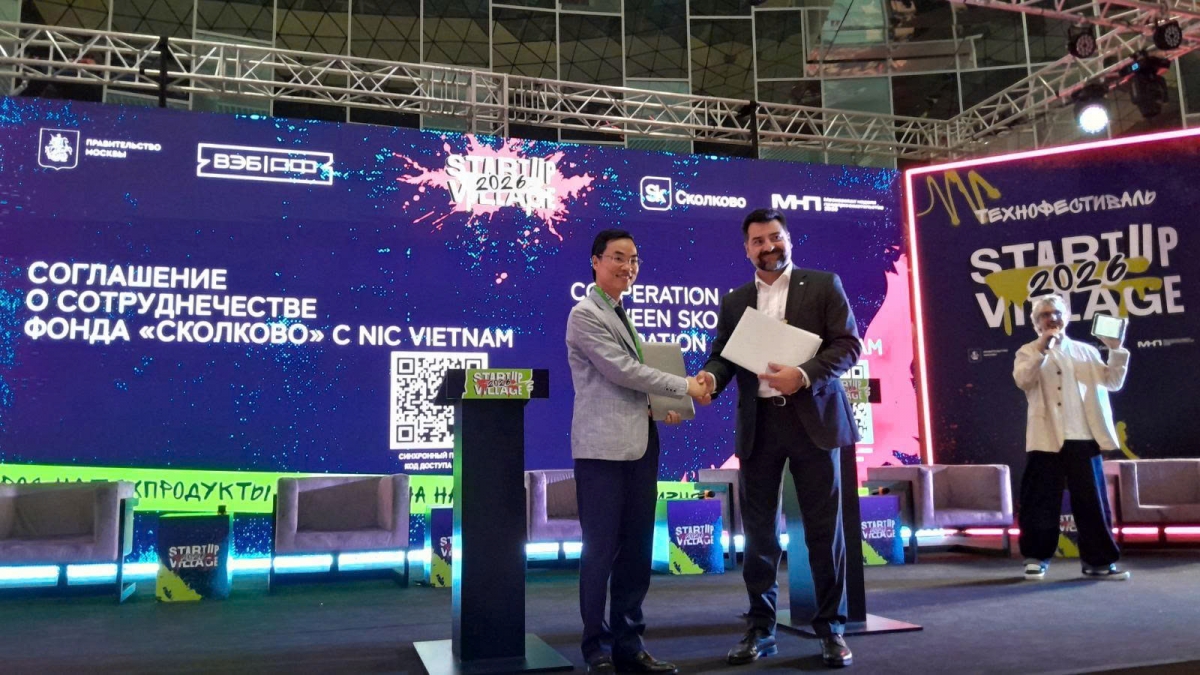
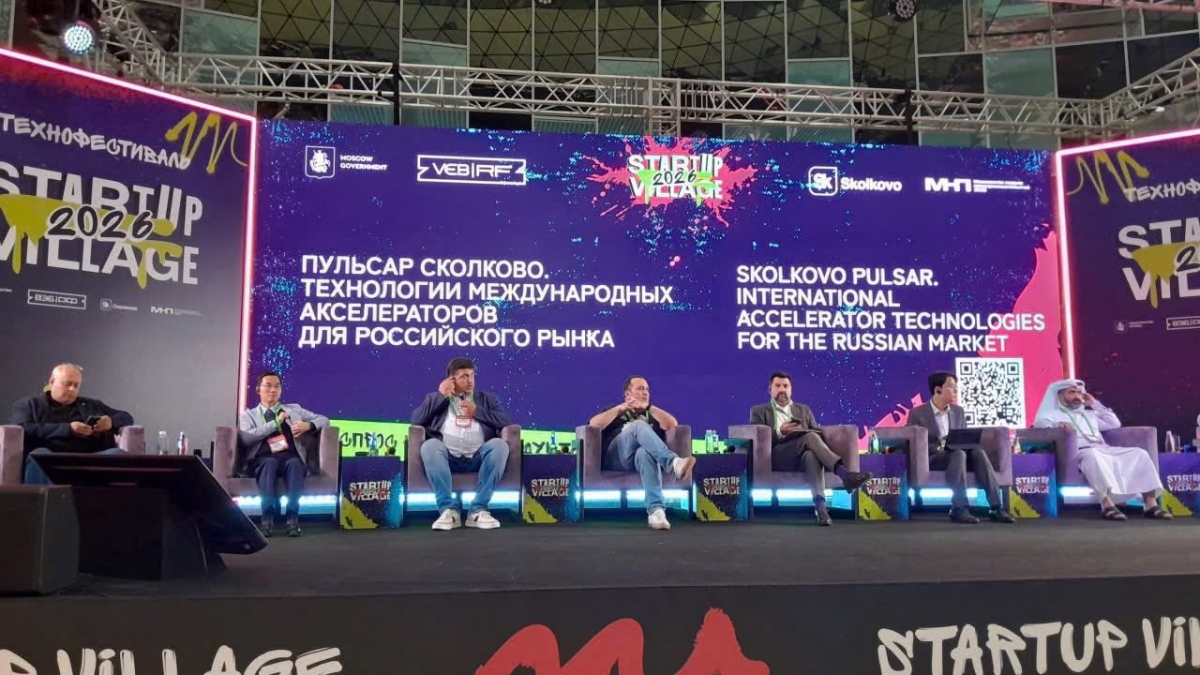
Mr. Do Tien Thinh: Although NIC has previously worked with Russian partners, this agreement comes at a particularly important time as bilateral relations continue to deepen. It creates a systematic framework linking the innovation ecosystems, startups, research institutions, and major enterprises of both countries.
The Skolkovo Foundation, established under the initiative of the Russian President in 2012, is a key to Russia’s innovation system. Our partnership forms a two-way bridge for technology exchange and investment while aligning with Vietnam’s newly updated Law on Science, Technology, and Innovation and the Law on Investment.
Reporter: Russia is known for its strengths in basic science and core technologies, while Vietnam offers a dynamic market with rapid technology adoption. Which sectors could generate the greatest synergy in 2026?
Mr. Do Tien Thinh: Many of Vietnam’s strategic priorities match Russia’s technological strengths. This creates tremendous opportunities for Vietnamese companies to acquire advanced technologies through transfers and investment partnerships.
Russian partners are increasingly interested in working with Vietnamese businesses to commercialize research and view Vietnam as both a domestic market and a gateway to global markets.
This presents an opportunity for Vietnamese technology companies to expand internationally. We should seriously consider whether Russia can become one of Vietnam’s strategic technology hubs.
Russia’s commitment to strengthening economic, innovation, and investment cooperation with Vietnam has never been clearer. The current environment is especially favorable for joint ventures, deep research and development collaboration, and venture capital investment in Russian startups rather than relying solely on traditional trade.
Reporter: What concrete plans do NIC and Skolkovo have for the second half of 2026? How can Vietnamese startups access Russian resources, and what support will Russian technology firms receive in Vietnam?
Mr. Do Tien Thinh: During negotiations, we identified several priorities. First, this partnership establishes a foundation for elevating innovation and entrepreneurship cooperation at the government-to-government level.
Second, it creates channels for Vietnam to access Russian expertise in areas such as nuclear energy, aerospace, and emerging technologies. NIC can bring together universities, research institutes, corporations, and startups to participate in these collaborations.
Third, we aim to facilitate business exchanges by encouraging reciprocal office establishment. Vietnamese companies introduced by NIC to Russia could receive significant incentives, including tax benefits and potential startup funding from Skolkovo of up to 15 million USD. Likewise, Russian technology firms operating at NIC or Hoa Lac High-Tech Park would enjoy Vietnam’s highest available investment incentives.
Finally, human resource development offers enormous potential. Russia has a deep pool of highly skilled technology professionals whose expertise aligns closely with Vietnam’s growing demand.
Reporter: What about the plans to strengthen the “triple helix” model linking government, business, and academia in workforce development?
Mr. Thinh: Russia has developed an effective model that closely integrates universities, research institutes, enterprises, and government agencies.
Vietnam can benefit from this experience by connecting our startup incubators with Russian research institutions and involving Russian experts in Vietnamese technology projects. At the policy level, we also plan to propose special frameworks that support joint innovation initiatives.
In the near term, NIC will connect major Vietnamese corporations with Russia’s innovation ecosystem, research institutes, and startups. We are already working with domestic partners to identify practical technological challenges that Russian companies can help solve.
Reporter: International cooperation with Russia inevitably faces geopolitical, payment, and logistical challenges. How does NIC plan to address these obstacles?
Mr. Thinh: I agree that those challenges certainly exist, but they are manageable. NIC is already implementing support contracts for several Russian startups. Payment channels remain operational, business delegations continue to travel, and we expect many current difficulties to ease over time. What is most encouraging is that Russian companies are more open than ever to working with Vietnamese partners. At the same time, valuations of Russian technology startups are currently attractive, making it a prime time for venture capital investment.
Reporter: If you could send one message to Vietnam’s startup and scientific community about this new wave of cooperation, what would it be?
Mr. Do Tien Thinh: Innovation cooperation with Russia represents a major strategic opportunity. Vietnam should view the Russian market, its technology partners, and its innovation ecosystem as important stepping stones for integrating more deeply into global value chains and moving well beyond traditional export activities.
Reporter: The NIC–Skolkovo agreement marks a step toward deeper, long-term innovation cooperation between Vietnam and Russia, opening new opportunities for technology transfer, startups, and joint research. Thank you, Mr. Do Tien Thinh, NIC Deputy Director, for talking to VOV24/7 and sharing your insights.
In 1988, the Vietnam–Russia Tropical Centre was established, becoming the flagship bilateral scientific institution.
In 2014, a strategic partnership agreement on education, science and technology was signed.
Science and technology remain a regular agenda item of the Vietnam–Russia Intergovernmental Committee on Economic, Trade, and Scientific-Technical Cooperation.
Cooperation spans nuclear science, space technology, biotechnology, IT, environmental research, and advanced materials.
Thousands of Vietnamese students and researchers have received education and training in Russia over the years.
2026 has been designated the Vietnam–Russia Cross-Year of Scientific and Educational Cooperation, providing the backdrop for the NIC–Skolkovo strategic partnership.
Source link