As artificial intelligence (AI) rapidly reshapes the global technology industry, software companies are rethinking how they hire while countries race to establish themselves as centres of AI innovation. For Bangladesh, the challenge extends beyond adopting AI tools. It also involves strengthening higher education, improving access to computing infrastructure, attracting investment, and creating an ecosystem capable of producing AI products rather than relying primarily on outsourcing.
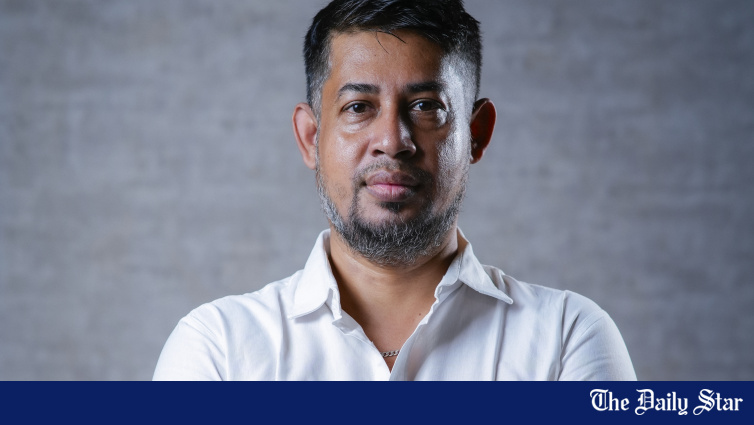
In an interview with The Daily Star, Shafiul Hasan Tareq, chief executive and co-founder of the software company Vivasoft, said Bangladesh’s ability to compete in the AI era will depend less on following the latest technological trend and more on building stronger foundations.
Beyond prompt engineering
While frontier AI model development demands exceptional expertise and computing resources, Tareq believes most graduates entering Bangladesh’s software industry should focus on learning how to use AI effectively rather than trying to build foundation models. “There are multiple segments. For core model development, you must be highly competent. If you want to work at places like OpenAI or train your own models, you need a very sharp IQ and dedication,” he shared.
Bangladesh, however, faces structural limitations. “We lack the infrastructure and GPU capacity required for this,” added Tareq. Instead, he recommends mastering coding agents and prompt engineering while learning to critically assess AI-generated responses. For regular developers entering the industry, he recommends mastering coding agents and prompt engineering. He believes it is crucial to understand how to talk to AI, and specifically to recognise when AI is hallucinating or providing incorrect information. “The main problem we see is people simply copy-pasting AI answers as absolute truths. Instead, you should challenge the AI using your own research and knowledge to get more accurate, filtered results.”
Universities are falling behind
Tareq believes Bangladesh’s higher education system is struggling to keep pace with the speed of AI development. Although he works with universities, he said public institutions often require years to revise curricula because of regulatory approval processes, leaving courses outdated before students complete them. “Our current AI syllabuses are lagging 15 to 20 years behind global standards.”
As such, rather than constantly chasing new AI trends, universities should prioritise stronger programming fundamentals, analytical thinking, and emotional intelligence, he argued. “We should not just chase AI trends. We must focus on strong fundamentals in coding and thinking. Students also need critical thinking and high emotional intelligence (EQ).” He added, “One can use AI to build an agent or software, but those will eventually be considered ‘low-end’ skills at the bottom of the pyramid.”
AI will reshape software jobs
As AI becomes integrated into software development, Tareq expects the labour market to evolve rather than disappear. “In Bangladesh, the education system is often job-market driven rather than passion-driven,” he stated, arguing that graduates who entered computer science purely because of attractive salaries would find it increasingly difficult to compete.
“The market will split: there will be AI operators, and then there will be those who use AI to generate high-value, fruitful solutions. The latter will command much higher salaries,” Tareq stated. “I won’t hire someone who lets the AI provide the entire solution. AI should be the execution tool, not the brain.”
From outsourcing to innovation
According to Tareq, Bangladesh’s ambitions to become an AI innovation hub will require solving structural challenges that extend far beyond workforce training. Without access to advanced hardware, local engineers struggle to gain practical experience with technologies such as distributed GPU computing, reducing the country’s competitiveness in advanced AI development.
Investment remains another major obstacle. Tareq believes local angel investors often demand disproportionately large ownership stakes, while Bangladesh also lacks experienced mentors capable of helping founders build globally competitive businesses. “We need to bring back Non-Resident Bangladeshis (NRBs) who have served on international boards to groom our startups. Our startup ecosystem is currently facing a critical crisis; even Pakistan is receiving more investment and has much larger IT companies.”
He also called for greater participation from established business families through professionally managed investment funds and urged faster government decision-making. “While the government has some great initiatives, when it comes to AI, an idea can become obsolete in six months; by the time government funding is processed, the window for technological relevance often closes.”
He added that companies should also recruit researchers who combine advanced academic qualifications with commercial experience. “Recruiting someone with a PhD in computer vision who has worked in the industry for three years acts like a ‘steroid’ for a project’s growth.”
Unlike many industry leaders concerned about brain drain, Tareq views the migration of talented engineers as a long-term advantage, arguing that many eventually return with valuable experience and international business connections. Instead, he believes the software industry lacks the commercial ecosystem that helped Bangladesh’s garment sector expand globally. “We need a system like buying houses or consultancy firms that bring in work and outsource the development to local vendors.”
Preparing for an AI economy
Looking ahead, Tareq expects AI adoption to spread well beyond software companies into banking, accounting, customer service and other sectors that rely heavily on repetitive work.
For Tareq, Bangladesh’s long-term competitiveness will depend on how successfully it develops both technical expertise and human judgement as AI becomes increasingly embedded across industries. “Finally, I believe the demand for IQ and EQ will only increase. Bangladesh must prepare, because as robotics and AI advance, even our garment industry might face a massive threat within a few years.”