





Fintech pledged to tear down the old walls of finance and in many ways it delivered. Digital accounts are ubiquitous, small businesses can secure capital faster and international payments move at a fraction of the legacy cost. However, evaluating who engineered these products, who started the firms and who secured the capital backing shows a far less equal picture.
Globally, women account for under a third of the fintech workforce, with their presence shrinking even further across founder rosters and C-suites. Talent isn’t the issue at hand. The Aurora Tech Award 2026, which focusses on female founders at the forefront of solving genuine money hurdles in emerging markets, drew 3,400 applications spanning 127 countries. The huge volume proves top-tier innovation is flourishing way outside the tight circles VCs usually run in.
Why Are There Still So Few Women In Senior FinTech Roles?
The venture disparity in fintech hits especially hard because removing financial friction was the industry’s original selling point. Yet back in 2024, startups with at least one female founder secured just 20% of global deals, while all-female teams walked away with a measly 2% of total capital. Numbers that are quite indefensible in this sector.
The real movement is where commercial innovation is actually taking root. Credit access for informal economies, Sharia-compliant savings, agricultural finance for smallholder farmers and payment infrastructure for underserved cross-border corridors are all categories where female founders are doing work that the mainstream sector hasn’t prioritised. The women profiled below are a good representation of this momentum.
The Top Women In FinTech In 2026
The following profiles are some of the founders and leaders to watch in 2026, across payment infrastructure, alternative credit, digital savings, SME lending, agricultural finance and B2B tooling globally.
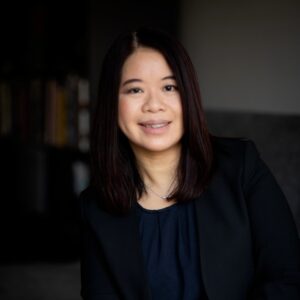
1. Theodora Lau, Founder, Unconventional Ventures
Lau is the founder of Unconventional Ventures, which works to connect financial institutions, startups, venture capitalists and accelerators to better address the unmet needs of consumers, with a focus on women and underrepresented founders.
She was named in American Banker’s Top 20 Most Influential Women in Fintech and is the author of Banking on AI (2025), as well as co-author of Beyond Good (2021) and The Metaverse Economy (2023). She’s also the host of One Vision, a podcast on fintech and innovation, and a regular contributor to Harvard Business Review, MIT Tech Review, American Banker and Nikkei Asia.
Lau operates in the advisory and thought-leadership layer of fintech, mentoring startups across financial services and healthcare and advising B21 Ventures. Her focus on longevity, gender equity and AI in finance addresses a space that product-focused companies rarely fill: building the connective tissue between the institutions, founders and capital that determines who gets to participate in the financial system.
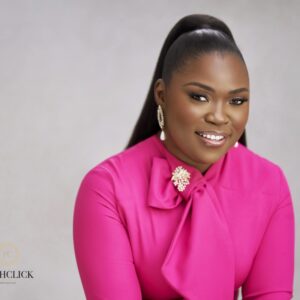
2. Solape Akinpelu, Co-founder, HerVest
Akinpelu is the CEO and co-founder of HerVest, a Nigerian fintech providing savings, impact-investing and credit products to African women, with a particular focus on smallholder women farmers and women-led SMEs. HerVest has over 100,000 members.
She’s a Google-backed founder, a member of the Presidential High Level Advisory Committee to Nigeria’s President on Women and Girls’ Economic Empowerment, and is part of the CBN Gender Committee Desk on the Framework for Advancing Women’s Financial Inclusion. She’s also the author of Stripped: An African Woman’s Guide to Building Generational Wealth.
HerVest was created around a simple truth: financial exclusion hits women hardest. Instead of tweaking a generic banking app, they’ve built an all-in-one savings, investment and credit platform designed specifically for African women from day one.
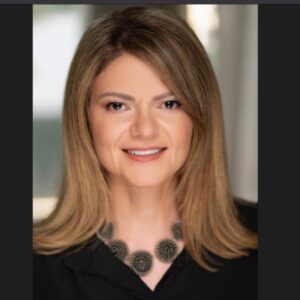
3. Alona Shevtsova, Founder and CEO, Sends
Shevtsova founded Sends, a UK-based FCA-authorised electronic money institution offering payment solutions across cross-border transfers, financial crime prevention and infrastructure linking UK, EU and MENA fintech networks. In 2026 she won the Excellence in Finance Industry Global FinTech Leadership Award at FiNext Awards Dubai and the Woman Finance Leader of the Year award at FinTech Week Dubai.
The UK-to-MENA corridor is notoriously underserved in cross-border payments, and Sends is building straight for the compliance and liquidity hurdles that keep others out. Beyond the main product, Shevtsova has established deep cross-regional fintech networks, giving the business a community foothold competitors can’t easily match.
4. Penny Musengi, Founder, Pesira Technologies
Musengi founded Pesira in 2023, an AgriFinTech platform digitising agriculture value chains and connecting smallholder farmers across Africa and the Global South to finance, markets and digital tools.
She brings over 18 years of experience across finance, technology, marketing and operations in Africa’s private and public sectors. In 2026 Pesira placed second globally out of 3,400 applicants from 127 countries at the Aurora Tech Award, winning a $30,000 prize. Backers include Mercy Corps AgriFin and JICA.
Agriculture is the economic backbone of much of sub-Saharan Africa, and the financing discrepancy for smallholder farmers is substantial. Instead of fixing isolated parts of the chain, Pesira is creating the platform that connect farmers to financial access and open markets.
5. Mercedes Bidart, Founder and CEO, Quipu
Bidart launched Quipu following her time as a Fulbright scholar at MIT, where she earned her master’s in Cities and built the startup through the MIT DesignX incubator.
The platform uses AI and alternative data including SMS transactions, social media activity, inventory records and wallet flows to build equitable credit scores for informal micro-businesses across Latin America. Quipu has supported more than 30,000 micro-businesses to date. In 2026 it won the overall top prize at the Aurora Tech Award and Bidart was named an MIT Innovator Under 35 by MIT Technology Review. She is also a Cartier Women’s Initiative Fellow.
Latin America’s informal economy has a massive credit void that legacy scoring models miss completely. Quipu is building the system to fix this market gap, turning everyday, overlooked behavior into hard risk metrics lenders can actually use.
6. Nihal Ali, Co-founder, Fincart
Ali co-founded Fincart as COO, an Egyptian fintech that operates as an operating system for online sellers across Africa and MENA.
The platform automates shipping, logistics, and marketplace management, pairing operational tools with working capital and dedicated merchant financing.. Fincart achieved approximately 4x year-on-year revenue growth in 2025 with zero paid marketing, and in mid-2026 raised an oversubscribed $2.8 million seed round backed by Bluestream Capital. The company was also named among the Aurora Tech Award 2026 Top 100.
Digital commerce across Africa and the Middle East is outpacing the financial systems designed to support it. Fincart has created a platform that allows online merchants to grow without hitting early-stage liquidity challenges.
7. Mai Masoud, Founder and CMO, Taiseer
Masoud founded and leads marketing for Taiseer, a fintech app making Sharia-compliant gold savings accessible across MEA, starting at just one milligram. With over 15 years in brand leadership and an ESLSCA MBA under her belt, she helped propel Taiseer onto the 2026 Aurora Tech Award Top 100 list of Egyptian female-led startups.
The platform is built specifically for people dealing with unstable local currencies, where normal bank accounts just don’t cut it. Masoud’s background in building trust-based brands in low-trust markets came in handy with what Taiseer is doing: making wealth preservation accessible in a context where most people have been excluded from formal financial systems.
8. Adina Simu, Co-founder and Chief Product and Commercial Officer, Auditoria.AI
Simu co-founded Auditoria.AI to give CFO offices an agentic AI boost, pulling ERP data, inboxes and external feeds together so finance teams get clear and actionable insights. She also spearheaded the launch of SmartResearch, an AI analyst built to handle the heavy investigative load across finance, treasury and procurement.
Finance automation is certainly a crowded category, but the focus on explainability sets Auditoria.AI apart. For CFOs navigating regulatory scrutiny, explainability is an key requirement. Building that transparency directly into the product architecture has created a clear technical and commercial edge.
Source link