Consider a professional who has worked for twelve years, has a real title, a team, and a track record. Someone who has navigated crises, built things, and made difficult strategic calls. We all know professionals like that. They are good at their job. In most rooms they walk into, they are the most experienced person there.
And then, somewhere around year ten or eleven, the growth slows down.
Their portfolio sees revenue plateau. Decisions feel harder than they used to. Strategy meetings produce agreement but not movement. The junior colleagues who were easy to align when there were five of them are harder to coordinate now that there are twenty. The business that was moving has stalled, and no one can quite name the reason.
This is a specific kind of stuck. It is not the stuck of someone who lacks ambition or drive. It is the stuck that comes from having built everything you know on experiential learning, and then running into a situation where that learning is insufficient.
Part of the challenge comes from the fact that experience teaches you what worked in the situations you encountered. It does not automatically teach you why it worked. Which means that when the market shifts, when the business grows past a certain size, or when a better competitor enters the market, the judgment that got you here starts to produce diminishing returns.
The professional in question can see the ceiling. They have the energy to push through it. Often, the missing piece is a framework that works across situations, not just in the specific ones where they originally built their instincts.
Bangladesh has built excellent infrastructure for early-career professional development. Getting into IBA, into BUET, into the country’s strong institutions: there are pathways for that, and they work. However, serious applied education for the professional who has already arrived somewhere and needs to think and operate differently at the next level remains in short supply in the country.
Most corporate training is skills-based: Excel, presentation skills, leadership workshops. Most MBA programs are designed for freshers or mid-career credential-seekers. The experienced senior professional who wants a structured framework for strategic thinking finds almost nothing designed specifically for where they are.
That gap is the original problem iMBA, an applied executive education program for business professionals, wanted to address.
Enter iMBA
iMBA stands for Intelligent Mastermind Business Accelerator. iDEAN Consulting, a Dhaka-based strategy consulting firm, designed and runs the program. Mark Anupom Mollick, iDEAN’s founder, teaches it himself.
The program runs as a live cohort, meaning participants go through it together in real time with direct access to Anupom across the sessions.
The curriculum covers five areas: business strategy, sales, marketing, negotiation, and offer creation. AI runs through every module as an execution tool. iDEAN built a proprietary system called IDEAN AI with the firm’s consulting frameworks embedded in the prompting architecture. Participants learn a strategy in the session and use IDEAN AI to apply it immediately. It shortens the gap between learning about a framework and applying it. In fact, the program’s design requires participants to apply what they learn in real time. It makes learning utterly real, improving learning outcomes significantly. It also makes sense given that participants are mostly senior business professionals who want to learn tools and techniques they can apply to their work. It also helps Anupom get real-time feedback from the participants and guide them better. Every session becomes a real-life demonstration of how to solve a particular problem.
The program sits at the top of iDEAN’s education architecture, designed for participants with significant operational experience who want to upgrade how they think rather than learn business basics.
In the context of Bangladesh, as we noted above, iMBA makes particular sense. In most instances, high-quality professional education remains in limited supply. Most professional education either delivers theory without application or teaches tactics without strategy.
iDEAN claims iMBA does something different. It starts with the participant’s actual situation, applies proven frameworks to that situation, and uses AI to compress the execution timeline. The case studies are Bangladeshi. The frameworks are global. The application is immediate.
In many ways, iMBA is a unique program in its category without any meaningfully comparable offering for the senior professional who wants applied strategic education. The program is delivered live in a cohort-based format, by someone who is also actively consulting with Bangladeshi companies, with AI integrated as a working tool. That is an interesting combination.
More importantly, the program fills the gap for a rigorous, applied, AI-integrated strategic education for experienced Bangladeshi professionals that takes them seriously as practitioners rather than treating them as students who need to start over.
The origin
The origin of iMAB is an interesting story. The program did not start as a standalone idea. It grew from the logic of and as part of iDEAN’s ecosystem. More importantly, understanding that logic can help explain why the program is structured the way it is. At the same time, as you will see, the story itself can be a lesson in how ideas evolve, and new products come into the market.
Anupom launched iDEAN in 2019 as a consulting practice. From the start, the firm positioned itself as a strategy consultant, not an agency. When companies came in with growth problems, iDEAN diagnosed the structural cause and helped build the framework to address it. We have covered this in detail in our earlier piece on iDEAN’s consulting approach. The consulting work was effective. It was also limited in reach. Only companies with strong execution teams could act on what the engagements produced.
This observation drove the creation of iDEAN Lab, iDEAN’s education arm. If consulting could not reach every business that needed it, education could reach many more.
The early programs were targeted: marketing funnel courses, digital marketing training, e-commerce frameworks. The audience was entrepreneurs and business professionals who needed practical tools for building and growing what they had.
GrowthX emerged as iDEAN Lab’s signature program. We covered it in a separate article. It is a three-month blended program for entrepreneurs and business leaders who want to grow their businesses more deliberately. The curriculum covers seven frameworks, from niche selection through strategic brand management, that together form what iDEAN calls the Growth Code. Over 1,000 people have completed GrowthX across five batches.
GrowthX answers a specific question: how do I build a business that grows systematically rather than by accident? iMBA answers a different question: how do I think and lead at a higher level of strategic complexity? The two programs sit in sequence, not in competition.
A founder who has completed GrowthX and built their growth systems might use iMBA to develop the strategic leadership capabilities that running a more complex, larger organization requires. An executive at a corporation that has never used GrowthX might start directly with iMBA because their needs are about organizational strategy and leadership rather than entrepreneurial growth mechanics.
iMBA grew from the consulting work and from iDEAN Lab’s accumulated understanding of where practitioners most consistently hit walls.
As iDEAN’s reputation grew, a different kind of participant started appearing at events and in conversations: senior managers, experienced consultants who wanted sharper frameworks for their practice, business owners who had grown through instinct and wanted to systematize their knowledge and the operation. These people needed something more strategic and more leadership-focused than GrowthX. iMBA was built for them.
The AI dimension came from watching how graduates applied what they had learned. While the program focused heavily on applied learning, the application was slow. Anupom saw that the frameworks were clear. The participants also gave similar feedback.
After some digging, it became clear that execution was the bottleneck. Translating a strategic framework into a specific action in a specific business situation took more time than it should. People needed more in-the-moment guidance that could also help them move fast.
IDEAN AI was built to remove that bottleneck by embedding the frameworks directly in the tool’s architecture.
Evolution
The early version of iMBA was more narrowly focused on strategy and sales frameworks. Anupom was teaching what he applied in consulting, adapted for a cohort format. The content was solid. The gap between the session and actual business application remained large.
The first significant shift was structural. Running cohorts revealed that the most valuable learning happened when participants applied frameworks to their own situations, instead of passively consuming content. Sessions became more workshop-oriented. Content became more effective. Application practice received more time.
The second shift was IDEAN AI. Adding the tool changed what participants could do between sessions. A participant who used IDEAN AI to work through their offer architecture during the week arrived at the next session with specific findings: what the framework revealed, where the gaps were, what the offer actually looked like when examined systematically. The conversation became more productive.
The third shift is ongoing. As AI has changed the demands of professional work, the curriculum’s AI fluency dimension has expanded. The program now addresses how AI changes skill requirements and the importance of human judgment in making decisions, not just how to use AI tools for routine efficiency.
The thesis is that a participant who leaves iMBA with strong strategic frameworks and AI fluency is in a structurally different position from one who has only the frameworks.
The program
iMBA covers five curriculum areas taught as a connected system. Each area builds on the others.
Business strategy is the foundation. The sessions cover how to read a market, understand the competition, recognize the positions that are defensible, and identify the specific customer for whom your offer is the obvious choice rather than one option among many.
Anupom uses the Zoom In, Zoom Out method throughout this section. Participants learn to assess the full business system before focusing on any single component. Most business problems, in fact, problems in general in life, look different when assessed from a distance. You get a detached and better view of things. Participants consistently report that this habit of assessment, once developed, changes how they enter every strategic conversation from that point forward.
Sales and marketing cover the architecture of persuasion at the strategic level. How an offer gets designed. How a customer moves from first contact to commitment. How retention gets built into the business model.
Instead of approaching it as a tactical digital marketing training, the program focuses on understanding the full customer journey system rather than optimizing individual components of it.
Participants with experience of running marketing operations for years often find this clarifying. It gives them a structured language for what they have been doing intuitively.
Negotiation has its own section, which separates iMBA from most professional education in Bangladesh. Anupom found through consulting work that a significant amount of value leaks from businesses and careers at the negotiation table. Deals that should have been structured differently, relationships that should have carried different terms, prices that should have been higher. Most professionals in Bangladesh negotiate from instinct and relationships, which produces inconsistent results. The program gives participants a structured approach to negotiation that works across the range of situations senior professionals actually face, such as client negotiations, supplier negotiations, employment negotiations, and partnership terms.
Offer creation is where strategy and execution meet most directly. How do you package what you know, or what your business does, into something a specific client will pay for at a premium price? For consultants, advisors, and service business owners, this question sits at the center of the business model, and most have never been taught to answer it systematically. The program provides frameworks for designing offers that are differentiated, clearly communicated, and priced appropriately for the value they deliver.
AI fluency runs through all four areas rather than sitting as a separate module. The focus is on how to use AI for strategic work, such as using it to apply a specific framework rather than just asking it to generate content, using it to compress the gap between strategy and execution, and maintaining judgment and analytical integrity while accelerating the speed of application.
Sessions run in real time with a fixed cohort. Participants apply frameworks between sessions using IDEAN AI and bring the results back. This structure solves the gap between understanding something in a session and being able to use it in an actual business situation the following week, a common failure mode in all kinds of education.
By making participants apply the lessons between sessions and building the next session around the results of that application, iMBA keeps the learning and the doing close together.
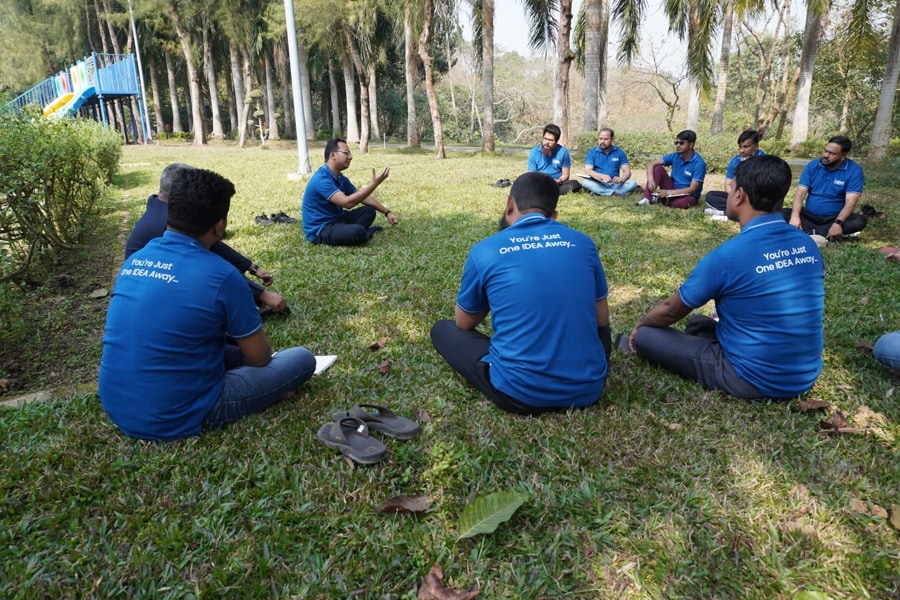
The cohort also produces a specific kind of learning that individual study cannot replicate. A senior professional at a bank and a retail business owner work through the same negotiation framework. Their situations look different. Their applications look different. But watching a peer in a different industry apply a framework to a different problem teaches something that no amount of content delivery can teach.
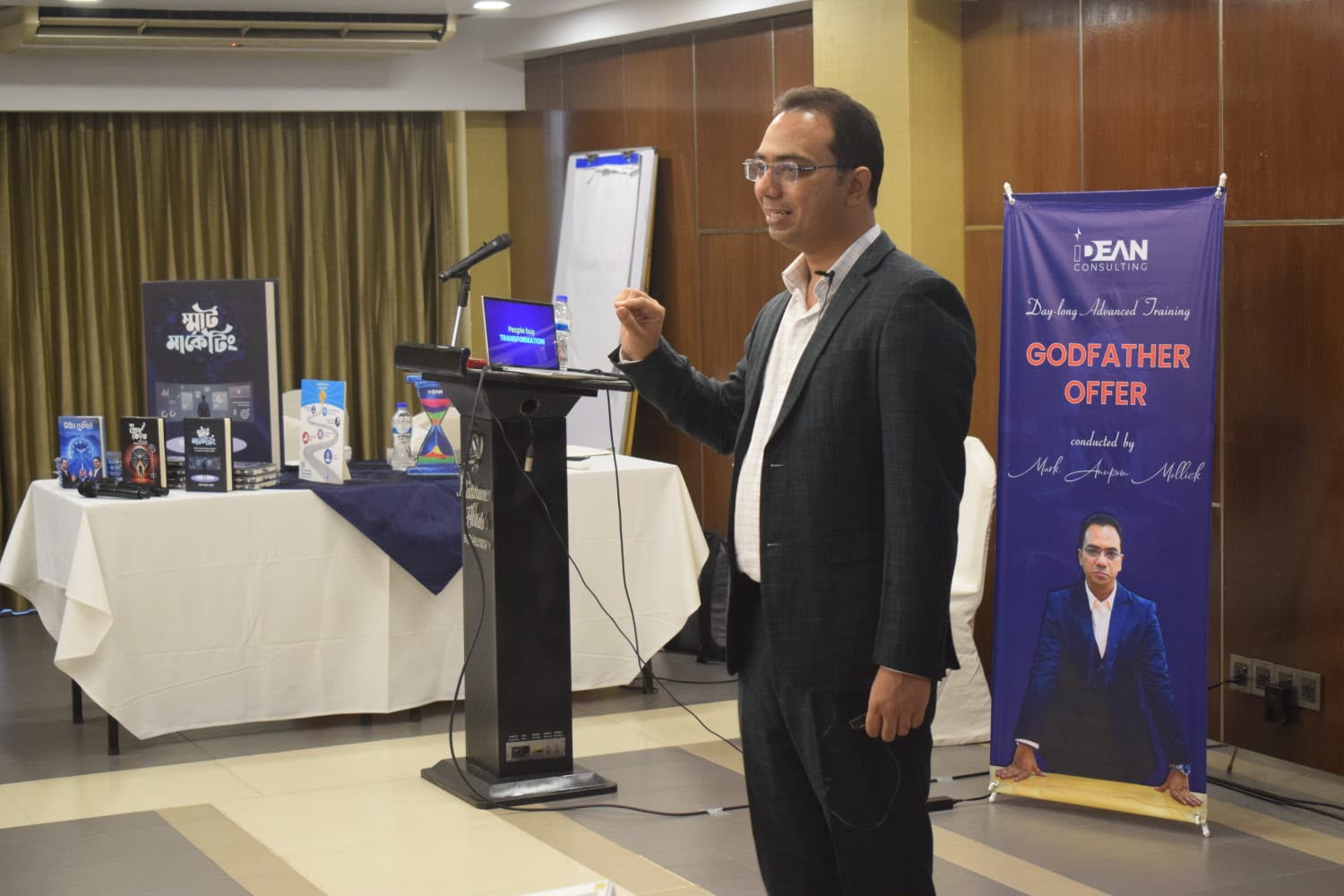
Anupom teaches the program himself, which is both a quality guarantee and a distinctive characteristic. Participants access someone who is applying these frameworks in live consulting engagements with Bangladeshi companies. Questions about how to apply a framework in a specific situation get answers from someone who has applied it in that situation.
iDEAN AI: The execution layer
iDEAN AI deserves separate mention because, although it is not part of the curriculum, it is central to how iMBA delivers its promises.
Most AI tools require significant effort to prompt effectively. A professional who has learned a negotiation framework in a session and then tries to use a general-purpose AI tool to help them prepare for their next real negotiation will spend a large portion of their preparation time figuring out how to direct the tool before getting to the actual preparation. This is a friction point and is also the reason most professionals who understand AI in principle still use it only for routine tasks.
iDEAN AI solves this problem. Anupom and his team embedded iDEAN’s consulting frameworks in the prompting architecture of the tool. A participant who has completed the negotiation module opens IDEAN AI and finds it already oriented toward the right questions, the right analytical structure, the right outputs for that specific framework. The tool holds the analytical structure while the participant applies their own judgment and expertise to their actual situation.
This compression is significant for working professionals because often the gap between a strategy session and actually changing something in your business is where most professional education loses its impact. You learn something on a Tuesday. By Thursday, operational demands have crowded it out. iDEAN AI keeps the Tuesday session alive through the week by making application fast enough to fit into a working schedule.
What participants get
The most consistent thing participants describe after completing iMBA is a shift in how they approach business problems.
Before the program, a growth challenge leads to the question: what should we change? After working through the curriculum, the instinct is to first locate the problem in the system before moving toward solutions. Where exactly is the constraint? Is it in the offer, the customer journey, the negotiation approach, the pricing architecture? Locating the problem precisely before acting on it changes which solutions get chosen and how quickly problems get resolved.
A business owner who cycled through marketing tactics every quarter now examines the offer architecture before touching the tactics. A senior manager frustrated with strategy meetings now knows which question to ask to move from vague agreement to specific commitment. A consultant who struggled to justify premium pricing now has a framework for articulating why the expertise is worth more than the market has been paying.
The AI change is separate and significant. Most participants arrive aware that AI is important. Few have developed a way to use it for strategic work. IDEAN AI gives them a working model for what AI-assisted strategic thinking looks like in practice, and they continue using it after the program because they understand the frameworks well enough to direct it toward their specific situations.
The change iMBA produces is structural rather than dramatic. Frameworks get installed in how you think. Habits get replaced by better habits. The results accumulate over months and years rather than appearing in a single breakthrough moment.
This is important to understand because many programs at this price point often promise transformation, and the honest description of what actually happens is more durable and more useful than that promise.
Strategic context
iMBA is not a standalone product. It is part of a thesis that underpins everything iDEAN does. That Bangladesh’s professional and business community needs structured strategic business knowledge and that making that knowledge accessible is a worthwhile venture.
Anupom’s stated vision is to democratize business strategy. The consulting practice reaches a small number of organizations at significant depth. The education programs reach a much larger number at different levels. The books reach anyone who picks them up.
iMBA sits at the high end of this architecture, designed for participants who want substantive engagement with iDEAN’s frameworks and have the professional context to make full use of them.
The programs also connect as a progression. GrowthX installs growth systems in entrepreneurs. iMBA installs strategic leadership frameworks in senior professionals. The consulting practice applies both to organizations directly. The books distribute the underlying thinking to anyone. Each element serves the same larger purpose at a different price point and for a different audience.
This coherence is deliberate and reflects the kind of ecosystem thinking that distinguishes iDEAN from a firm that just runs training programs.
Challenges and opportunities
iMBA has real strengths. It also has limitations that need attention, because the most useful evaluation of any program comes from understanding both.
The most significant limitation is access. The program is premium-priced, which limits who can attend. A large portion of the senior professionals who would benefit most cannot afford it. iDEAN has addressed this partially through lower-priced courses and free resources, but iMBA itself is designed for a specific economic tier. This is a structural tension in any premium professional education program. The people who need it most and the people who can afford it may not always be the same group.
The live format creates scheduling friction. Senior professionals have demanding schedules, and the requirement to attend live sessions with a cohort may create conflicts. Some participants miss sessions or engage inconsistently because work demands crowd out the program time. The format’s strength, the pressure to apply and return, is also one of the constraints against irregular availability.
The program’s quality depends substantially on Anupom’s personal involvement. He teaches it himself, which is a genuine advantage and a scalability ceiling at the same time. Small cohorts taught by the founder produce a specific quality of experience that is difficult to replicate through other facilitators without dilution.
As demand grows, maintaining that quality while expanding the program’s reach is the central operational challenge.
Outcomes are also difficult to measure with precision. The changes iMBA produces, such as sharper strategic thinking, clearer communication of value, and better decisions at higher leverage points, are real but hard to attribute specifically to the program. Revenue may increase. Negotiations may improve. Careers may accelerate. Connecting these outcomes directly to the program is methodologically difficult, which creates a challenge for potential participants who want evidence before committing.
While challenges are there, opportunities are substantial as well. AI is changing what strategic work requires faster than most professional development infrastructure can adapt. iMBA is already integrating AI into its program. As Bangladeshi businesses accelerate their AI adoption, the demand for professionals who can use AI for strategic rather than just routine work will grow. In that case, iMBA is positioned ahead of that demand.
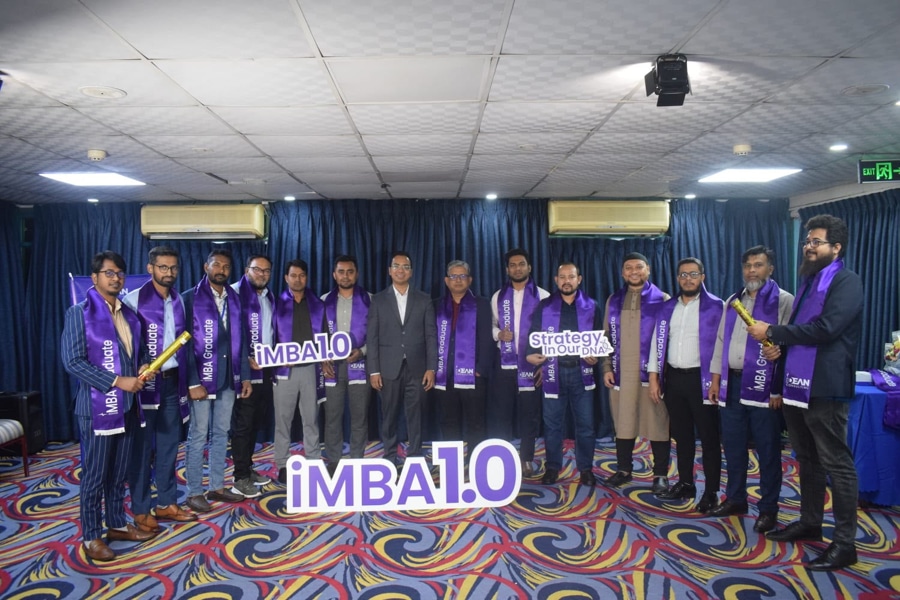
The alumni network is currently small and growing. As more cohorts complete the program, it will help create a valuable professional community that itself can become an important component. Right now this is nascent. In five years, with several hundred iMBA alumni in senior roles across Bangladesh’s business landscape, it could become one of the program’s most significant assets.
The private cohort model is worth watching. Companies that want to develop strategic leadership capability across an entire management team, rather than sending individual participants to a public cohort, can run dedicated cohorts for their organizations.
This also changes the economics for iDEAN and changes the learning dynamics for participants, who work through frameworks in the context of their shared organizational situation. The conversations become more specific and the application more immediate.
iDEAN has run corporate training engagements with companies including Grameenphone, Navana Group, and Akij Group. iMBA in a private cohort format is a natural extension of that work.
Closing
The professional described at the beginning of this article, the one with twelve years of experience and a plateau they cannot explain, is not a rare type in Bangladesh. The country has spent three decades building a professional class. That class is now mature enough to need something different from what it needed at the beginning.
At the beginning, the need was credentials and foundational knowledge. The MBA programs and the professional training industry were built for that stage, and they have served it reasonably well. The next need is harder to serve because it is less standardized. Every senior professional’s gap is somewhat different. The frameworks that would help depend on the specific situation, industry, and career stage.
iMBA’s response to this challenge is to teach frameworks that work across situations rather than tools calibrated to specific ones. The Zoom In, Zoom Out method, the offer creation framework, the negotiation structure, the strategic brand management approach: these are general enough to apply across contexts while specific enough to produce concrete change when applied to a particular situation.
The AI integration accelerates the application. The live cohort creates accountability and perspective. The result is a program that is specific enough to be useful and general enough to work for a range of participants.
There is a broader observation here worth making for readers who may never attend iMBA. The professional plateau that experience alone cannot resolve is not a personal failure or a sign of insufficient ambition. It is a structural feature of how experiential learning works. You build capability in the situations you encounter. When you face situations you have not encountered before, or when the rules governing familiar situations shift, that capability transfers imperfectly.
The response is structured thinking. Structured ways of thinking about business problems that work across situations because they are built on principles rather than on memory of what worked before.
Bangladesh’s business environment is changing fast enough that the professionals who will do best in the next decade are the ones who can think from principles and blend that with experience. They are also the ones who can direct AI tools with enough precision to use them for genuine strategic work rather than just efficiency.
iMBA is a small program, reaching small cohorts at a time, at a price point that limits access. The broader need is for much more of this kind of thinking to reach many more professionals through many more channels and at many more price points.
iDEAN’s ecosystem, from the free ebooks through to iMBA, is a serious attempt to build this at different levels. Whether it can achieve the scale while delivering quality that Bangladesh’s professional development needs is the open question.
Full details on iMBA, including enrollment information and cohort dates, are available at ideanconsulting.com. Earlier articles in this series cover the firm’s full story, how the consulting service works, and the GrowthX program.
Source link