For Thomas Goergen, partner at , this first close marks “the first milestone of a new journey”. After more than twenty-five years in Luxembourg’s fund industry, the former co-founder of Luxembourg Investment Solutions, contacted by telephone this Monday 8 December, now embraces a decisive pivot towards health. “The first company we invested in developed therapeutic games for elderly people in nursing homes. I felt something very different compared with the pure financial world: you really feel you can make an impact with money, through investments in digital solutions,” he explains.
Catalpa Health Fund I aims to reach €30m, with the initial €10m raised largely from entrepreneurs, industry leaders and family offices based in Luxembourg. The fund plans to invest over four years in 15 to 20 startups, with tickets ranging from €300,000 to €1.5m and follow-on capacity for the strongest performers.
Its investment thesis stems from a now-well-documented reality: an ageing population, health systems under strain, a growing shortage of healthcare professionals and rising costs. Europe is projected to face a deficit of four million healthcare workers by 2030, while health expenditure already accounts for around 10% of GDP and rises faster than economic growth. Catalpa intends to contribute to improving health outcomes for “up to 100 million people” through evidence-based innovation.
A strategic focus on scalable healthtech
The fund focuses on three major themes: demographic ageing, workforce shortages and cost containment. “We believe these three megatrends will shape the coming decades. That is where well-designed healthtech solutions can free up medical time, prevent complications and make systems more sustainable,” says Thomas Goergen. Concretely, Catalpa will target preventive and chronic-care solutions, tools that support medical professionals, and software that improves workflows and reduces administrative burden in clinics, practices, CROs and laboratories.
Around one third of the portfolio will be devoted to pure software improving operational efficiency. “The beauty of these solutions is that they don’t need to go through clinical trials to obtain medical-device validation, which shortens the path to exit,” he notes. The remaining two thirds will focus on clinically proven innovations with a strong digital component, whether certified medical devices or telemedicine platforms. “We don’t invest in biotech or purely hardware medtech – the new wheelchair or hospital bed – because we need the potential for rapid scale. We are a venture capital fund with a seven-year horizon per investment and a minimum fund-level performance target of 3x. A solid company growing at 5% a year doesn’t fit our story.”
This approach requires clear boundaries, including on startup governance. For Thomas Goergen, certain configurations are immediate red flags. “A no-go for us is an unbalanced founding team. If a founder keeps 95% and gives 5% to a co-founder, or if 60 to 70% of the equity is already with business angels at an early stage, incentives no longer work. Even with a good idea, we would rather pass.” Conversely, a healthy pre-seed team typically comprises two to three founders and one or two early employees. In contrast, a seed-stage company like Noah Labs already counts around twenty staff.
Our expertise, both in sourcing the best deals and supporting founders, is clearly in Europe, not the United States.

Catalpa Health Fund I positions itself firmly as a European fund. It will primarily target founders based in Europe but remains open to Israeli companies seeking to enter the EU market. “Our expertise, both in sourcing the best deals and supporting founders, is clearly in Europe, not the United States,” says Thomas Goergen. Yet he sees it as natural that the most successful startups eventually cross the Atlantic. “At a certain point, when they scale, they must also enter the world’s largest healthcare market, the US. Many already prepare the ground with a Delaware entity, which is cheap to set up and simplifies future steps.”
Catalpa’s first investment illustrates its strategy. The fund has signed a binding term sheet to invest in Noah Labs, a Berlin-based startup developing a reimbursed remote cardiac-monitoring platform for heart-failure patients. The solution is a certified medical device with a strong digital component. Its core innovation lies in vocal biomarkers captured through a smartphone. “If you speak into your phone, the algorithm can detect heart failure up to three weeks earlier than the usual clinical signs, such as the weight gain registered on a connected scale,” explains Thomas Goergen. According to him, the solution already demonstrates a 30% reduction in hospital admissions for monitored patients, and can save lives by intervening before fluid accumulation triggers an emergency hospitalisation.
A fast-moving sector where execution is everything
Beyond the technology, the economic model played a decisive role. Noah Labs already has around 70 prescribing physicians, with an average of 25 patients each, and the tool is reimbursed by insurers, who also pay fees to cardiologists using the platform. “In healthcare, it is not enough to have a great solution for patients. It must also be attractive for practitioners, who need to earn money with it, and for the payers, the insurers. It’s a triangle, and to succeed in healthtech you must serve all three.”
If the first investment is German, locating Catalpa in Luxembourg is far from incidental. Thomas Goergen knows the financial centre intimately, having led management companies such as Commerzbank Asset Management / Cominvest, later sold to Allianz Global Investors, before co-founding and scaling one of the first third-party AIFMs, eventually sold to a listed group, now part of Apex. “I knew how supportive Luxembourg can be when it decides to achieve something and sets a national agenda,” he recalls.
He sees a fast-maturing health ecosystem in the country, notably around the Luxembourg Institute of Health, with which the fund has signed a cooperation agreement. He considers the Grand Duchy a “springboard” for non-European startups seeking EU entry, or for mature companies aiming to expand into several European markets. Catalpa also counts on national support instruments – grants, innovation schemes, clinical-study frameworks – to encourage companies to establish a subsidiary, conduct clinical research or undertake R&D in Luxembourg, without requiring complete relocations of teams already established in Berlin or Paris.
You need investors able to […] avoid depending solely on public money, which sometimes takes too long.
This momentum intersects with a broader debate on sovereignty, particularly data sovereignty in health. “Luxembourg has a real opportunity when it comes to sovereignty over data and health data. There is a legacy from the financial centre: tier-three data centres and high security requirements. All this can be an asset for health-data operators in a European context,” argues Thomas Goergen.
Speed remains a key challenge in a sector where adoption curves can accelerate rapidly. Thomas Goergen concedes that “time is a relevant factor” and that some public processes remain too slow for healthtech. But he sees the emergence of specialised VC funds as essential to accelerate deployment. “You need investors able to take fast decisions, mobilise relevant capital and avoid depending solely on public money, which sometimes takes too long.”
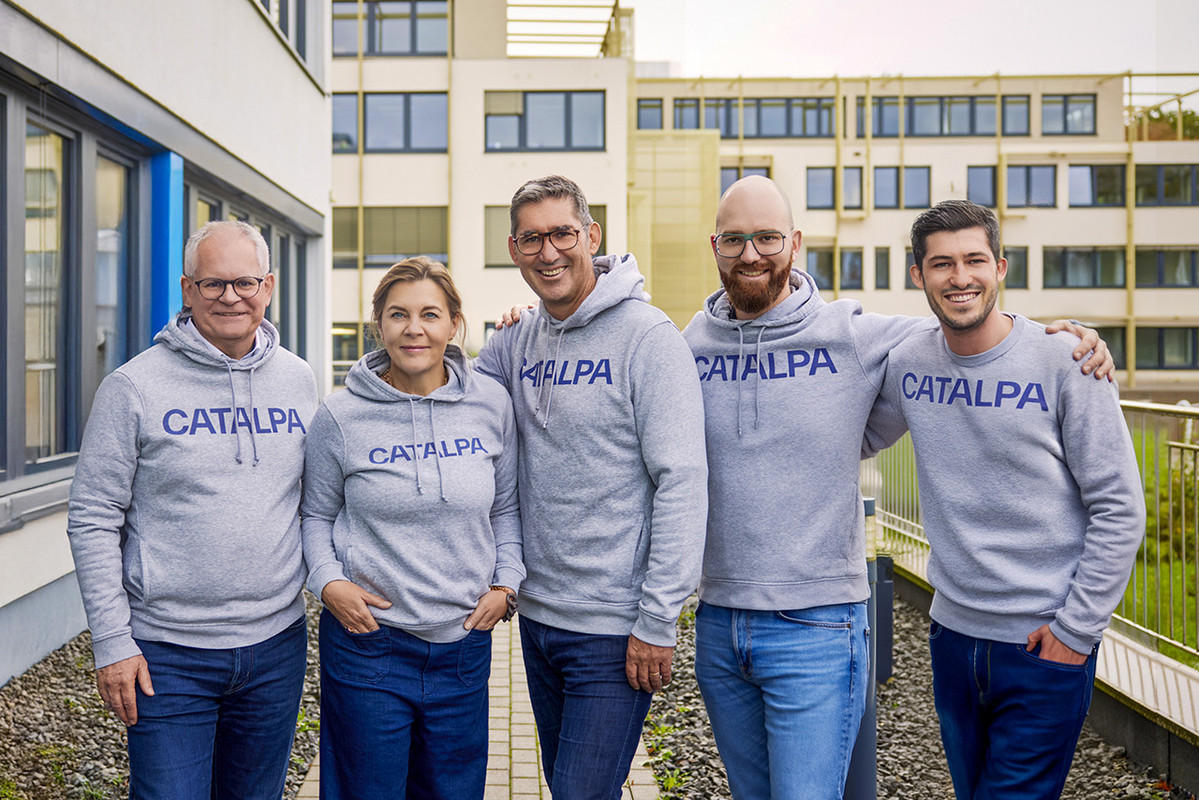
With a five-member team combining medical, scientific, entrepreneurial and financial expertise, Catalpa Health Fund I positions itself as a specialist but ambitious player in European healthtech. “We are building a platform for bold innovation and real impact, supporting tomorrow’s healthtech leaders and transforming care for millions of patients,” concludes Thomas Goergen, as the fund prepares to deploy its next tickets in a market where needs are only increasing.