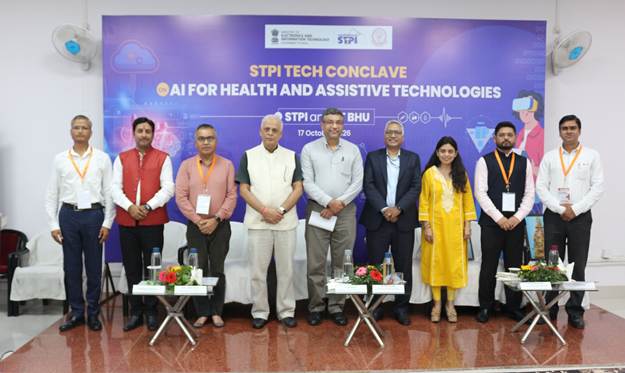
Artificial intelligence could help make healthcare more accessible, affordable and effective, while expanding support for people with disabilities and underserved communities, experts said at a technology conclave organised by Software Technology Parks of India (STPI) and the Centre for Innovation, Incubation and Entrepreneurship (CIIE) at IIT BHU, Varanasi.
The October 18 event, titled AI for Health & Assistive Technologies, brought together government representatives, academics, healthcare professionals and startups to explore practical applications of AI in healthcare, inclusion and citizen well-being.
AI for Healthcare and Assistive Technology
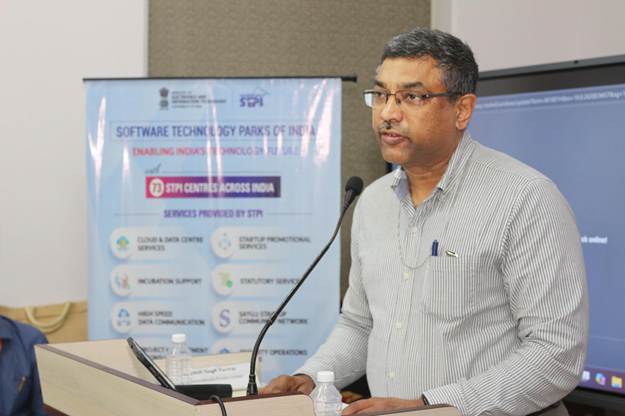
Delivering the keynote address, Electronics and IT Secretary S. Krishnan highlighted AI’s potential to improve clinical decision-making and healthcare delivery, particularly in communities with limited access to medical services.
He identified disease screening, medical diagnostics, remote intensive care unit monitoring and AI-assisted surgical planning as areas where the technology could contribute to healthcare delivery.
Krishnan also called for AI education across academic disciplines and closer collaboration between technology and medical research institutions. He encouraged IIT BHU, STPI, industry and startups to develop practical solutions, highlighting support available through the IndiaAI Mission and other Ministry of Electronics and Information Technology initiatives.
STPI Pushes Indigenous Innovation and Startups
STPI Director General Arvind Kumar highlighted the organisation’s role in supporting India’s information technology industry since 1991. He said the country could build on that experience to strengthen indigenous AI innovation and entrepreneurship.
With 27 Centres of Entrepreneurship, STPI aims to connect innovators with industry networks, investors and market opportunities. Kumar emphasised the importance of translating research into products, creating intellectual property and expanding startup support beyond established technology hubs.
IIT BHU Director Amit Patra similarly highlighted the institute’s Centre for Innovation, Incubation and Entrepreneurship, which seeks to help students, faculty and aspiring entrepreneurs turn ideas into viable businesses. He stressed the need for institutional support and access to multiple funding sources to sustain the startup pipeline.
Experts Examine AI’s Role in Inclusive Healthcare
Two panel discussions explored how AI could improve healthcare access and well-being, and how research could be translated into scalable products.
The first, Empowering Citizens Through AI: Health, Inclusion & Well-being, brought together researchers from computer science, physics, biomedical engineering and pharmaceutical engineering, alongside startup representatives. Discussions focused on the importance of combining technical expertise with healthcare research and entrepreneurial perspectives to develop solutions centred on citizens’ needs.
The second panel, From Innovation to Impact: Translating AI Research into Scalable Healthcare & Assistive Solutions, featured representatives from MeitY, Banaras Hindu University, BioNest BHU, startups and STPI’s MedTech Centre of Entrepreneurship at SGPGIMS, Lucknow.
The discussion examined the pathway from scientific research to practical applications, highlighting the role of collaboration in moving promising innovations towards real-world use.
Building a Scalable AI Innovation Ecosystem
The conclave underscored the importance of partnerships between government, academic institutions, healthcare organisations and startups in developing AI-powered healthcare and assistive technologies.
By connecting research capabilities with entrepreneurship support and industry networks, STPI and CIIE at IIT BHU aim to encourage responsible, practical and scalable solutions addressing healthcare access, accessibility and wider societal needs.
Source link