Adgully has been turning the spotlight on visionary entrepreneurs who dared to challenge conventions and build brands that resonate with modern India in our special series – START-UP STARS. Championing the spirit of the ‘Vocal for Local’ movement, Adgully continues to celebrate homegrown brands that are redefining innovation, quality and consumer trust.
India’s healthcare landscape has long operated on a reactive playbook, one driven by managing symptoms, endless diagnostic panels and lifelong prescription cycles, often leaving patients overwhelmed yet unhealed. As lifestyle conditions surge across urban India, a discerning consumer is now questioning this traditional pill-for-every-ill approach, driving a decisive shift toward functional wellness, holistic diagnostics and root-cause resolution. Recognizing this critical white space, UN:BLOC emerges as a transformative force in the preventive health ecosystem. By converging modern biomarker data with Ayurvedic clinical wisdom and AI-enabled pattern recognition, the platform moves beyond cosmetic relief to decode the underlying physiological “blocks,” reimagining patient care through outcome-oriented, physician-supervised protocols.
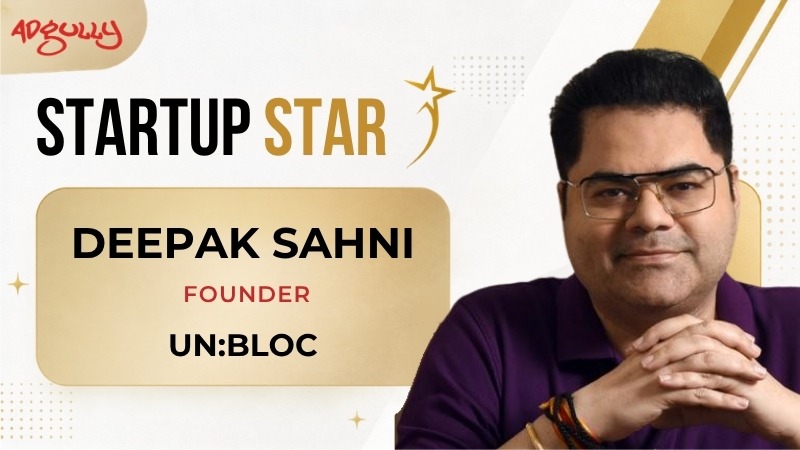
In conversation with Adgully, Deepak Sahni, Founder of UN:BLOC, reflects on the personal experience that inspired him to build the venture after spending 12 years developing Healthians into a major at-home diagnostics platform. He discusses the brand’s education-led communication strategy, the role of technology and AI in its patient journey and how clinical credibility, patient outcomes and content marketing are shaping its go-to-market approach. He also shares his vision for expanding UN’s reach and rethinking how patients understand and approach long-term healthcare.
What gap in India’s healthcare ecosystem led you to build UN:BLOC and how has your own journey shaped the venture?
The gap I noticed wasn’t in access to healthcare. It was in the question the current healthcare was asking.
I spent twelve years building Healthians into one of India’s largest at-home diagnostics platforms. We ran millions of tests. We put health data in the hands of people across 250 cities. And, through all of that, I watched the same pattern repeat itself. People were getting tested, getting reports, getting prescriptions and still not getting better. The data was improving. The outcomes were not keeping pace. The moment that made it personal was when I turned that same lens on myself. I was managing Type 2 diabetes with twelve medications. I understood health data better than most people in this country. And I had no clear answer for why my own numbers kept moving in the wrong direction despite doing everything the system prescribed.
That is when I started asking a different question. Not how do I manage this problem, but what is actually producing it. Working alongside a physician, I identified my own blocks, addressed them at the root and reduced my medication load by 75% in 90 days. That experience is the foundation of UN:BLOC. If this is possible for me, it should be accessible to everyone.
Healthcare marketing in India is predominantly reactive and symptom-driven. What is your communication strategy to educate consumers to look past quick symptom relief and invest in long-term root-cause treatment?
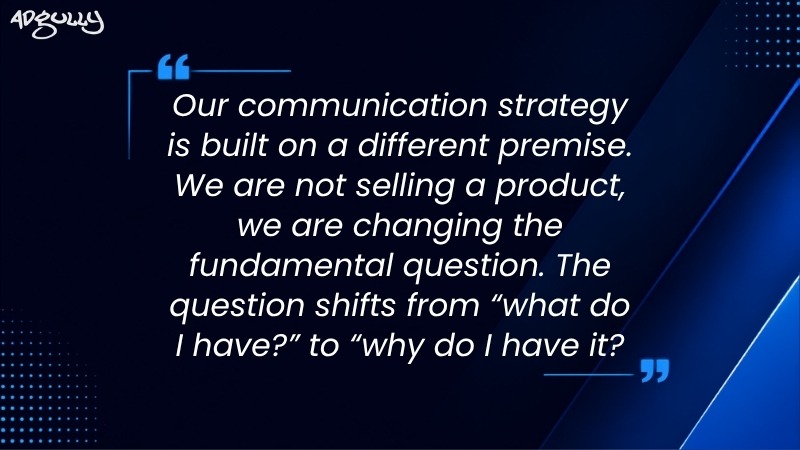
You are right that most healthcare marketing in India is built around the symptom. Take this for pain. Take this for acidity. Manage your sugar. The communication reinforces the same reactive model the system is built on. Our communication strategy is built on a different premise. We are not selling a product, we are changing the fundamental question. The question shifts from “what do I have?” to “why do I have it?”
In practice, this means leading with education rather than conversion. Our content, across all platforms, is designed to give people a new vocabulary for thinking about their own health. The concept of a block. The idea that a blood report is a data point, not a diagnosis. The argument that chronic disease is not always permanent.
When people encounter that language and it resonates with their own experience, years of reports, years of medication, still not feeling well, they can join UN:BLOC. The consumer we are targeting is already frustrated with the symptom-management model. Our job is not to convince them the problem exists. Our job is to give them the solution for what they have always felt and then offer them an alternative.
In the near term, we’ll be leading with the proof-led content. Also, word of mouth and patient outcomes will be our strongest long-term channels for building trust.
With health and wellness becoming increasingly digital, what role will technology, health data and AI play in UN:BLOC’s patient experience?
Technology at UN:BLOC is not the product. It is the infrastructure that makes the product possible at scale. The patient journey begins with our BlocMarker assessment, a proprietary diagnostic intake that draws on both modern biomarker data and Ayurvedic evaluation frameworks to identify the specific block driving a patient’s condition. This process generates a clinical picture that no standard panel is designed to produce and technology is what allows us to do that consistently and systematically across patients.
AI plays a specific role in pattern recognition, helping the clinical team identify convergences between modern diagnostic data and Ayurvedic clinical indicators that a human might miss or take significantly longer to identify. It is not replacing clinical judgment. It is accelerating and sharpening it. On the patient experience side, technology enables continuity and longitudinal tracking of a patient’s markers over the course of their protocol, so the clinical team can see whether the block is being addressed and adjust accordingly.
What does the patient journey look like at UN:BLOC and which channels are driving the strongest engagement for the brand?
The patient journey at UN:BLOC begins with the BlocMarker assessment, priced at ₹2,499. This is the entry point, a comprehensive intake process that maps the patient’s history, symptoms, family background, lifestyle and biomarker data to identify their specific block. It is designed to answer the question the standard consultation has never asked. From there, patients move into the UnblocProtocol, a personalised, physician-supervised treatment plan built around their identified block and overseen by the UnblocPanel. The protocol ranges from ₹1.2 lakh to ₹6 lakh depending on the complexity and duration of the case.
On channels, Instagram is our primary platform, followed by Youtube and than LinkedIn. We will always lead with content-led marketing and partnerships. We are in business where referrals are going to be the most scalable channel and that is why our focus is on outcomes, which drives these referrals automatically.
How are you shaping the go-to-market and storytelling playbook for UN:BLOC? What role do creator partnerships, doctor advocates and content marketing play?
The go-to-market is built on three pillars- clinical credibility, patient proof and education-led content. Clinical credibility starts with the medical board. The doctors associated with UN:BLOC are clinicians with documented expertise and a clear philosophy of care. In a space crowded with wellness claims and lifestyle advice, a credentialed clinical team is a meaningful differentiator.
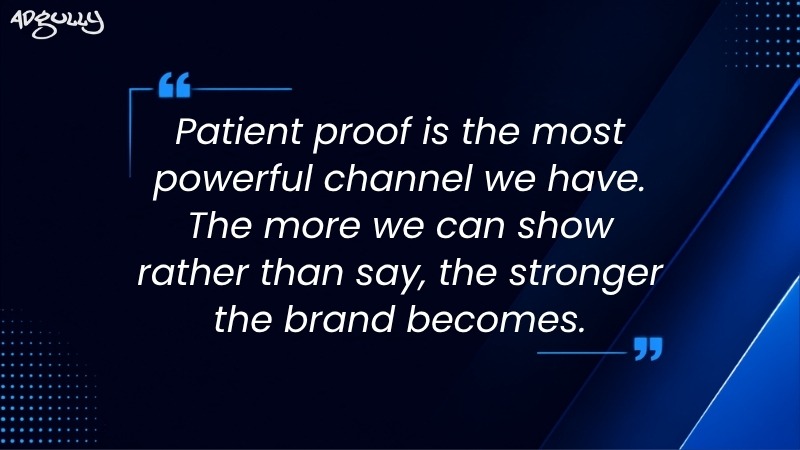
Patient proof is the most powerful channel we have. Before and after reports, real outcomes, documented cases, this is what builds trust in a category where overclaiming has made consumers deeply sceptical. The more we can show rather than say, the stronger the brand becomes.
Creator partnerships are selective. We work with health and wellness creators whose audiences are actively seeking answers to chronic health problems, not passive consumers of wellness content. The fit has to be genuine, both in the creator’s credibility and in the relevance of their audience to what we are building. Content marketing is the engine underneath all of it. The goal is to build a body of work that gives people a new framework for thinking about their health, one that moves the conversation from symptom management to root cause. That is a long-term point of view and it compounds over time.
What are the key milestones UN:BLOC is aiming for over the next three to five years and what is your broader vision for reshaping the preventive healthcare paradigm in India?
The milestone that matters most to me is not a number. It is a shift in how patients define a successful healthcare interaction. Right now, success is a prescription written and a consultation completed. I want UN:BLOC to be the moment that definition changes, when a patient leaves not just with a label, but with an answer.
Apart from that, we are working on deepening our AI intelligence not by fine-tuning, but by bringing the context that most health AI systems miss because of a lack of structured data mapped reversed to the outcomes in patients. We always had International expansion in our plans starting from Gulf to markets where the appetite for root-cause healthcare is significant. And expanding our protocol suite into more chronic diseases like, dementia, Alzheimer’s and cancer, where research partnerships are already underway.
Source link