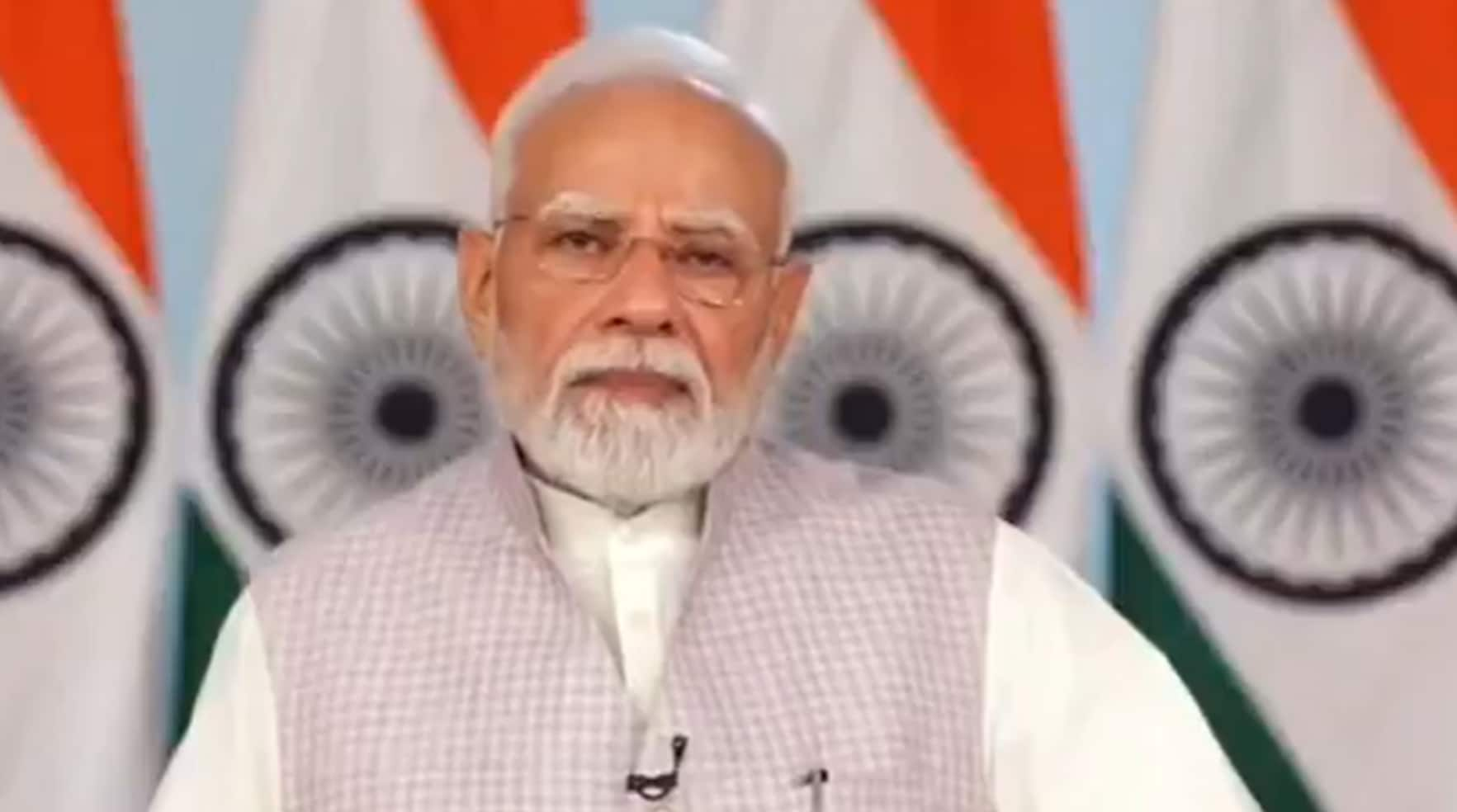
Prime Minister Narendra Modi on Monday said investments in clean energy over the past decade had helped India navigate the ongoing West Asia crisis, as he set a target of adding another 500 gigawatts (GW) of non-fossil fuel-based power generation capacity over the next 10–11 years.
“If India had not invested in clean energy and built new systems for it over the past decade, our crisis could have been far more severe than that faced by the rest of the world,” Modi said while inaugurating the Bharat Renewable Energy Summit in New Delhi.
The crisis had sent a clear message that “energy security is directly linked to economic security”, he said, adding that the future of energy security lay in clean energy. “If we continue to depend heavily on fossil fuels, the global economy will keep getting disrupted repeatedly,” he said.
Modi said India had attracted more than ₹15 lakh crore ($164 billion) in renewable energy investments over the past decade, including over ₹6 lakh crore ($63 billion) since the 2024 RE-INVEST Summit. Investment opportunities in the sector could exceed ₹20 lakh crore ($220 billion) by the end of this decade, he said.
“The kind of demand, scale and scope that India offers is difficult to find elsewhere. Political and policy stability like that in India is also rarely found in other places,” he said, pitching India to global clean energy investors.
India to add another 500 GW of non-fossil capacity in 10–11 years
Modi said India had already achieved nearly 300 GW of non-fossil fuel-based capacity, with more than 50% of its installed power capacity now coming from non-fossil sources. The country achieved its Paris climate pledge of sourcing half its installed power capacity from non-fossil sources in 2025, five years ahead of the 2030 deadline.
“Now, over the next 10–11 years, our effort will be to add another 500 GW of new non-fossil capacity. This target is somewhat challenging, but I have faith in the capabilities of our country. And that is why I say — we will do it,” he said.
Modi calls for clean cooking movement to reduce imported gas dependence
Against the backdrop of the West Asia crisis and concerns over energy security, Modi called for reducing household dependence on imported gas through greater use of solar power.
“We have to move towards a situation where a family can cook food using electricity generated by the solar plant installed on its own rooftop. We have to launch a Clean Cooking Movement,” he said, urging startups and innovators to develop solutions that allow households to meet more of their energy needs through rooftop solar.
He also called for wider adoption of electric vehicles, with households using rooftop solar to charge their two-wheelers and cars, saying this could help middle-class families save thousands of rupees annually.
Modi pitches wider use of solar power in agriculture
More than 30 lakh farmers had benefited from solar-powered irrigation arrangements under the PM-KUSUM scheme, Modi said. Each farmer using a solar pump could save around ₹1 lakh annually, according to an estimate cited by him.
He urged farmers to expand solar use beyond irrigation by installing panels on vacant land and along field boundaries. “My vision is that the annadata (food provider) should also become an urjadata (energy provider),” he said.
He also called for solar-powered equipment for dairy operations, animal fodder preparation, harvesting and post-harvest activities.
PM Surya Sarovar to promote solar power over water bodies
Modi referred to the PM Surya Sarovar initiative, which envisages installing solar panels over reservoirs, ponds and lakes to generate electricity.
“This will lead to better utilisation of water bodies. Such projects will also reduce the expenditure on land,” he said.
PM Surya Ghar scheme covers over 65 lakh households
More than 65 lakh households have joined the PM Surya Ghar Muft Bijli Yojana since its launch in February 2024. The scheme aims to cover one crore households.
“Every six days, one lakh new households are becoming part of this solar movement,” Modi said.
Citing a study, he said electricity bills of these households had declined by nearly 76%, with several reporting zero bills and some selling surplus power to the grid. More than 44,000 government buildings had also been connected to solar energy, generating annual savings of around ₹700 crore, he said.
₹2 lakh crore investment target for Green Energy Corridors
Modi said Green Energy Corridors, comprising dedicated transmission lines and substations, were being developed to transport solar and wind power from generation centres to demand areas.
“Over the past years, we have connected five regional grids into an integrated network. Now the entire country is connected to a power grid operating at a single frequency,” he said.
India had set an investment target of around ₹2 lakh crore for the next phase of strengthening the Green Energy Corridor network, he added.
Solar manufacturing capacity crosses 200 GW; push for storage
India’s solar module manufacturing capacity had risen from around 2 GW a decade ago to over 200 GW, while solar cell capacity had reached around 40 GW, Modi said.
The National Green Hydrogen Mission aims to produce 5 million tonnes of green hydrogen by the end of the decade, he said, adding that India’s first green hydrogen train had started.
Calling for greater investment in domestic technology, he said, “We need indigenous solutions for storage. We need to create new battery storage capacity.”
$200 million Africa Solar Facility proposed
Modi said India wanted to share its clean energy experience and expertise with other countries through the International Solar Alliance.
“A proposal has been made for a $200 million Africa Solar Facility,” he said, aimed at helping countries access funding, technology and expertise for renewable energy.
