Introduction
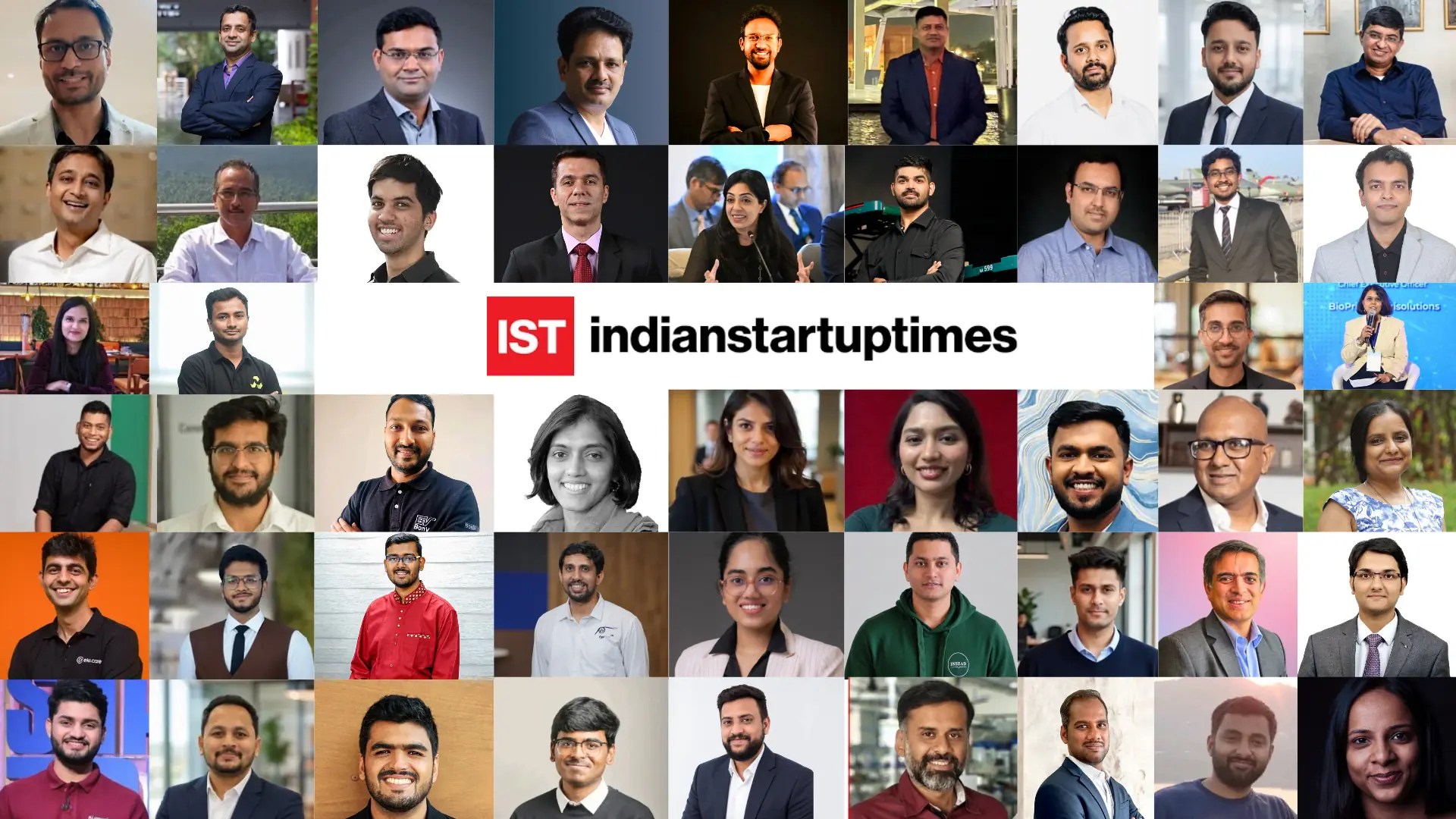
The DeepTech 50 – AI & Intelligence Innovators is a special editorial recognition initiative by Indian Startup Times, celebrating 50 pioneering startups and innovators shaping the future of India’s deeptech ecosystem. The initiative recognises organisations leveraging artificial intelligence, advanced computing, intelligent automation and emerging technologies to address complex challenges, build transformative solutions and push the boundaries of technological innovation. By bringing together ventures at the forefront of AI and intelligence-led innovation, the recognition aims to spotlight the vision, ingenuity and technological contributions driving India’s next wave of deeptech advancement.
From research-driven breakthroughs and next-generation hardware to intelligent software platforms and technology-led industrial applications, India’s deeptech landscape is expanding across an increasingly diverse range of sectors. The innovators featured in this edition represent this breadth of ambition, with contributions spanning robotics, semiconductors, aerospace, biotechnology, quantum computing, climate technology, healthcare and advanced manufacturing. Through this initiative, Indian Startup Times seeks to bring greater visibility to the founders, researchers and technology leaders translating scientific discoveries and engineering expertise into real-world solutions, while recognising the entrepreneurial vision and persistence driving India’s growing influence in the global deeptech landscape.
Ganesh Ramakrishnan – Founding Director | BharatGen: Prof. Ganesh Ramakrishnan is a distinguished computer scientist and AI researcher whose work spans multilingual natural language processing, data-efficient machine learning and translational artificial intelligence. As Founding Director of BharatGen and Institute Chair Professor at IIT Bombay, he is advancing research into indigenous AI capabilities that reflect India’s linguistic and cultural diversity. His research-led approach focuses on making intelligent systems more accessible, efficient and relevant to real-world applications, contributing to India’s vision of building sovereign AI technologies for the future.
Abhishek Upperwal – Founder & CEO | Soket AI Labs: With a background in computational data science, high-performance computing and distributed systems, Abhishek Upperwal has built his entrepreneurial journey around advancing the science of artificial intelligence. He founded Soket AI Labs in 2019, driven by the ambition to develop indigenous AI capabilities with global relevance. One of his notable contributions is Pragna-1B, an open-source multilingual foundation model developed to support Hindi, Gujarati, Bengali and English. His work also extends to building language datasets and advancing efficient AI architectures, reflecting a research-led approach to strengthening India’s AI capabilities.
Ayush Misra – Co-Founder & CEO | AmpereHour Energy: Ayush Misra’s work in clean energy reflects a conviction that the transition to renewable power depends as much on reliable storage as it does on generation. An alumnus of IIT Bombay, where he pursued both his B.Tech. and M.Tech. in Materials Science, Misra developed an early understanding of battery technologies and their role in the evolving energy landscape. Before co-founding AmpereHour Energy in 2017 with Rahul Shelke, Harshal Thakur and Neehar Jathar, he was part of the early team at CleanMax, contributing to the growth of solar power solutions for corporate clients. As CEO, he is steering the company’s development of battery energy storage systems and intelligent energy management software, helping utilities and businesses integrate renewable power with greater reliability and efficiency.
Abilash Soundararajan – Founder & CEO | PrivaSapien: Abilash Soundararajan has built his professional journey around addressing one of the most critical challenges in the advancement of artificial intelligence: ensuring that innovation goes hand in hand with data privacy and security. With over 16 years of experience spanning AI, cybersecurity, networking and privacy engineering, he has developed deep expertise in privacy-preserving technologies and responsible AI. An IIM Bangalore alumnus and inventor associated with over 30 patents, Soundararajan is working to bridge the gap between complex technological innovation and practical enterprise requirements. His contributions to privacy-enhancing technologies and AI governance position him among the voices shaping the future of secure and responsible AI adoption.
Sashikumaar Ganesan – Founder | ZenteiQ.ai: A distinguished academic and researcher in computational science, Sashikumaar Ganesan brings a scientific perspective to the evolving field of artificial intelligence. As the Founder of ZenteiQ.ai and a Professor at the Indian Institute of Science (IISc), his work centres on Scientific Machine Learning, physics-AI integration and the development of scientific foundation models. Under his research leadership, ZenteiQ was selected under the Government of India’s IndiaAI Mission to develop sovereign scientific foundation models. His efforts are focused on connecting advanced mathematical research with practical engineering applications across critical industries, expanding the possibilities of AI beyond conventional language-based systems.
Anjan Umamaheswaran B – Founder | OpenChase.ai: Anjan Umamaheswaran B is an entrepreneur with a keen interest in reimagining how people discover, access and engage with information across the internet. Drawing on his experience in product development and business leadership at HealthifyMe, he previously founded CuriousCats.ai, building technology around personalised information discovery. His latest venture, OpenChase, takes this vision further by making conversations across social media, videos, online communities and news platforms searchable through a unified AI-powered experience. By bringing real-time digital conversations into the search ecosystem, Anjan is exploring new possibilities for AI-driven research, information discovery and contextual intelligence.
Ravinder Kumar – Founder | Tecnod8.ai: Ravinder Kumar’s experience across robotics and industrial automation has shaped his approach to making complex engineering technologies more accessible and intuitive. Having worked with FANUC, a global leader in industrial robotics, and Orangewood Labs, he brings over 15 years of industry experience to his entrepreneurial journey. At Tecnod8.ai, he is developing an agentic AI co-pilot designed specifically for industrial and manufacturing engineering teams. By combining generative AI, industrial knowledge and contextual intelligence, his vision is to simplify engineering workflows, accelerate troubleshooting and help organisations unlock greater productivity through intelligent automation.
Atul Rai – Co-founder & CEO | Staqu Technologies: Atul Rai’s journey in artificial intelligence began with an academic interest in understanding how machines could interpret visual information and translate it into meaningful insights. Holding a master’s degree in Artificial Intelligence from the University of Manchester, he also gained research experience in machine learning and computer vision at the University of Szeged, Hungary. Since co-founding Staqu Technologies in 2015, Rai has focused on taking AI research into real-world applications. His work centres on JARVIS, an AI-powered video and audio analytics platform that transforms existing camera infrastructure into intelligent systems capable of real-time monitoring, identification and actionable insights.
Abhay Adya – Founder & CEO | Enerzolve Smart Technologies: Building indigenous engineering capabilities for India’s evolving energy landscape is central to Abhay Adya’s entrepreneurial vision. With professional experience spanning power transmission, infrastructure and energy systems, including leadership associations with Larsen & Toubro, Adani Energy Solutions, Sterlite Power and Zetwerk, he brings a broad industry perspective to the deeptech sector. Through Enerzolve Smart Technologies, Adya is focused on advancing power electronics, semiconductor-based technologies and intelligent energy solutions. His approach combines engineering innovation with the larger ambition of developing reliable, efficient and locally engineered technologies for India’s next generation of energy infrastructure.
Deepak Shapeti – Chief Executive Officer | Morphing Machines: Deepak Shapeti is steering the commercialisation of indigenous semiconductor innovation, bringing together strategic leadership and deep technology expertise. A Stanford University alumnus with a background in chemical and biochemical engineering, he has held leadership positions across multiple industries, including healthcare, pharmaceuticals, technology and emerging computing. At Morphing Machines, he is leading the journey of REDEFINE, a runtime-reconfigurable many-core processor architecture designed to adapt computing resources to different workloads. Under his leadership, the company has advanced its semiconductor ambitions with MuDRA-1, its first indigenously designed silicon chip, marking a significant milestone in India’s homegrown computing ecosystem.
Jyothis Indirabhai – CEO & Co-founder | Netrasemi Private Limited: With more than two decades of experience in semiconductor engineering, Jyothis Indirabhai has built a career around designing advanced computing architectures and pushing the boundaries of chip innovation. His professional journey includes working with global technology companies such as Intel, Hitachi, Microtune and WIDCOMM, where he gained expertise in system-on-chip design, graphics processors, wireless technologies and computer architecture. At Netrasemi, he is translating this technical experience into indigenous Edge AI capabilities. Under his leadership, the company developed the NETRA A2000, a 12nm Edge AI system-on-chip featuring in-house AI and vision processing capabilities, advancing India’s ambitions in semiconductor design and intelligent computing.
Shashwath T R – Co-founder & CEO | Mindgrove Technologies Pvt. Ltd.: An electronics engineer by training, Shashwath T R has spent over 17 years working across technology-intensive sectors, including nuclear, oil and gas, and aerospace. His professional experience spans hardware development, signal processing, computer vision and specialised engineering software, providing the foundation for his transition into semiconductor entrepreneurship. Co-founding Mindgrove Technologies in 2021, he set out to demonstrate India’s capabilities in designing commercially viable, high-performance chips. Under his leadership, the company developed Secure IoT S2401, an indigenous RISC-V-based microcontroller SoC, and is advancing its Vision SoC programme for intelligent video-processing applications. His work reflects a broader ambition to strengthen India’s semiconductor design ecosystem through homegrown engineering and innovation.
Naman Pushp – Founder & CEO | Airbound: Long before Airbound became an aerospace venture, Naman Pushp was experimenting with robotics and building aircraft prototypes as a teenager. Beginning his drone-building journey at the age of 15 during the pandemic, he transformed an early engineering experiment into an ambitious entrepreneurial pursuit. His fascination with physics, aerodynamics and first-principles engineering led him to develop a distinctive approach to autonomous aviation. At Airbound, Pushp is pioneering lightweight, carbon-fibre delivery aircraft featuring a blended-wing-body, tail-sitter design, with the vision of making aerial logistics significantly more affordable and accessible. His hands-on approach to engineering and manufacturing reflects a new generation of Indian deeptech entrepreneurship, where ambitious scientific thinking meets the determination to build globally competitive aerospace technology.
Tarun Wig – Co-founder | Innefu Labs Pvt. Ltd.: Tarun Wig’s entrepreneurial journey is rooted in the belief that India needs to develop its own advanced technologies to address evolving security challenges. Before establishing Innefu Labs, he co-founded Appin Group, gaining experience in cybersecurity training and technology services. Since co-founding Innefu in 2010, he has focused on building indigenous AI-powered platforms for national security, intelligence and cyber defence. With over 17 years of experience in cybersecurity, Wig leads the company’s strategic direction, business growth and client engagements. His work has helped advance the application of predictive intelligence, data analytics and machine learning in mission-critical security environments, reinforcing the role of homegrown deeptech in strengthening India’s security infrastructure.
Arun Vinayak – Co-founder | Exponent Energy: Recognising that the future of electric mobility depends as much on energy innovation as vehicle engineering, Arun Vinayak has dedicated his entrepreneurial journey to solving some of the EV industry’s most persistent challenges. An IIT Madras alumnus, he previously served as Founding Partner and Chief Product Officer at Ather Energy, where he played a key role in developing its electric mobility ecosystem. In 2020, he co-founded Exponent Energy with the ambition of making rapid charging commercially viable. The company’s integrated battery and charging technology enables a 0–100% charge in approximately 15 minutes, addressing critical concerns around charging time, battery longevity and vehicle utilisation. Vinayak’s work is helping redefine the possibilities of energy infrastructure for India’s commercial electric mobility sector.
Dheemanth Nagaraj – Co-founder & CEO | Agrani Labs: Having spent more than two decades shaping the architecture of advanced computing systems, Dheemanth Nagaraj brings extensive semiconductor expertise to India’s emerging AI hardware ecosystem. His professional journey includes senior technical leadership positions at Intel, where he served as an Intel Fellow, and AMD, where he worked as a Senior Fellow in the Datacenter Solutions Group. At Agrani Labs, he is pursuing the ambitious goal of building high-performance, indigenous AI GPUs supported by an integrated software ecosystem for enterprise and data-centre computing. His vision centres on strengthening India’s capabilities in advanced chip design and creating homegrown computing technologies with global relevance.
Pramod Ghadge – Co-founder & CEO | Unbox Robotics: The intersection of industrial engineering and supply chain automation has shaped Pramod Ghadge’s entrepreneurial vision. An alumnus of Veermata Jijabai Technological Institute and the National University of Singapore, he previously led robotics and automation initiatives at Flipkart, where his exposure to warehouse operations revealed the need for more space-efficient sorting technologies. In 2019, he co-founded Unbox Robotics to address this challenge through intelligent robotic systems. Under his leadership, the company has developed a swarm-intelligence-powered, three-dimensional parcel sorting platform that combines proprietary hardware and software to improve warehouse efficiency, optimise space utilisation and accelerate fulfilment operations. His work is advancing the application of robotics and intelligent automation across modern logistics infrastructure.
Gokul N A – Founder, Design, Product & Brand | CynLr: What makes human vision remarkably powerful is its ability to recognise and interact with unfamiliar objects without requiring prior instructions or extensive training. This principle lies at the heart of Gokul N A’s work at CynLr. An alumnus of Amrita School of Engineering, he began his career at National Instruments, designing machine vision systems and developing algorithms for industrial applications. His experience solving complex vision challenges led him to establish CynLr in 2019, where he is building visual object intelligence for industrial robotics. Through its CLX vision platform and CyRo robotic system, Gokul is advancing neuroscience-inspired technologies that enable robots to perceive, understand and manipulate unfamiliar objects, bringing greater adaptability to industrial automation.
Rama Krishna – Co-founder & CEO | EndureAir: An aerospace engineer from IIT Kanpur, Rama Krishna has channelled his expertise in rotorcraft aerodynamics, structural engineering and experimental flight systems into building indigenous unmanned aviation technologies. His entrepreneurial journey took shape through research at IIT Kanpur, where the foundations of EndureAir’s specialised UAV technology were developed before the venture was incubated in 2018. As Co-founder and CEO, he leads the company’s product development, strategic partnerships and business expansion. Under his leadership, EndureAir has developed advanced platforms such as SABAL, designed for heavy-payload aerial logistics, and ALAKH, built for surveillance and specialised missions. His work is advancing India’s capabilities in autonomous aviation, particularly for challenging high-altitude environments and mission-critical applications.
Hareesh Chandrasekar – CEO & Co-founder | AGNIT Semiconductors Pvt. Ltd.: A strong foundation in semiconductor research has shaped Hareesh Chandrasekar’s journey from academic scientist to deeptech entrepreneur. He earned his PhD in Gallium Nitride (GaN) materials and devices from the Indian Institute of Science (IISc), where his doctoral research received the Best Thesis Prize for Applied Research. His subsequent postdoctoral research at the University of Bristol and The Ohio State University further expanded his expertise in compound semiconductor technologies. At AGNIT Semiconductors, he is translating years of research into commercially viable GaN solutions, spanning materials, fabrication processes and semiconductor devices. His efforts are directed towards developing indigenous semiconductor components for critical applications across defence, telecommunications and power electronics, strengthening India’s position in the global compound semiconductor landscape.
Vrinda K. – Co-founder | Bharat Semi: At the intersection of semiconductor innovation, defence technology and indigenous manufacturing, Vrinda K. is building a distinctive entrepreneurial journey in India’s deeptech ecosystem. An IIT Delhi alumna, she co-founded 3rdiTech in 2019 alongside Vinayak Dalmia and Mukul Sarkar, with the ambition of developing advanced imaging and sensor technologies in India. As Co-founder of Bharat Semi, she is driving the development of high-performance image sensors, infrared detectors and intelligent sensing solutions for mission-critical applications. Her leadership has also brought her into key national technology and policy conversations, including NITI Aayog’s semiconductor workstream. Through her work, Vrinda is championing India’s ambition to build globally competitive semiconductor capabilities across defence, aerospace and emerging AI applications.
Gaurav Parchani – Co-founder & CTO | Dozee: A fascination with engineering, coding and solving complex mathematical problems laid the foundation for Gaurav Parchani’s journey into healthcare technology. An alumnus of IIT Indore, he began his professional career at Altair Engineering, where his experience in simulation, computational modelling and product development shaped his approach to building technology. In 2015, he joined hands with Mudit Dandwate to establish Dozee, applying sensor technology and advanced algorithms to an unconventional challenge: monitoring human health without physical contact. As CTO, Parchani has been instrumental in developing the company’s proprietary ballistocardiography-based technology, which uses subtle body vibrations to track vital signs and AI-powered analytics to identify early warning signals. His work is advancing the role of continuous, contactless monitoring in making healthcare more proactive and data-driven.
Vikalp Sahni – Founder & CEO | Eka Care: From building large-scale consumer technology platforms to reimagining India’s digital healthcare infrastructure, Vikalp Sahni’s career reflects an ability to apply technology to complex, population-scale challenges. Before founding Eka Care in 2020, he was part of the founding team at Goibibo, where he played a significant role in shaping its technology and product architecture. He also contributed to the development of Aarogya Setu as a Volunteer Architect during the pandemic. At Eka Care, Sahni is working towards creating an interconnected digital health ecosystem through personal health records, electronic medical records and AI-powered clinical tools. His vision centres on making healthcare information more accessible, structured and useful for both patients and medical professionals, strengthening the foundations of India’s digital health infrastructure.
Shruti Kutmutia – Founder | BacAlt: A background in microbiology and bioinformatics has shaped Shruti Kutmutia’s approach to solving one of the pressing challenges in modern materials science: reducing dependence on synthetic polymers and microplastic-intensive formulations. An alumna of Fergusson College and the Institute of Bioinformatics and Applied Biotechnology (IBAB), she combines scientific understanding with an entrepreneurial vision for sustainable biomanufacturing. Through BacAlt Biosciences, she is developing high-performance biopolymers and specialty ingredients using precision fermentation and agricultural waste valorisation. The company’s approach focuses on creating cost-competitive, bio-based alternatives for applications across personal care, home care, agriculture and pharmaceuticals. Her work reflects the growing potential of biotechnology to transform conventional industrial formulations while advancing circular and resource-efficient manufacturing.
Devmalya Biswas – Founder & CEO | HyPrix: A fascination with high-speed aviation and propulsion technology has guided Devmalya Biswas towards building next-generation aerospace capabilities. An engineering student at BITS Pilani, Hyderabad, he gained early research exposure through his association with the Defence Research and Development Organisation (DRDO), where he worked on advanced aerospace engineering challenges. In 2024, he co-founded HyPrix with the ambition of developing indigenous supersonic propulsion and autonomous flight technologies. The company’s work spans ramjet propulsion, advanced aerodynamics, guidance and navigation systems, and software-defined flight architectures. Through a first-principles engineering approach, Biswas is working to advance India’s private-sector capabilities in high-speed aerospace technology and strengthen the country’s emerging deeptech and defence innovation ecosystem.
Dr Ezhil Subbian – Co-founder & CEO | String Bio: Dr. Ezhil Subbian’s work brings together biotechnology, molecular science and sustainable manufacturing, with a focus on harnessing biological systems to address industrial and environmental challenges. Trained in industrial biotechnology at Anna University, she went on to earn doctoral degrees in biochemistry, biophysics and molecular biology from Oregon Health & Science University and Rutgers University. Before establishing String Bio, she contributed to biobased product innovation at pioneering biotechnology companies in Silicon Valley, including Gevo, Codexis and Intrexon. At String Bio, she is advancing a proprietary gas fermentation platform that converts greenhouse gases into valuable ingredients for food, agriculture and industrial applications. Recognised with the Women Transforming India Award by the United Nations and NITI Aayog in 2018, Subbian is championing the potential of biotechnology to create more resource-efficient and sustainable manufacturing pathways.
Satyabrata Satapathy – CEO, Co-founder & Director | BonV Aero: An early fascination with robotics, autonomous systems and unmanned flight laid the foundation for Satyabrata Satapathy’s career in aerospace innovation. A gold medallist from SRM University, he further specialised in avionics at BITS Pilani, developing expertise in flight control systems, embedded technologies and autonomous platforms. Before establishing BonV Aero in 2021, he gained industry experience at Asteria Aerospace, where he worked on avionics and unmanned aerial systems. At BonV Aero, Satapathy is driving the development of indigenous electric vertical take-off and landing (eVTOL) platforms, with a particular focus on heavy-lift logistics drones for challenging terrains. The company’s Air Orca platform has demonstrated high-altitude cargo delivery capabilities, including operations above 19,000 feet in the Himalayas. His work is advancing India’s capabilities in autonomous aerial mobility, with applications across defence, disaster response and critical logistics.
Ramya Yellapragada – Founder & CEO | Marbles Health: An interest in computational biology and neuroscience led Ramya Yellapragada to explore how technology could transform the understanding and treatment of brain health conditions. An alumna of IIIT Delhi, where she studied computer science with a focus on computational biology, she further developed her research and entrepreneurial perspective through the Tech Leaders Fellowship at Plaksha University. In 2020, she co-founded Marbles Health with the ambition of making advanced brain care more accessible through technology. Under her leadership, the company developed EASE, a portable, medically licensed neuromodulation platform combining targeted brain stimulation, EEG monitoring and AI-guided therapy. Her work is helping bring neuroscience-led innovation into clinical practice, opening new possibilities for personalised mental and neurological healthcare.
Subramani (suBBu) Ramachandrappa – Founder | Fermbox Bio: Building a biotechnology venture from the ground up requires a combination of scientific foresight, entrepreneurial resilience and an understanding of how research can translate into scalable manufacturing. Subramani Ramachandrappa brings these qualities to his work in synthetic biology, backed by more than two decades of experience in biotechnology entrepreneurship. Before establishing Fermbox Bio, he founded Richcore Lifesciences, now Laurus Bio, which developed animal-origin-free recombinant proteins, enzymes and biomanufacturing solutions. At Fermbox Bio, he is advancing a collaborative approach to precision fermentation and synthetic biology, enabling the development, scale-up and commercialisation of sustainable bio-based alternatives. His vision centres on transforming conventional supply chains through biotechnology while making next-generation biomanufacturing more accessible and commercially viable.
Laina Emmanuel – Co-Founder & CEO | BrainSightAI: Laina Emmanuel brings together experience in technology, healthcare management and public policy to address some of the most complex challenges in brain health. An electronics and communication engineering graduate from NIT Calicut, she also holds an MBA in Healthcare from the Indian School of Business. Her professional journey spans technology product teams at NetApp and Infosys, alongside consulting engagements with the Government of India and the Clinton Health Access Initiative. In 2019, she co-founded BrainSightAI with neuroscientist Dr. Rimjhim Agrawal, combining her healthcare and business expertise with Agrawal’s research in computational neuroscience. As CEO, Emmanuel is leading the development of AI-powered neuroimaging solutions that translate complex MRI data into personalised brain maps, supporting clinicians in neurological and psychiatric investigation, diagnosis and treatment planning.
Ankit Alok Bagaria – Co-founder & CEO | Loopworm: Ankit Alok Bagaria’s entrepreneurial journey took an unconventional turn during his time at IIT Roorkee, where a United Nations report on the potential of insects as future sources of food and feed sparked an interest that would eventually shape his career. A graduate in chemical engineering with a dual degree from IIT Roorkee, he co-founded Loopworm in 2019 alongside Abhi Gawri, transforming an academic exploration into a biotechnology venture. His early entrepreneurial experience with AgroSnap further shaped his understanding of agricultural challenges and technology-led solutions. At Loopworm, Bagaria is pioneering insect-based biomanufacturing, harnessing silkworms and other insect resources to develop sustainable proteins, specialised ingredients and recombinant proteins for applications across animal nutrition, healthcare and life sciences. His vision is centred on unlocking the untapped potential of biological resources and building scalable, science-driven manufacturing solutions.
Apurwa Masook – Founder & CEO | SpaceFields: From student-led rocketry experiments to building indigenous propulsion systems for strategic aerospace applications, Apurwa Masook’s journey reflects a commitment to advancing India’s space and defence capabilities. An alumnus of Veer Surendra Sai University of Technology (VSSUT), he co-founded India’s first student rocketry team, VSLV, which successfully developed and launched seven sounding rocket missions. He further strengthened his entrepreneurial and innovation expertise through a programme at the Massachusetts Institute of Technology (MIT). At SpaceFields, Masook is leading the development of customised solid-propulsion systems, rocket motors and advanced energetics for aerospace, defence and unmanned aerial platforms. With the venture securing multiple Innovations for Defence Excellence (iDEX) challenges, his work is contributing to the development of indigenous propulsion technologies for India’s strategic requirements.
Neha Satak – CEO | Astrome Technologies Pvt. Ltd.: Bridging the digital divide through advanced communication engineering has been a defining ambition of Neha Satak’s entrepreneurial journey. Armed with a PhD in Aerospace Engineering from Texas A&M University and a master’s degree from the Indian Institute of Science (IISc), she combines deep technical research with a strong understanding of technology commercialisation. Before establishing Astrome, she co-founded two space-focused ventures, exploring satellite technologies and space innovation. At Astrome, she is pioneering millimetre-wave wireless communication and satellite connectivity solutions designed to deliver fibre-like broadband speeds to underserved regions. The company’s flagship GigaMesh platform uses patented multi-beam technology to enable high-capacity wireless connectivity across multiple locations. Her contributions have earned recognition from the International Telecommunication Union and NITI Aayog’s Women Transforming India initiative, reflecting her role in advancing India’s indigenous communication technologies.
Johns T Mathai – Founder & CEO | EyeROV: Johns T Mathai’s transition from developing robotics systems to building indigenous marine technology reflects his interest in applying engineering to challenges that demand precision and reliability. An alumnus of IIT Delhi, where he pursued an M.Tech in Electrical Engineering, he began his professional career at Samsung R&D before working as a firmware engineer at GreyOrange Robotics. In 2016, he co-founded EyeROV with the vision of making underwater exploration and infrastructure inspection safer through advanced robotic systems. Under his leadership, the company has developed remotely operated vehicles (ROVs), autonomous underwater platforms and AI-powered analytics solutions for applications across defence, energy and maritime infrastructure. A significant milestone in this journey is the development of TROUT, a military-grade underwater ROV delivered to the Indian Navy, demonstrating the growing capabilities of India’s indigenous marine robotics ecosystem.
Janhavi Gore – Co-founder & CEO | CosmoChute: A fascination with space exploration, rocket engineering and the possibility of building beyond Earth’s boundaries has shaped Janhavi Gore’s professional journey. An alumna of SRM University and the University of Southampton, where she pursued advanced studies in aeronautical and astronautical engineering, she has worked on projects spanning rocket design, satellite systems, flight dynamics and propulsion engineering. Her experience as a systems engineer at Orbex further strengthened her understanding of commercial space technology. At CosmoChute, she is building reusable robotic infrastructure for lunar operations through LEAP, a modular rover and payload transportation platform designed to make movement and deployment on the Moon more accessible. Her vision extends beyond conventional space missions towards creating the foundational infrastructure for a sustainable lunar economy.
Akash Shetty – Co-founder & CEO | OXG Space: From engineering spacecraft mechanisms at ISRO to building the next layer of orbital infrastructure, Akash Shetty’s professional journey reflects a deep understanding of the engineering challenges involved in space missions. With over a decade of experience in spacecraft mechanisms and large deployable space antennas, he has contributed to critical hardware development for Chandrayaan-2 and Chandrayaan-3, including an 18-metre deployable mesh reflector antenna. An alumnus of BITS Pilani and INSEAD, Shetty combines technical expertise with strategic business leadership. At OXG Space, he is working to address the limitations of conventional satellite communication by developing an orbital network that integrates persistent connectivity and in-orbit computing. His vision is to enable satellites to communicate, process data and generate actionable intelligence directly in space, advancing India’s capabilities in next-generation space infrastructure.
Sujoy Chakravarty – Co-founder & CEO | Quanfluence: A successful entrepreneurial exit did not mark the end of Sujoy Chakravarty’s technology journey; instead, it opened the door to one of computing’s most complex frontiers. An electronics engineering graduate from COEP Technological University, he brings over 25 years of experience spanning semiconductor design, embedded systems and advanced computing. Before establishing Quanfluence in 2021, he co-founded Silicon and Beyond, a semiconductor IP venture acquired by Synopsys in 2018. At Quanfluence, Chakravarty is applying this experience to develop scalable photonic quantum computing systems that use light as the foundation for computation. The company’s Time-Multiplexed Coherent Ising Machine is designed to address complex optimisation challenges across industries, while its broader ambition is to build a full-stack, fault-tolerant quantum computer in India. His journey reflects a determination to move quantum technology beyond experimental research and towards practical computing applications.
Sabyasachi Ghosh – Co-founder & CEO | ThinkMetal: An engineering challenge encountered during his student years became an early stepping stone towards Sabyasachi Ghosh’s journey in advanced manufacturing. While pursuing mechanical engineering at SRM University, he served as Technical Director of the university’s Hyperloop team, contributing to its participation in the SpaceX Hyperloop Pod Competition. This experience strengthened his interest in mechanical design, materials and precision engineering. In 2021, he co-founded ThinkMetal with Arushi Sharma to develop indigenous metal additive manufacturing technologies for industrial applications. The company’s SistemT1 platform combines proprietary FuseX metal materials with an integrated manufacturing process to produce precision components in significantly shorter timeframes than conventional methods. By addressing manufacturing constraints across aerospace, defence, automotive and electric mobility, Ghosh is working towards making advanced metal manufacturing faster, more accessible and commercially scalable in India.
Agadh Gupta – Founder & CEO | Orbit Grid: A background in management consulting and strategic business leadership has given Agadh Gupta a distinctive perspective on the infrastructure challenges emerging from the rapid expansion of space-based systems. An alumnus of SVKM’s NMIMS, where he specialised in finance, Gupta is now directing his entrepreneurial focus towards one of the next frontiers of computing: orbital data centres. Through Orbit Grid, he is working towards developing infrastructure that enables satellites and other space-based systems to process, store and distribute data directly in orbit, reducing dependence on transmitting vast volumes of information back to Earth. The venture brings together challenges across aerospace engineering, thermal management, power systems and computing architecture. With Orbit Grid selected for T-Hub’s space-tech incubation programme, Gupta is pursuing a vision of making in-orbit computing a foundational layer of the next generation of space infrastructure.
Raksheet Jain – Co-founder | Aignosis: At a relatively early stage in his career, Raksheet Jain has channelled his technical education in artificial intelligence into addressing an important gap in paediatric healthcare: the timely identification of developmental concerns. A B.Tech graduate in Artificial Intelligence from SVKM’s NMIMS, Jain co-founded Aignosis in 2024 alongside Divyansh Mangal, with the vision of making autism and developmental screening more accessible. The startup’s AI-assisted platform uses computer vision and behavioural indicators, including eye gaze and responses to stimuli, to generate screening insights through a standard laptop and webcam. Designed for use across paediatric clinics, schools and community healthcare settings, the technology aims to help identify children who may require further clinical assessment. Jain’s work reflects how emerging AI talent can translate technical expertise into solutions addressing meaningful societal challenges.
Pankaj Raut – Chief Executive Officer | Dimension NXG: Driven by the ambition to make advanced technology a catalyst for human progress, Pankaj Raut has spent over a decade building solutions at the intersection of artificial intelligence, immersive computing and human-machine interaction. An alumnus of London South Bank University, he began his entrepreneurial journey with an interest in 3D scanning and visual technologies before co-founding Dimension NXG in 2014. Through its flagship brand, AjnaLens, he has led the development of indigenous augmented and mixed reality headsets, AI-powered smart glasses and immersive learning platforms. The company’s technologies are being deployed across defence, healthcare, manufacturing and education, with initiatives focused on bridging skill gaps through experiential training. Recognised with the Graham Bell Innovation Award and an Auggie Award for Best Enterprise Solution, Raut continues to advance India’s capabilities in extended reality and applied AI, with a broader vision of augmenting human intelligence through technology.
Raoul Nanavati – Co-founder & CEO | Navana.ai: An early experience with the limitations of text-based digital interfaces shaped Raoul Nanavati’s approach to building more inclusive technology. An alumnus of Cornell Tech, where he pursued an MBA, he co-founded Navana in 2018 alongside Jai Nanavati, initially exploring voice-first interfaces that could make digital services accessible to people with limited literacy. That founding insight has since evolved into a specialised focus on multilingual Voice AI. Today, Nanavati is leading the development of enterprise-grade conversational AI systems tailored to India’s linguistic diversity, with applications across banking, financial services and customer engagement. Through its proprietary speech models and voice automation platforms, Navana is enabling businesses to communicate with customers in their preferred languages while making digital interactions more natural, accessible and context-aware.
Sudarsan M S – Co-Founder & CEO | Albatross Energetics: A curiosity about fluid science and its real-world applications set the foundation for Sudarsan M S’s entrepreneurial journey. An alumnus of IIT Madras, he began exploring the possibilities of more efficient air-conditioning systems while working on research projects at the institute’s Centre for Innovation in 2019. His collaboration with Srihari Balaji, rooted in their shared interest in thermal and fluid sciences, eventually led to the founding of Albatross Energetics in 2021. Under his leadership, the company is advancing liquid desiccant-based cooling and dehumidification systems that separate humidity control from conventional cooling processes, offering industries a more energy-efficient approach to thermal management.
Abhit Kumar – Chief Executive Officer | Integra Robotics: Abhit Kumar’s interest in robotics took shape through an early exploration of assistive technology and its potential to address real-world human challenges. While studying biomedical engineering at Dr. A.P.J. Abdul Kalam Technical University, he began working on projects involving bionic systems and assistive devices, an experience that eventually led him to co-found Social Hardware in 2016 with Cameron Norris. The venture, now known as Integra Robotics, has since expanded into industrial and mission-critical robotics. As CEO, Kumar is steering the development of integrated robotic systems that bring together modular hardware, computer vision, teleoperation and embodied AI, with the aim of making complex and hazardous operations safer and increasingly autonomous.
Yeshwanth Reddy – Co-Founder & CEO | UNMANND: Aerospace engineering and an entrepreneurial drive to solve complex operational challenges have shaped Yeshwanth Reddy’s journey across the drone technology landscape. An alumnus of IIT Bombay, he previously co-founded Aereo, working in the geospatial technology space, before going on to establish F-drones, where he explored autonomous aerial logistics. These experiences now inform his work at UNMANND, which he co-founded with Hemaditya Prasad in 2025. As CEO, Reddy is leading the development of autonomous aerial systems for defence logistics and aerial security, including Titan, a heavy-lift platform for high-altitude operations, and Fury, an interceptor system designed to counter hostile drone threats.
Akshay Mittal – Founder & CEO | StrainX Bioworks: Akshay Mittal’s approach to biotechnology brings together the analytical rigour of an engineer and the strategic perspective of an entrepreneur. An alumnus of IIT Delhi, where he studied Biochemical Engineering and Biotechnology, he also holds an MBA from the University of Virginia’s Darden School of Business. His professional experience spans strategy and business leadership, including stints at Boston Consulting Group and Strategic Decisions Group. In 2023, he co-founded StrainX Bioworks with Dr Alok Malaviya to translate advances in synthetic biology into scalable manufacturing. Under his leadership, the company is building an integrated precision fermentation platform that engineers microorganisms to produce high-value proteins and biomolecules for food, nutraceutical and personal care applications.
Swati Pandey – Co-Founder & CEO | Arboreal: Swati Pandey’s transition from engineering and investment management to biotechnology entrepreneurship was driven by a desire to make healthier food choices more accessible. A mechanical engineering graduate from IIT (ISM) Dhanbad and a Commonwealth Scholar at Imperial College London, she built experience across venture capital, sustainable energy and consulting before returning to India to establish Arboreal in 2015 alongside Manish Chauhan. What began as an effort to develop natural alternatives to sugar has evolved into a broader ingredient innovation platform combining plant biotechnology, fermentation, extraction and formulation science. Under Pandey’s leadership, Arboreal is developing specialty ingredients that help food and beverage companies create healthier products without compromising on taste, texture or functionality.
Renuka Diwan – Chief Executive Officer | Bioprime™: With a career rooted in plant science and biotechnology, Dr. Renuka Diwan has spent more than two decades exploring how biological research can translate into practical solutions for agriculture. After completing her PhD in Plant Sciences at the University of Pune and postdoctoral research in genetic engineering, she built a strong research foundation in bioactive compounds, plant tissue culture and genetic engineering. In 2016, she co-founded BioPrime AgriSolutions with fellow researchers Dr. Amit Shinde and Dr. Shekhar Bhosle, bringing scientific discovery closer to the needs of farmers. As CEO, Diwan is guiding the company’s work on next-generation agricultural biologicals, including its proprietary SNIPR and Bionexus platforms, designed to help crops withstand environmental stress and improve agricultural resilience.
Raviteja Chivukula – Co-Founder & CEO | Perceptyne: Raviteja Chivukula’s engineering journey has taken him from building complex aerospace systems to rethinking the future of industrial automation. An alumnus of IIT Madras, where he pursued electrical engineering and VLSI, he developed a multidisciplinary foundation spanning electronics, embedded systems and robotics. His experience as a technical consultant in avionics, including his association with Skyroot Aerospace, gave him first-hand exposure to the precision and reliability demanded by mission-critical engineering. In 2021, he co-founded Perceptyne with Jagga Raju Nadimpalli and Mrutyunjaya Nadiminti. Today, he is leading the company’s development of AI-powered, dexterous robotic systems that combine vision, tactile sensing and intelligent control to automate complex manufacturing tasks.
Prasanta Sarkar – CEO & Co-Founder | Newtrace: An aerospace engineer by training, Prasanta Sarkar’s journey into climate technology has been shaped by a deep interest in engineering solutions to large-scale challenges. He holds a master’s degree in Aerospace Engineering from the University of Manchester and a PhD in Fluid Mechanics and Energy Engineering from Université Grenoble Alpes, where his research focused on computational mechanics and fluid-structure interactions. A two-time Marie Skłodowska-Curie fellow, Sarkar also gained industry experience with Leonardo Helicopters before turning to entrepreneurship. In 2021, he co-founded Newtrace with Rochan Sinha to address one of the key barriers to green hydrogen adoption: production costs. As CEO, he is driving the development and commercialisation of advanced electrode and electrolyser technologies designed to make green hydrogen more affordable and scalable for industrial decarbonisation.
Bottom Line
The DeepTech 50 – AI & Intelligence Innovators celebrates the vision, ingenuity and determination of the founders and innovators translating complex scientific ideas into solutions with the potential to shape India’s future. From artificial intelligence, robotics and advanced computing to biotechnology, semiconductors, aerospace and climate technology, this year’s recognised innovators reflect the breadth and growing ambition of India’s deeptech ecosystem.
Beyond the technologies they are building, these leaders represent a new generation of entrepreneurs driven by research, resilience and a commitment to solving meaningful challenges. Their work underscores the importance of homegrown innovation in strengthening India’s technological capabilities and expanding its contribution to the global innovation landscape.
As deeptech continues to redefine industries and create new possibilities, the 50 innovators recognised in this edition stand as a testament to the ideas, expertise and entrepreneurial courage moving the ecosystem forward. Indian Startup Times congratulates all the honourees and looks forward to following their journeys as they turn today’s breakthroughs into tomorrow’s transformative technologies.
Researched & Edited by: Muskan Dengra
Disclaimer
The DeepTech 50 – AI & Intelligence Innovators is an editorial recognition initiative by Indian Startup Times, curated through independent research, editorial assessment and a review of the innovation, technological contributions and leadership shaping India’s deeptech ecosystem.
The list has been developed through an editorial selection process and brings together a diverse cross-section of deeptech ventures and innovators across areas including Artificial Intelligence and Machine Learning, Robotics and Autonomous Systems, Semiconductors and Advanced Computing, Aerospace and Space Technology, Biotechnology and Synthetic Biology, Climate and Clean Energy Technology, Quantum Computing, Advanced Materials, Healthcare Technology and Industrial Automation.
The selection reflects the breadth of India’s emerging deeptech landscape and is intended to recognise promising work across varied fields rather than establish a definitive ranking. The order of names does not indicate any hierarchy or comparative position. Recognition is based on the information available and assessed at the time of editorial review. Inclusion does not constitute an endorsement, investment recommendation or guarantee of commercial performance, and the initiative is not a paid or sponsored listing. Indian Startup Times retains editorial independence over the selection and presentation of the profiles.