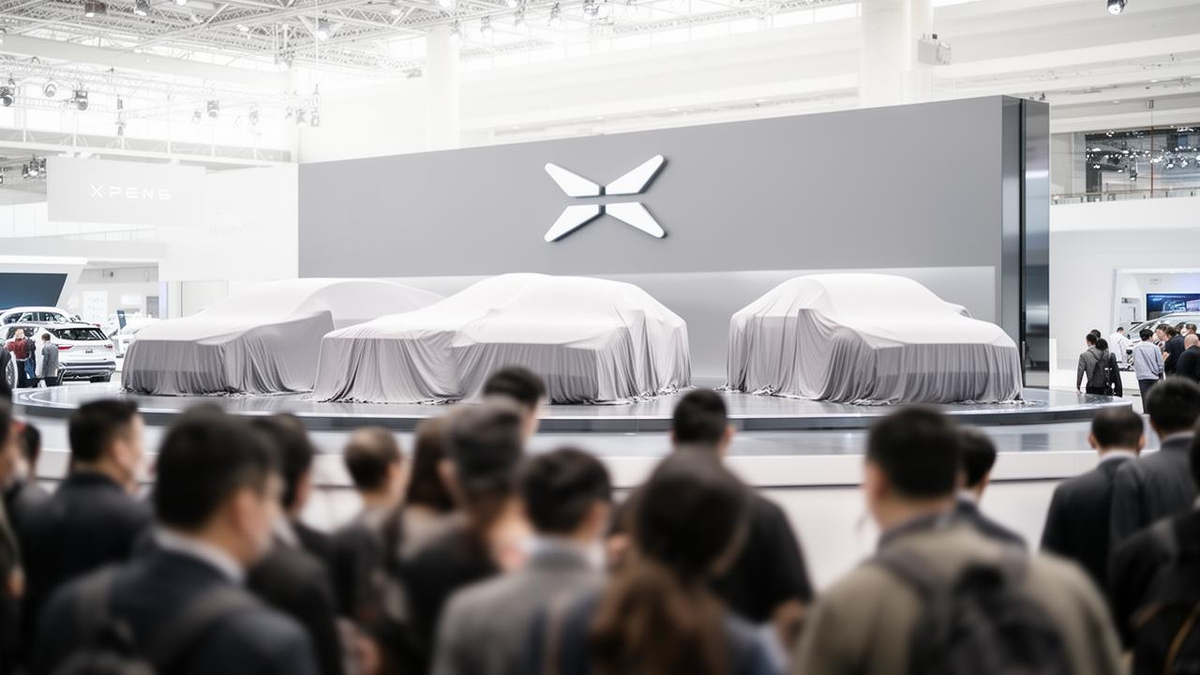
On November 27, the 24th Guangzhou International Automobile Exhibition opened. Unlike previous years, startup brands almost collectively skipped debuts of all-new model lines at this year’s show, shifting their focus instead to smart-technology systems, multi-brand coordination and global expansion. The four leading startups — NIO, XPeng, Xiaomi Auto and Leapmotor — each presented their own interim results, and a contest over the efficiency of turning technology into products unfolded both inside and outside the exhibition halls.
NIO placed its three brands — NIO, Onvo and firefly — on the same Guangzhou Auto Show stand for the first time. The NIO ES8 “Xuanjin Lanyue” special edition officially went on sale: the five-seat version is priced from 434,800 yuan (approximately $65,000) for the full vehicle, or from 326,800 yuan (approximately $49,000) with BaaS battery rental; the six-seat version starts at 458,800 yuan (approximately $69,000) for the full vehicle, or 350,800 yuan (approximately $53,000) under the BaaS plan. The Onvo brand showed its full lineup and brought out the new Onvo L60 Black Knight Edition. firefly, meanwhile, completed delivery of its 100,000th vehicle on the show’s opening day.
William Li, chairman of NIO, said at the press conference: “The NIO, Onvo and firefly brands are appearing together at the Guangzhou Auto Show for the first time. This show is also a concentrated display of NIO’s multi-brand coordinated development and 12 years of system innovation.” He also disclosed that NIO’s overall deliveries from January to October this year reached 334,547 vehicles, up 38.5% year on year and a record high; of that, cumulative deliveries in Guangdong province reached 47,618 vehicles, up 62% year on year.
XPeng, for its part, played both the “physical AI” and “going global” cards at once. At its stand, eight high-end general-purpose humanoid robots, IRON, made their first public appearance and officially “reported for duty,” handling guest reception, exhibition-area tours and vehicle presentations. Under the plan, IRON will enter hardware mass production in January 2027, take up internships as shopping guides at selected stores in the first quarter, be officially released to commercial clients in the second quarter, and launch globally in the second half of 2027.
On overseas markets, Alex, vice president of XPeng Group, said XPeng’s overseas sales are expected to exceed 100,000 vehicles this year, more than doubling from last year. In October, XPeng delivered 13,326 vehicles in overseas markets, up 166% year on year and a record high. To drive another doubling of overseas growth in 2027, XPeng will launch five internationalized models in overseas markets that year, including its popular XPeng P7, which will officially enter the European market.
Xiaomi Auto put its technology narrative on its driver-assistance system. The latest version of Xiaomi HAD released at this year’s show adds a “causal chain” and an “on-vehicle world model” to its original architecture. The causal chain can support 20 seconds of historical memory to understand a scenario, while the on-vehicle world model supports real-time reasoning and can predict six seconds into the future. Take a driving scenario: it is hard to judge a neighboring car’s intentions from a single frame alone; by looking back through the causal chain and combining the neighboring car’s past behavior to understand “why he is driving like that,” the on-vehicle world model then predicts its trajectory over the next six seconds based on that trend, judging “how he may drive,” and the vehicle immediately responds accordingly.
Leapmotor continued to reinforce its “extreme value for money” label, launching the all-new Lafa5, a five-door all-electric hatchback coupe, in five variants priced from 102,800 to 128,800 yuan (approximately $15,000–$19,000). Leapmotor pushed features such as a full-domain 800V high-voltage platform, FSD variable-damping shock absorbers, a Qualcomm SA8295P cockpit chip, a 50-inch AR-HUD and dual zero-gravity front seats down into the 100,000–130,000 yuan (approximately $15,000–$20,000) range. Leapmotor said: “Going forward, Leapmotor will continue to build on full-domain in-house development to bring higher value and a better experience to users worldwide.”
Outside the exhibition halls, October delivery data had already set the yardstick for this contest.
| Brand | October deliveries (vehicles) | Note |
|---|---|---|
| Leapmotor | 106,127 | Continues to lead the startups |
| XPeng | 50,237 | Tops the 50,000 mark for the first time |
| Xiaomi Auto | Over 50,000 | Close behind XPeng |
| NIO | 34,246 | — |
Note: Data comes from October delivery figures published by each automaker.
It is worth noting that startups generally did not launch standalone all-new model lines at this year’s Guangzhou Auto Show, in sharp contrast to the 115 world-premiere vehicles announced by the organizers. NIO brought 10 display vehicles and 12 in-house full-stack technologies, with new products mainly the ES8 “Xuanjin Lanyue” special edition and the Onvo L60 Black Knight Edition; the Leapmotor Lafa5 received more than 40 upgrades, lifting its overall value by more than 18,000 yuan (approximately $2,700); and what XPeng, Li Auto and Xiaomi showed were also established product lineups.
This change of pace is closely tied to the broader auto market. Data from the passenger car market joint branch of the China Automobile Dealers Association show that China’s retail sales of passenger vehicles totaled 1.643 million in October, down 27.1% year on year; cumulative retail sales in the first 10 months reached 14.978 million, down 22.3% year on year. Jiang Tao, general manager of Voyah, said during the auto show that automakers and dealers hold relatively conservative expectations for the market in the first half of next year and for the full year, and the industry generally believes sales may contract next year. He believes this is a stage the auto industry must go through, and that similar changes have appeared in the phone, home appliance and solar industries.
From an investment perspective, the focus of startup competition is shifting from the density of new-model launches to the efficiency of technology conversion. NIO is betting on multi-brand coordination and its battery-swapping system, XPeng has put humanoid robots on its mass-production timetable and is accelerating its global push, Xiaomi is consolidating product strength through iterations of its driver-assistance algorithms, and Leapmotor is maintaining its price-band advantage by pushing features downward. Pressure from the phase-out of subsidies and rising raw-material costs remains in the fourth quarter, and only those that can turn technology narratives into actual deliveries will take the initiative in this shift period.